
 Veselin Stoyanov9 min read
Should You Cold Plunge Before or After the Sauna?
Discover the optimal sauna cold plunge order. Learn the physical effects of contrast therapy, standard protocols, and whether you should end your session on hot or cold.
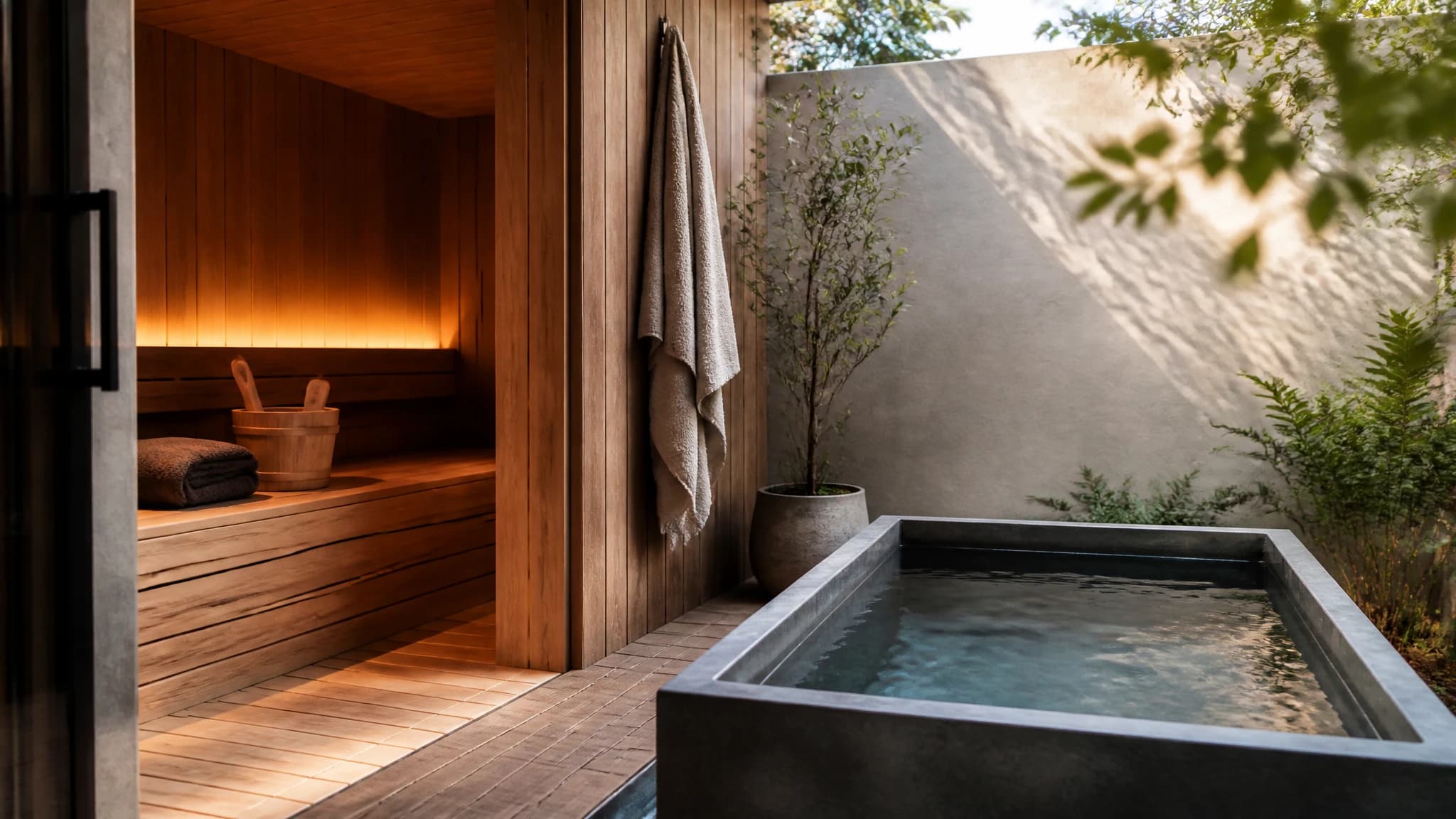
If you are exploring the world of contrast therapy, you have likely encountered a common dilemma: should you cold plunge before or after the sauna? The sequence in which you expose your body to extreme temperatures plays a major role in how you feel, both during the session and for hours afterward.
The short answer is that the traditional and most widely practiced sauna cold plunge order is to start with the heat and follow with the cold. However, the true protocol is often a cycle of both, and whether you choose to end your final round on a hot or cold note depends entirely on your goals for the day.
In this guide, we will break down the physiological effects of alternating hot and cold, explore the ideal sauna and cold plunge protocol, and help you determine the best routine for your individual needs.
The Physiology of Contrast Therapy
To understand the optimal sauna cold plunge order, it helps to understand what is happening inside your body when you expose it to contrasting temperatures. Contrast therapy is essentially a workout for your circulatory system, often referred to as vascular gymnastics.
The Heat Response (Vasodilation)
When you step into a hot sauna, your core body temperature begins to rise. In response, your cardiovascular system springs into action to keep you cool. Your blood vessels widen—a process called vasodilation—which increases blood flow toward the surface of your skin. Your heart rate elevates, mimicking the effects of light to moderate cardiovascular exercise, and your body begins to sweat to dissipate the heat. This state promotes deep muscle relaxation and can help loosen stiff joints.
The Cold Response (Vasoconstriction)
When you immediately step out of the sauna and into a cold plunge, the exact opposite happens. The sudden exposure to cold water shocks your system. Your blood vessels rapidly constrict—known as vasoconstriction—forcing the blood away from your extremities and back toward your vital organs to preserve core heat. This rapid shift flushes metabolic waste from the muscles and triggers a massive release of endorphins and adrenaline, leaving you feeling exceptionally alert and energized.
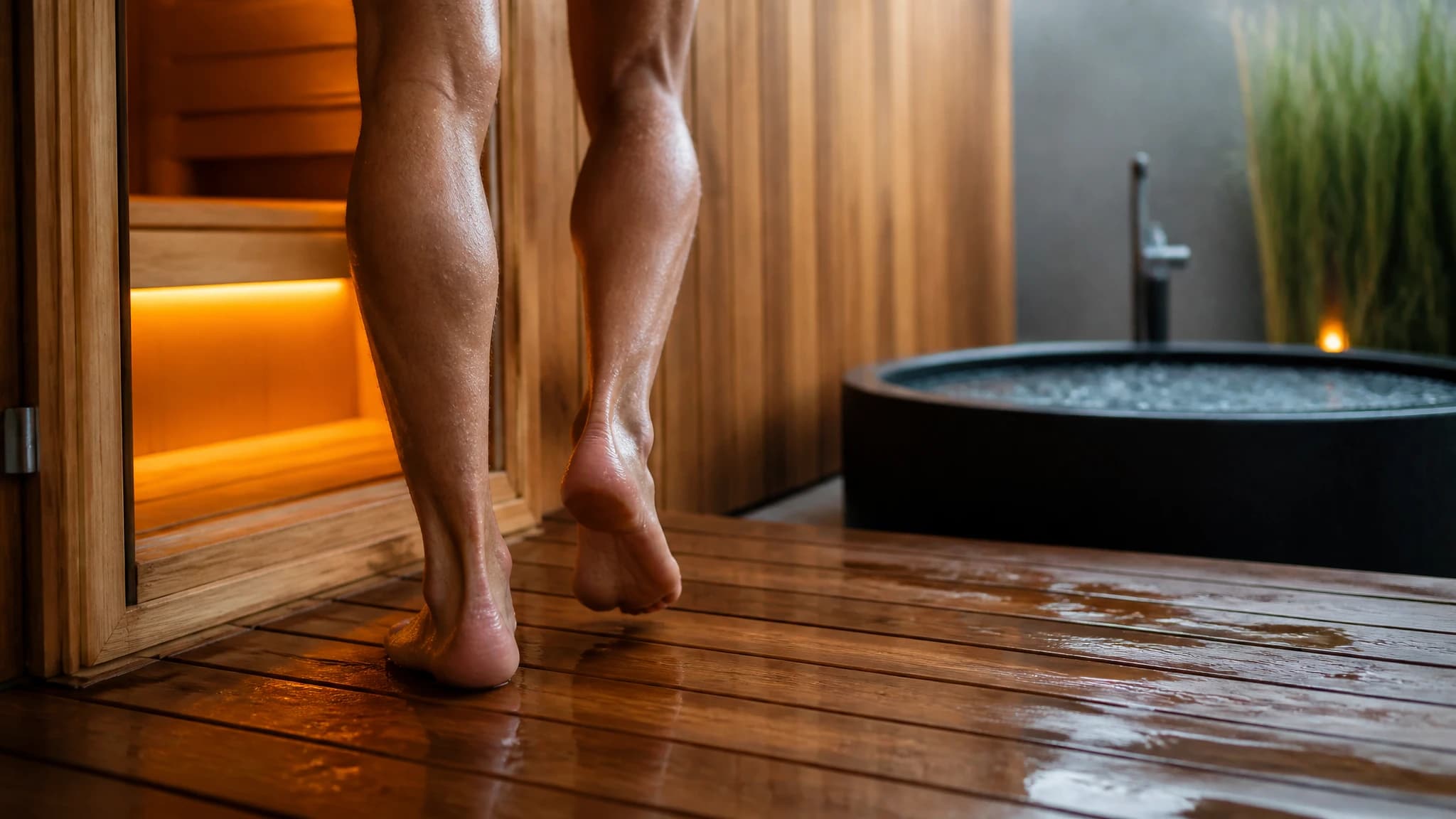
The rapid transition from heat to cold is the foundation of contrast therapy.
Should You Cold Plunge Before or After the Sauna?
Because of how the body manages core temperature, the standard recommendation is to use the sauna first, followed by the cold plunge. Here is why the hot-to-cold sequence is the standard.
Why Sauna First Makes Sense
Heating the body first prepares your system for the cold. The intense heat of the sauna dilates your blood vessels and raises your core temperature. When you subsequently enter the cold plunge, the temperature drop is profound but manageable because you have a buffer of stored heat. The transition from vasodilation to vasoconstriction creates the pumping mechanism that flushes your muscles and provides the signature invigoration of contrast therapy.
Can You Cold Plunge First?
While starting with a cold plunge is less common, it is not inherently wrong. Some individuals use a cold plunge first thing in the morning to wake up, then use a sauna session to rewarm their body. This can be a gentle way to recover from the initial shock of the cold. However, starting cold and ending hot will yield a completely different feeling than starting hot and ending cold.
If you do plunge first without warming up, your core temperature is already at its baseline. The cold water will drop your core temperature faster, meaning you may not be able to stay in the water as long as you would if you had pre-warmed in the sauna.
The Classic Sauna and Cold Plunge Protocol
Rather than looking at it as a single sequence of one before the other, the most effective sauna and cold plunge protocol involves multiple cycles. This method, often referred to as the Nordic Cycle, has been practiced in Scandinavian cultures for centuries.
Here is a practical, widely used protocol to get you started:
Step 1: The Heat Phase (10-15 Minutes)
Begin your session in the sauna. Allow your body to fully warm up. You should stay in long enough to build a substantial sweat, but not so long that you feel dizzy or uncomfortably overheated. For most people, 10 to 15 minutes at a standard sauna temperature is sufficient.
Step 2: The Cold Phase (1-3 Minutes)
Exit the sauna and proceed immediately to the cold plunge. Focus on controlling your breath. The initial shock will cause a reflex to gasp, but try to take slow, deliberate exhales. Stay in the cold water for 1 to 3 minutes. If you are new to cold exposure, even 30 seconds is a great starting point.
Step 3: The Rest Phase (10-15 Minutes)
This is the most frequently skipped step, yet it is crucial. After exiting the cold plunge, do not rush immediately back into the sauna. Sit at room temperature or outside and allow your body to naturally stabilize. This rest period lets your heart rate return to normal and gives your circulatory system time to recover from the rapid constriction.
Step 4: Repeat
Repeat this cycle two to three times. The contrast effect becomes more profound with each round as your body becomes highly efficient at regulating its temperature.
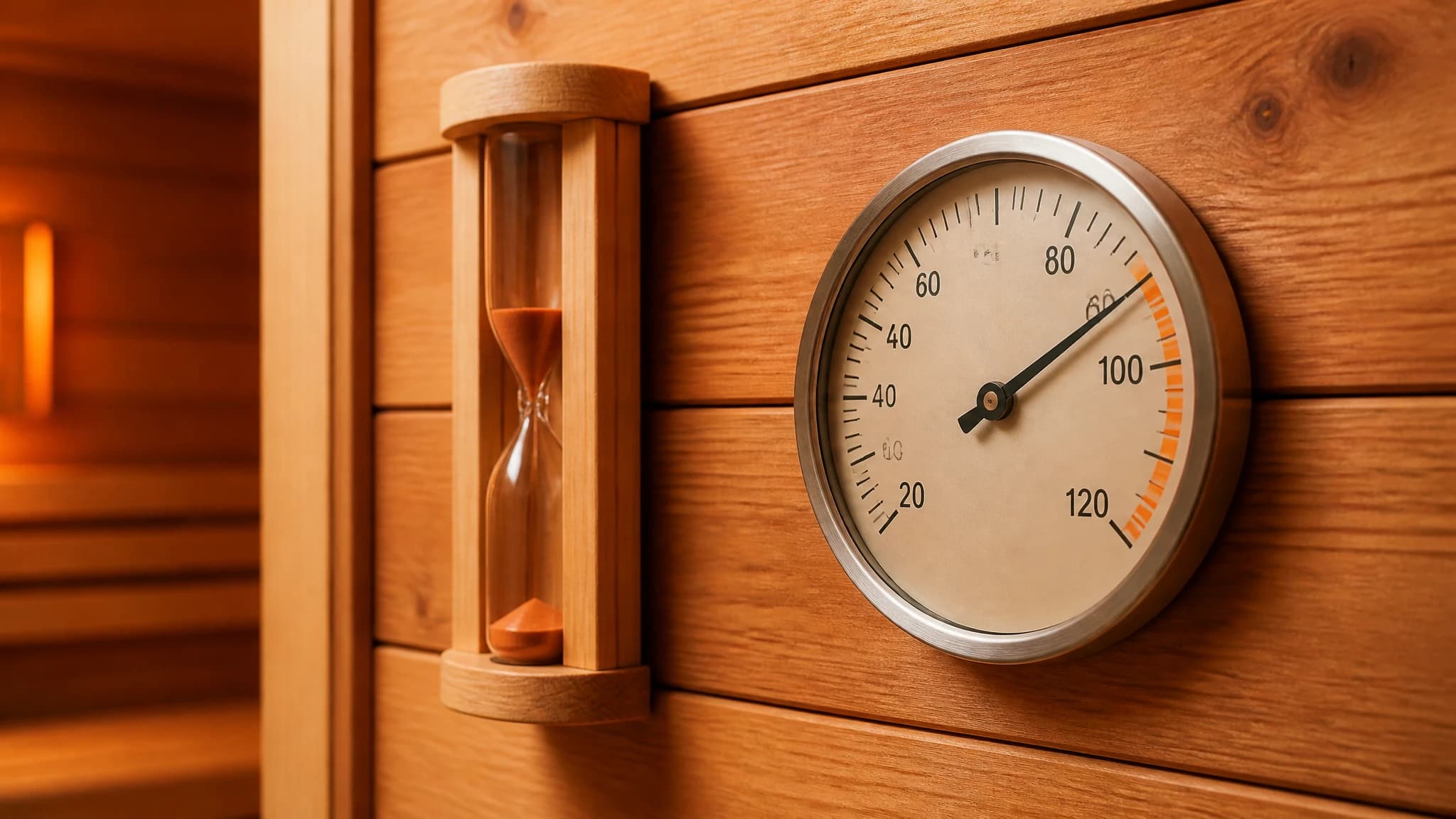
Tracking your time and temperature is key to finding the right personal protocol.
The Final Round: Ending on Hot vs. Ending on Cold
If you run through multiple cycles, the most important decision you will make is how to finish your session. The final temperature you expose yourself to will dictate how you feel for the next several hours.
The Case for Ending on Cold
Ending your session on cold is heavily favored for morning or mid-day routines. When you finish with a cold plunge, your body must work naturally to reheat itself. This prolonged metabolic effort keeps your metabolism elevated and sustains the release of norepinephrine and dopamine.
Ending on cold leaves you feeling highly alert, focused, and invigorated. If you have a busy workday ahead of you or need sharp mental focus, ending on cold is the optimal choice. Proponents of deliberate cold exposure often recommend ending on cold to maximize the metabolic benefits.
The Case for Ending on Hot
Ending your session in the sauna is ideal for the evening. If your goal is relaxation, recovery, or preparation for sleep, finishing with heat is the way to go. The heat leaves your blood vessels dilated, your muscles relaxed, and your nervous system in a parasympathetic (rest and digest) state.
Finishing with the sauna allows your core temperature to slowly drop once you get out and cool off at room temperature. This gradual cooling process mimics the natural drop in body temperature that occurs right before sleep, making it a highly effective tool for combating insomnia and improving sleep quality.
Tracking Your Routine
Because everyone's physiology is different, there is no single perfect protocol. Some people feel amazing after a 15-minute sauna and a 2-minute plunge, while others prefer shorter or longer intervals. The only way to know what works best for your body is to track your sessions.
Paying attention to how long you stay in the heat, the temperature of the cold plunge, and the order in which you complete your cycles will help you refine your habit. Notice how you feel two hours after a session where you ended on cold versus a session where you ended on hot.
If you want a simple way to monitor this, you can use the free SaunaMetrics app. It allows you to log your session times, track your temperatures, and write down brief notes on how you felt afterward. Over time, you will build a clear picture of the exact sauna and cold plunge protocol that yields the best results for your body.
Safety Considerations
While contrast therapy is generally safe for healthy individuals, the rapid shift in blood pressure is demanding on the heart. Always listen to your body. If you feel lightheaded, excessively dizzy, or uncomfortably cold, exit the environment immediately and sit down.
Never force yourself to stay in a cold plunge or sauna past the point of safety just to hit a specific time goal. It is always better to build your tolerance slowly over weeks and months rather than pushing too hard in a single session. Always consult a healthcare provider before beginning a new contrast therapy routine, especially if you have a history of cardiovascular issues or blood pressure abnormalities.