
 Veselin Stoyanov12 min read
How to Create a Personalized Sauna Protocol
Learn how to build a sauna protocol around your goals, schedule, temperature, humidity, session length, frequency, and recovery needs.
A good sauna protocol should fit your body, your schedule, and the type of sauna you actually use. Instead of copying a routine designed for someone else, adjust a few variables, observe how you respond, and make one change at a time.
The most useful variables to work with are session length, temperature, humidity, frequency, timing, and recovery. Tracking these consistently can help you identify which combination feels sustainable and produces the experience you want from your sauna routine.
This guide explains how to build a practical sauna protocol for regular use. It is not a prescription or a substitute for medical advice. If you have a medical condition, take medication that affects blood pressure or sweating, are pregnant, or have concerns about heat exposure, speak with a qualified healthcare professional before changing your routine. Sauna use can contribute to dehydration, and expert guidance commonly recommends keeping sessions brief, avoiding alcohol, hydrating, and leaving if you feel unwell. (health.clevelandclinic.org)
What is a sauna protocol?
A sauna protocol is a repeatable plan for using a sauna. It normally defines:
- Temperature: How hot the sauna is
- Humidity: How much moisture is present in the air
- Duration: How long each round lasts
- Rounds: Whether you complete one continuous session or several shorter rounds
- Frequency: How often you use the sauna
- Timing: When sauna fits into your day or training week
- Recovery: How you cool down, rehydrate, and return to normal activity
A protocol gives you a starting structure, not a rule that must be followed forever. Your best sauna routine may change with the season, your sleep, your training load, your work schedule, and your experience level.
Start with the goal of your sauna routine
Before changing sauna time and temperature, define what you want the routine to do for you. Different goals may call for different trade-offs.
Relaxation and stress management
If your main goal is winding down, consistency and comfort may matter more than maximizing heat. A moderate session at a time when you can avoid rushing may be more useful than an intense session late at night that leaves you overstimulated or dehydrated.
Consider prioritizing:
- A comfortable temperature you can tolerate without strain
- One calm round rather than multiple demanding rounds
- A predictable time of day
- A longer, gradual cool-down
- Minimal distractions inside the sauna
Building a consistent habit
For habit formation, the best sauna protocol is usually the one you can repeat. A shorter session on a regular schedule may be more sustainable than an ambitious plan that interferes with sleep, work, or exercise recovery.
Start by choosing a weekly target that fits your real calendar. You can increase frequency later if the routine remains comfortable and does not disrupt hydration, sleep, or other activities.
Supporting post-exercise recovery
Some people use a sauna after training as part of a broader recovery routine. If you do this, consider the full workload of the day. Exercise, heat exposure, sweating, and inadequate fluid intake can combine to increase fatigue.
On training days, track whether sauna leaves you feeling refreshed, neutral, or more depleted. If you feel unusually weak, lightheaded, headachy, or unable to recover, reduce the session or skip it rather than forcing the protocol.
Exploring heat tolerance
Experienced users may want to understand how they respond to different temperatures, humidity levels, or round structures. The goal should be controlled experimentation—not simply staying as long as possible.
Change one variable at a time. For example, keep temperature and frequency stable while testing a five-minute increase in duration. This makes it easier to understand what caused a change in your experience.
Choose a starting point for sauna time and temperature
There is no single best sauna temperature or session length for everyone. Sauna type, individual tolerance, humidity, hydration, and recent activity all affect how intense a session feels.
A practical starting protocol for an experienced but non-competitive user might look like this:
- One round: 10–15 minutes
- Moderate heat: Use a temperature that feels challenging but controllable
- Simple recovery: Leave the sauna, cool down gradually, and drink fluids
- Frequency: Begin with a schedule you can repeat comfortably
New users may need only a few minutes at first. Cleveland Clinic advises beginners to start around five minutes and add time gradually, while general guidance commonly places many sauna sessions around 15–20 minutes. (health.clevelandclinic.org)
Treat these ranges as guardrails rather than performance targets. If a shorter session gives you the result you want, there is no need to extend it simply to match someone else’s routine.
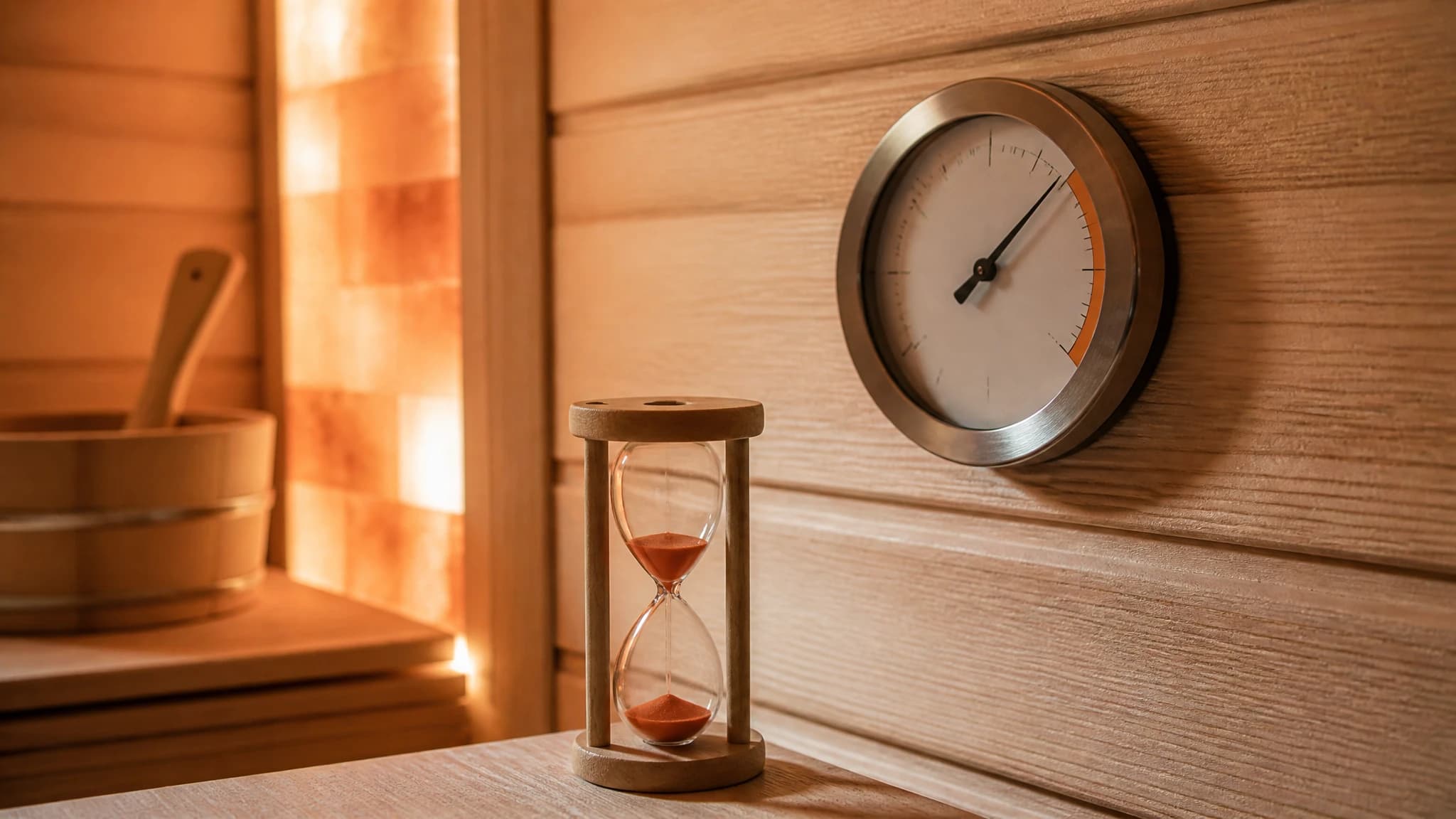
Track sauna time and temperature so you can compare sessions consistently.
Adjust one variable at a time
Personalization works best when your experiments are simple. If you change temperature, duration, humidity, frequency, and timing all at once, you will not know which change improved or worsened the experience.
Use a gradual testing sequence:
- Establish a baseline routine for at least several sessions.
- Record the key conditions and how you felt afterward.
- Change only one variable.
- Repeat the revised routine several times.
- Compare your notes with the baseline.
- Keep the change only if it fits your goal and remains sustainable.
For example, suppose your baseline is 12 minutes at a moderate temperature twice per week. You could test 15 minutes while keeping everything else the same. If the longer session consistently affects your sleep or leaves you drained, return to 12 minutes and test a different variable instead.
How to personalize each sauna variable
Session length
Duration is often the easiest variable to adjust. Increase it in small increments rather than making a large jump. Pay attention not only to how you feel inside the sauna, but also to your energy, hydration, sleep, and appetite later in the day.
A longer session is not automatically a better session. If your goal is relaxation, a shorter session that ends while you still feel comfortable may be more useful than one that pushes you into exhaustion.
Temperature
Temperature changes the perceived intensity of the session. If you increase heat, consider reducing duration at first. If you lower the temperature, you may be able to stay longer, but that does not mean you should automatically extend the session.
Record the actual temperature when possible rather than relying on labels such as “low,” “medium,” or “high.” Sauna displays and thermometers can vary, so the number is most useful when compared with your own past sessions in the same sauna.
Humidity
Humidity can change how heat feels and how quickly you become uncomfortable. In a traditional sauna, adding water to the rocks may create a short-lived increase in humidity and perceived intensity. If you are experimenting with humidity, keep temperature and duration stable so you can evaluate the difference.
Note whether higher humidity helps you enjoy the session or makes breathing and heat tolerance more difficult. Your preferred humidity level is personal, and it may depend on the sauna design as well as your own response.
Frequency
Frequency should account for the rest of your week. A routine that works during a light training week may feel excessive during travel, illness, intense exercise, or poor sleep.
Start with a repeatable schedule and review it after a few weeks. If you are consistently recovering well, you can consider adding another session. If each session feels like a major stressor, reduce frequency or intensity before trying to build more volume.
Timing
The same protocol can feel different depending on when you use it. Compare sauna sessions after work, after exercise, or earlier in the day. Track whether timing affects your alertness, sleep, hunger, and ability to complete the rest of your schedule.
Avoid treating sauna as a way to compensate for inadequate recovery. If you are already dehydrated, ill, or significantly fatigued, postponing the session may be the more useful choice.
Recovery
Recovery is part of the protocol, not an afterthought. Leave enough time to cool down gradually, replace fluids, and notice how you feel before driving, exercising, or returning to demanding work.
Avoid alcohol around sauna use. Health guidance also recommends extra caution for people with certain heart conditions, blood-pressure concerns, pregnancy, medication use, or other conditions that may affect heat tolerance. (health.clevelandclinic.org)
Track your sauna routine like an experiment
Memory is not precise enough to compare sauna sessions weeks apart. A simple log can reveal patterns that are easy to miss.
Record:
- Date and time
- Sauna type
- Temperature
- Humidity or water added, if relevant
- Number of rounds
- Duration of each round
- Pre-session energy and hydration
- Post-session comfort and fatigue
- Sleep that night
- Notes about exercise, caffeine, food, or unusual stress
You do not need to measure everything perfectly. The goal is consistency. If you record temperature for every session but humidity only occasionally, that can still be useful. The most important thing is to capture enough context to explain why one session felt different from another.
SaunaMetrics can help make this process easier by letting you log sauna sessions, temperatures, and notes over time. Used consistently, the record can help you compare routines and identify which combinations fit your lifestyle rather than relying on generic advice.
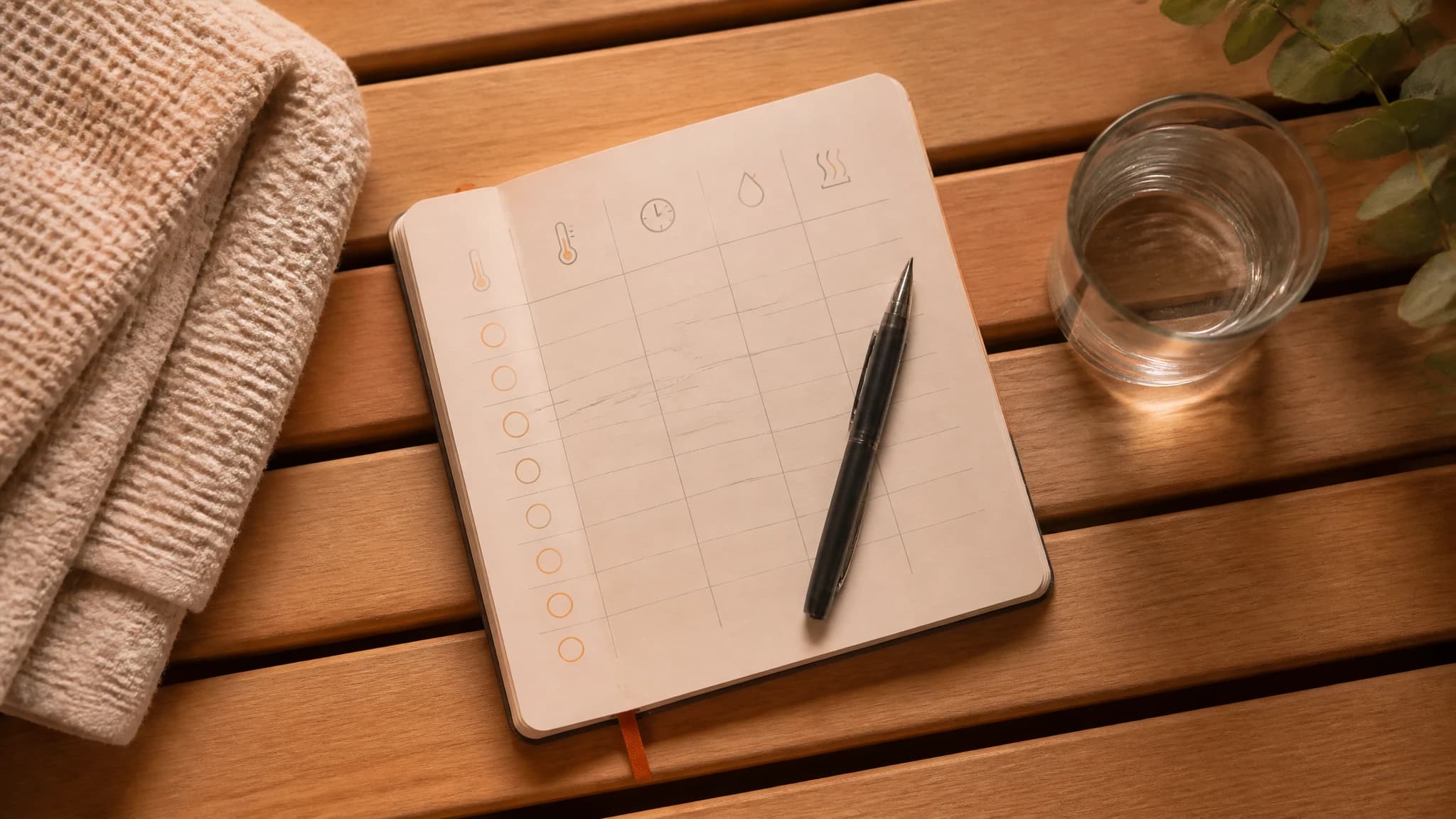
A simple log can reveal how temperature, duration, timing, and recovery affect your routine.
Example personalized protocols
These examples are starting frameworks, not universal prescriptions.
The busy-week protocol
- One session per week
- One short, comfortable round
- Schedule it at a predictable time
- Prioritize hydration and an unrushed cool-down
This approach is useful when consistency matters but your calendar is unpredictable.
The gradual-adaptation protocol
- Begin with short sessions
- Keep temperature moderate
- Add only a few minutes after several comfortable sessions
- Keep frequency stable while changing duration
This structure makes it easier to learn how your body responds without making the routine unnecessarily intense.
The training-week protocol
- Place sauna on selected training days rather than every day
- Compare post-exercise and separate-day sessions
- Track next-day energy and sleep
- Reduce heat exposure when overall training stress is high
The main purpose is to understand whether sauna complements your schedule. If it consistently adds fatigue, adjust the protocol instead of assuming more exposure is better.
Review your protocol every few weeks
A personalized sauna routine should evolve. Review your notes periodically and ask:
- Am I meeting the goal I set?
- Do I feel better, the same, or worse afterward?
- Is the routine easy to repeat?
- Has my sleep changed?
- Am I staying adequately hydrated?
- Did another variable—exercise, stress, caffeine, or illness—affect the result?
- What is the smallest change worth testing next?
Keep the review practical. You do not need to find a perfect protocol. You need a routine that is comfortable, repeatable, and appropriate for your circumstances.
If you experience dizziness, weakness, breathing difficulty, confusion, or feel unwell during a session, leave the sauna and seek appropriate medical help. Do not use a tracking log to justify continuing through warning signs. (health.clevelandclinic.org)
Final takeaway
Creating a personalized sauna protocol is a process of controlled adjustment. Start with a manageable routine, define your goal, track the conditions, and change one variable at a time.
The best sauna routine is not necessarily the hottest, longest, or most frequent. It is the one that fits your life, supports your intended purpose, and remains comfortable enough to repeat. By recording sauna time and temperature along with humidity, frequency, timing, and recovery notes, you can make decisions based on your own patterns rather than someone else’s routine.