
 Veselin Stoyanov8 min read
Dry Sauna vs. Steam Room: Which Should You Choose?
Discover the key differences between a dry sauna vs steam room. Learn about temperature, humidity, and how to track your routine with SaunaMetrics.
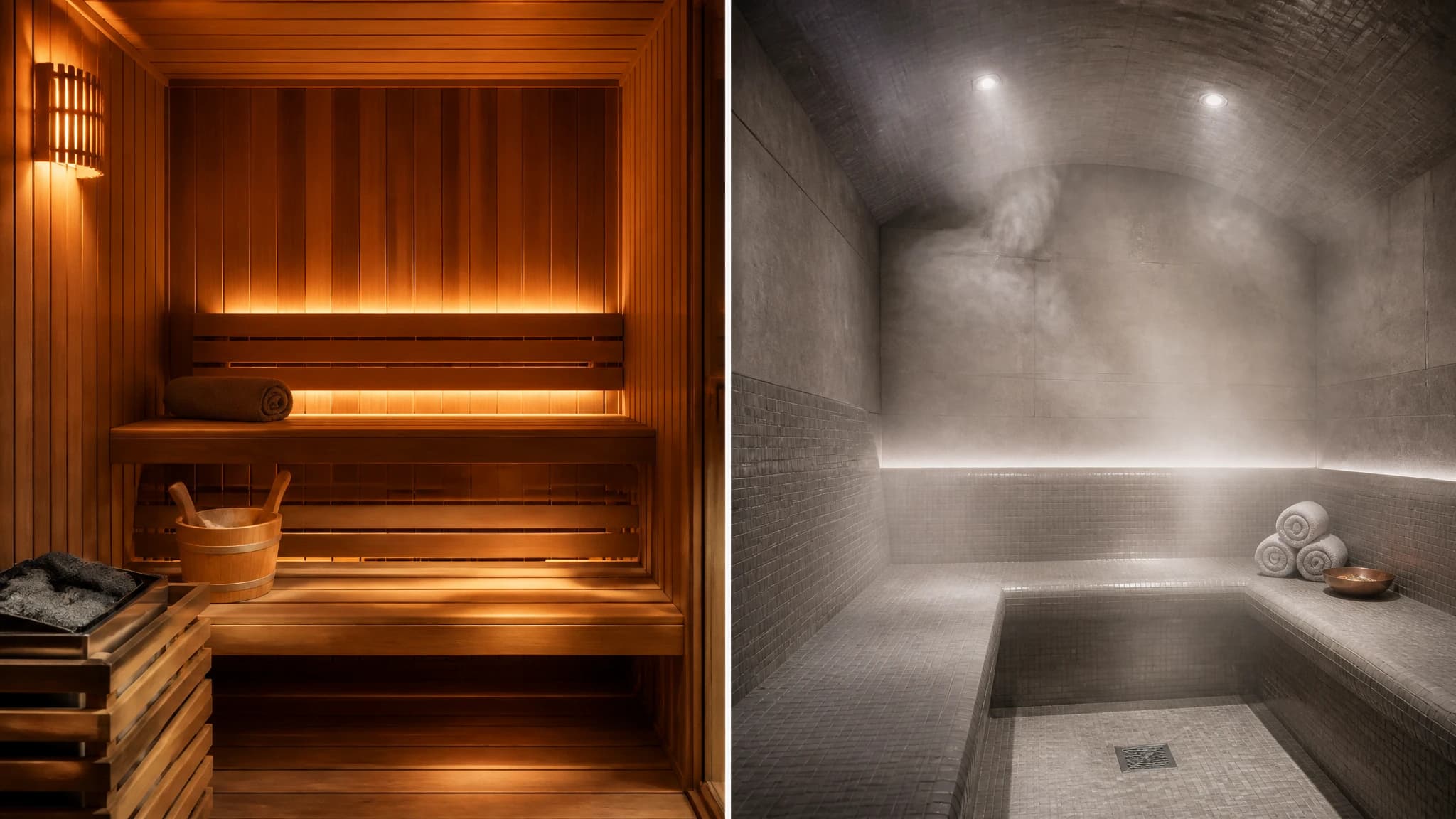
Stepping into a heated room is a time-honored way to relax, unwind, and disconnect from the stresses of daily life. However, when faced with the choice at your local gym or spa, you might find yourself wondering about the differences between a dry sauna vs steam room.
Both environments offer a dedicated space to sit, breathe, and experience intense heat, but they achieve this through entirely different methods. Choosing between a sauna vs steam room is not about finding out which one is objectively better; it is about discovering which environment your body responds to best and which one aligns with your personal comfort preferences.
In this comprehensive guide, we will break down the mechanics of both options, compare the distinct experiences they provide, and help you determine how to build a safe, consistent routine using a tracking tool like SaunaMetrics.
Understanding the Dry Sauna
A traditional dry sauna is characterized by high temperatures and incredibly low humidity. Originating in Finland, these spaces are designed to provide a dry, enveloping heat that causes your body to sweat profusely as a natural cooling mechanism.
The Environment and Setup
Dry saunas are almost exclusively constructed from wood, typically using cedar, hemlock, or spruce. Wood is used because it does not absorb heat in a way that would burn your skin upon contact. The heating source is usually an electric stove filled with specialized sauna rocks, though traditional wood-burning stoves are still popular in standalone outdoor saunas.
The temperature in a standard dry sauna ranges from 150°F to 195°F (65°C to 90°C). Despite this intense heat, the humidity remains very low, typically hovering between 5% and 20%.
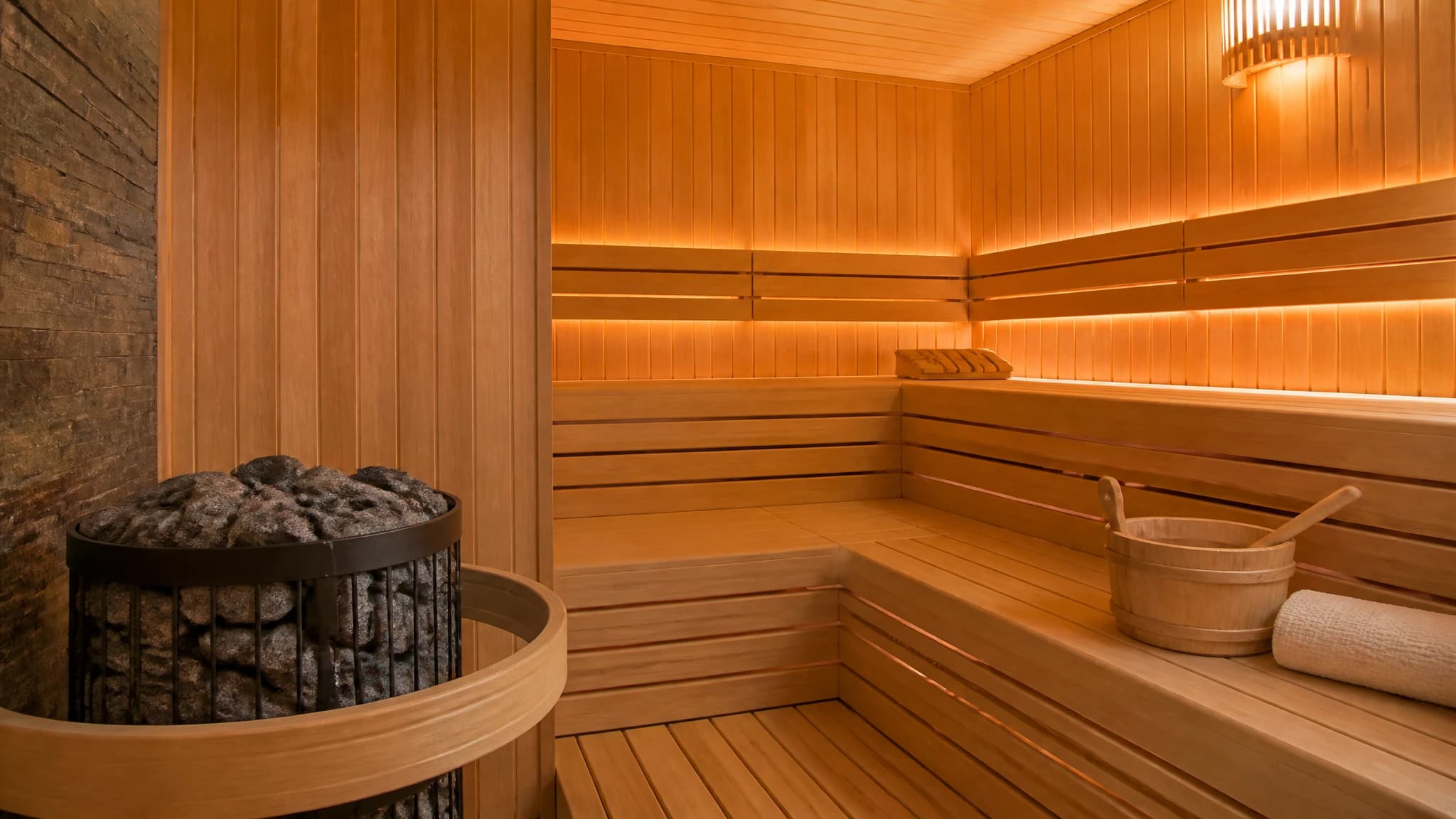
Dry saunas utilize low humidity and high temperatures to create an enveloping, dry heat.
The User Experience
Because the air is so dry, sweat evaporates quickly from your skin. This evaporation process is what keeps your body from overheating immediately. Many users find the dry heat easier to breathe in compared to heavy, moisture-laden air.
You can often control the humidity slightly in a dry sauna by pouring a small amount of water over the heated rocks. This creates a quick burst of steam, known as löyly in Finnish, which temporarily raises the humidity and makes the room feel significantly hotter. However, even with occasional bursts of water, the environment remains fundamentally dry compared to a steam room.
Understanding the Steam Room
Unlike the wood-lined interiors of a sauna, a steam room is designed to trap moisture. Also known as a Turkish bath or hammam in various cultures, a steam room relies on boiling water to create a completely humid environment.
The Environment and Setup
Steam rooms are built using non-porous materials like tile, glass, or acrylic. If wood were used in a steam room, the constant moisture would quickly lead to rot and bacterial growth. Instead, you sit on tiled benches in a sealed room where a steam generator pumps hot vapor directly into the space.
The temperature in a steam room is significantly lower than a dry sauna, usually ranging from 110°F to 120°F (43°C to 49°C). However, the defining characteristic is the humidity, which sits constantly at 100%.
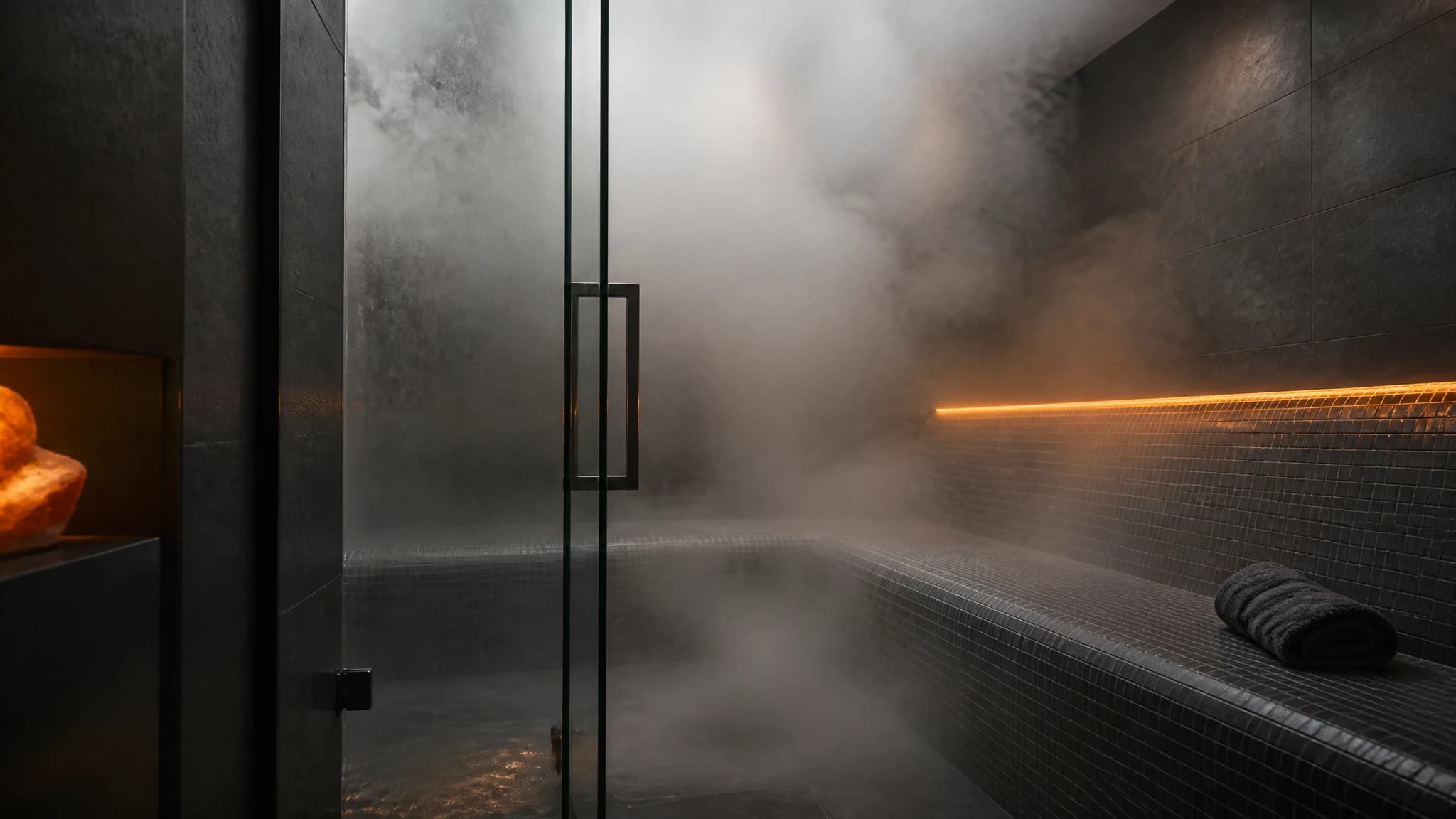
Steam rooms maintain 100% humidity, preventing sweat from evaporating and making lower temperatures feel intensely hot.
The User Experience
Because the humidity is at 100%, your sweat cannot evaporate into the air. The moisture you feel on your skin is a combination of your own sweat and the steam condensing on your body. This lack of evaporation means your body cannot cool itself as effectively, which is why a 115°F steam room can feel just as hot, if not hotter, than a 180°F dry sauna.
The dense, moist air can feel highly soothing to the nasal passages and throat. Many people who experience mild seasonal congestion prefer the steam room, as the vapor helps loosen mucus and provides a temporary sense of clearer breathing. However, some individuals find the heavy air stifling and prefer the crisp air of a dry sauna.
Key Differences: Sauna vs Steam Room
When comparing a dry sauna vs steam room, the decision ultimately boils down to three main factors: temperature, moisture, and maintenance.
Heat and Humidity Dynamics
The most obvious difference is the balance of heat and moisture. Dry saunas use high heat and low humidity, making the environment tolerable by allowing your body to rely on evaporative cooling. Steam rooms use lower heat but maximum humidity, preventing evaporation and causing condensation to form on your skin.
Materials and Atmosphere
Dry saunas offer a rustic, natural environment. The scent of heated cedar or hemlock adds a mild aromatherapy element to the experience. The lighting is typically dim, and the wooden benches provide a warm, organic feel. Steam rooms feel more clinical and sleek, characterized by slick tiles, heavy white fog, and the persistent sound of hissing steam from the generator.
Breathing Comfort
Your preference for breathing will likely dictate your favorite room. Dry air can sometimes feel sharp in the nostrils or throat, especially at temperatures approaching 190°F. Conversely, steam room air is incredibly thick. While the moisture is soothing to some, others may feel a sensation of shortness of breath simply due to the air density.
How Long Should You Stay in a Dry Sauna?
Whether you are using a sauna or a steam room, pacing yourself is critical. Understanding how long should you stay in a dry sauna depends entirely on your experience level and how well you are hydrated.
For absolute beginners, it is highly recommended to start with short sessions. Aim for 5 to 10 minutes. This allows your body to acclimate to the cardiovascular demand of high heat. As you become more comfortable and build a regular habit, you can gradually increase the duration.
Experienced sauna users typically stay inside for 15 to 20 minutes per session. It is rarely recommended to exceed 20 minutes in a single sitting without taking a break. If you wish to spend more time in the heat, the best practice is to complete a 15-minute session, step out to cool down for 10 to 15 minutes, drink plenty of water, and then return for a second round.
The guidelines for a steam room are very similar. Because the moisture prevents sweat evaporation, your core temperature can rise quickly. Limit steam room sessions to 10 to 15 minutes, and always step out immediately if you feel dizzy, lightheaded, or uncomfortable.
Discovering Your Preference with SaunaMetrics
The most effective way to decide between a dry sauna vs steam room is to test both and monitor how your body reacts. Tracking your routine removes the guesswork and helps you establish a safe, consistent habit.
By noting down the room type, the temperature, the duration of your stay, and how you felt afterward, you can identify patterns. Perhaps you sleep better after a 15-minute dry sauna session, or maybe a 10-minute steam room visit leaves you feeling more refreshed after a heavy workout.
SaunaMetrics is a free sauna tracking app designed specifically for this purpose. It allows you to log your sessions, track temperatures, and add personal notes to develop your habit over time. By maintaining a digital journal of your thermal experiences, you can confidently refine your routine.