
 Veselin Stoyanov10 min read
How Long Should You Stay in an Infrared Sauna?
Learn a practical infrared sauna duration, how to build up gradually, and the signs that it is time to step out.
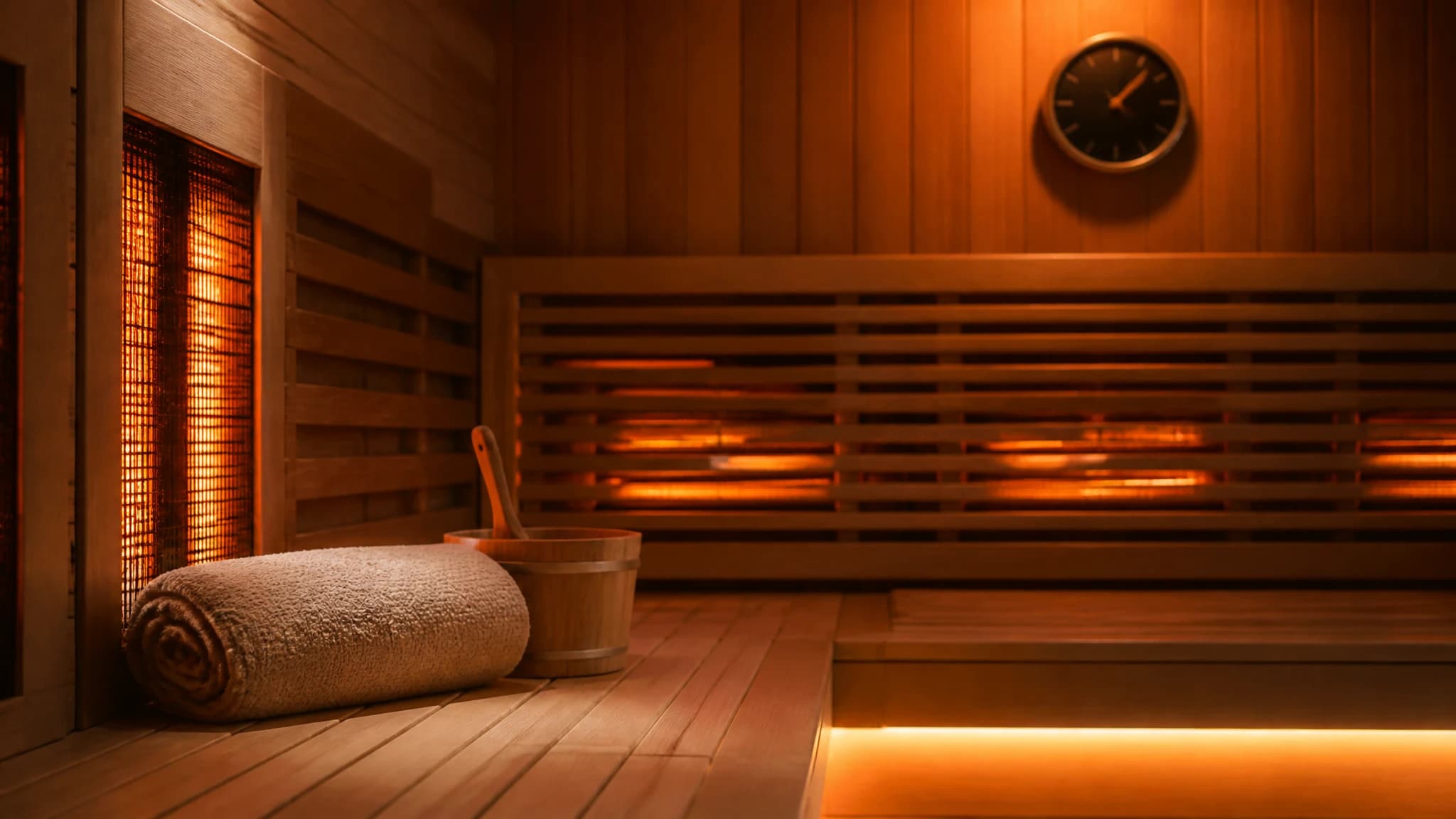
How Long Should You Stay in an Infrared Sauna?
For most healthy adults, an infrared sauna session can last about 10 to 30 minutes, depending on your experience, the cabin temperature, hydration, and how your body responds. Beginners should start closer to 5–10 minutes, while experienced users may gradually work toward 20–30 minutes if they remain comfortable.
Infrared saunas usually operate at lower temperatures than traditional saunas. That can make them feel more approachable and may allow users to stay in them slightly longer. However, lower air temperature does not eliminate the effects of heat, sweating, and cardiovascular stress. The right sauna duration is the longest time you can tolerate comfortably—not the longest time you can force yourself to endure.
Quick answer: Start with 5–10 minutes at a moderate setting. Increase gradually toward 20–30 minutes only if you feel well throughout the session and recover normally afterward.
Why infrared sauna sessions are usually longer
A traditional sauna heats the air around you, while an infrared sauna uses infrared energy to warm the body more directly. As a result, infrared cabins commonly run at approximately 110–135°F (43–57°C), compared with the much higher temperatures often found in traditional saunas. (health.clevelandclinic.org)
That temperature difference is the main reason people often spend slightly more time in an infrared sauna. The experience may feel less intense at first, giving you more room to relax, read, or practice slow breathing.
Still, your body is responding to heat. Sweating, an elevated heart rate, fluid loss, and changes in blood pressure can occur even when the cabin temperature feels manageable. A lower thermostat reading should be treated as one part of the decision—not permission to ignore discomfort or stay indefinitely.
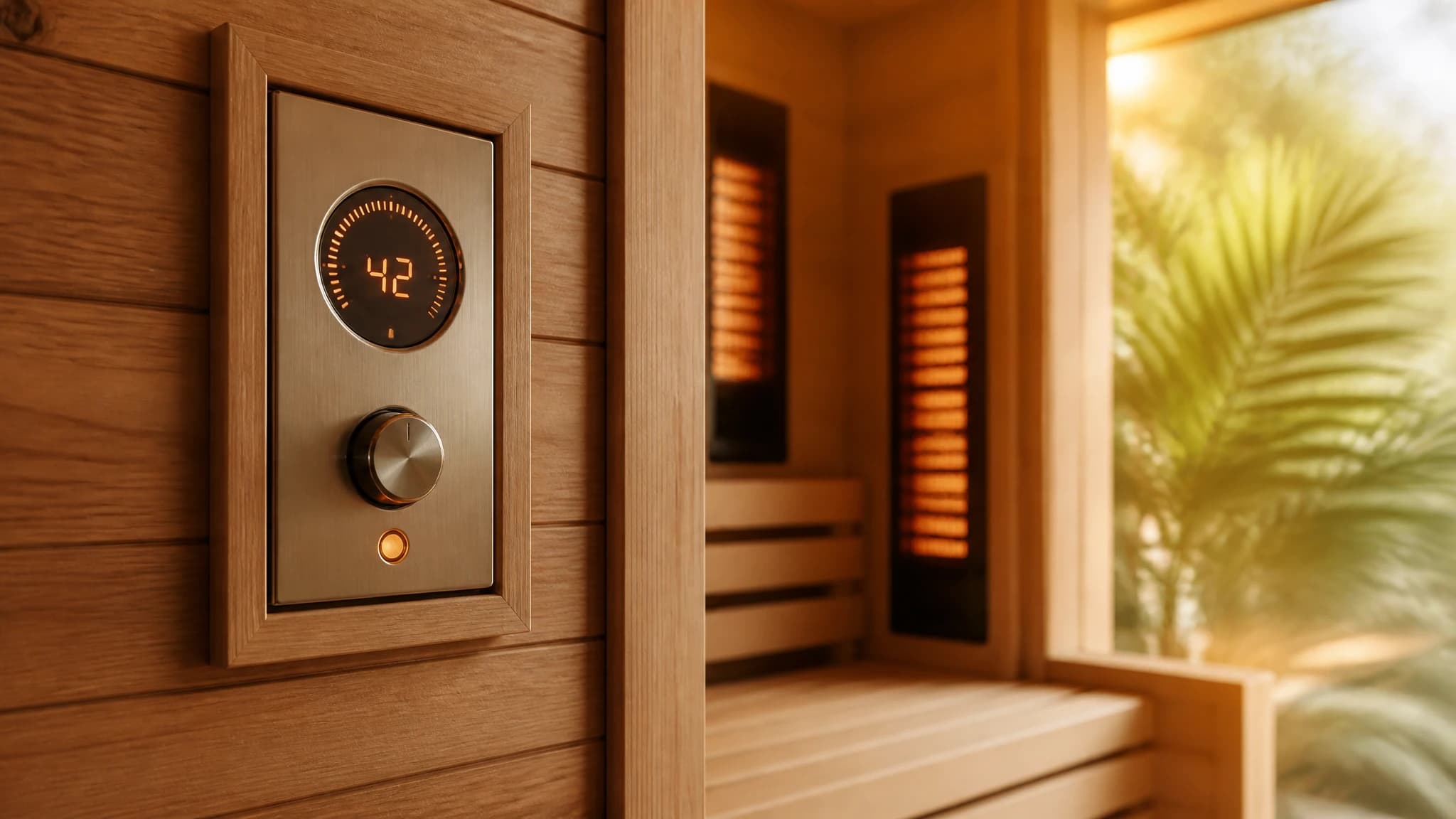
Infrared saunas generally operate at lower temperatures than traditional saunas.
A practical infrared sauna duration guide
Use the following ranges as a starting framework rather than a strict prescription.
If you are new to infrared sauna use: 5–10 minutes
Begin with a lower or moderate temperature and stay in for 5–10 minutes. This gives you a chance to learn how quickly you heat up and how you feel during the first few minutes after leaving.
You do not need to produce a large amount of sweat for the session to be worthwhile. Focus on comfort, steady breathing, and noticing how your body responds.
If you are becoming accustomed to it: 10–20 minutes
After several comfortable sessions, you can consider increasing the duration to 10–20 minutes. Keep the temperature unchanged while increasing time, or adjust one variable at a time. Changing both temperature and duration makes it harder to understand what your body is tolerating.
For many people, this range offers a practical balance between relaxation and heat exposure without making every session feel like a test of endurance.
If you are experienced: 20–30 minutes
Some experienced users may tolerate sessions of 20–30 minutes. Cleveland Clinic recommends keeping infrared sauna sessions below 30 minutes, even for experienced users, and suggests starting at around 110°F for 5–10 minutes before building gradually. (health.clevelandclinic.org)
There is no requirement to reach 30 minutes. If 15 minutes leaves you feeling comfortable and refreshed, that may be your optimal sauna time.
How to decide whether your session is long enough
The clock is useful, but your symptoms are more important. During a session, check in with yourself every few minutes:
- Are you breathing normally?
- Do you feel relaxed rather than distressed?
- Is the heat becoming uncomfortable?
- Do you feel dizzy, nauseated, weak, confused, or unusually tired?
- Are you experiencing a pounding or irregular heartbeat?
If you feel dizzy, nauseated, faint, confused, or unwell, leave the sauna immediately and begin cooling down gradually. Do not try to complete a target time simply because the timer has not finished.
A good session should not leave you feeling ill. Mild warmth and sweating may be expected, but symptoms that continue or worsen after leaving deserve attention. Seek urgent medical help for severe symptoms such as fainting, confusion, chest pain, trouble breathing, or signs of serious heat illness.
Five factors that affect infrared sauna duration
1. Your experience level
A person who uses an infrared sauna regularly may tolerate a longer session than someone trying it for the first time. Even experienced users should reduce their time when returning after a long break, illness, travel, or poor sleep.
2. The temperature setting
A 15-minute session at a high setting may feel more demanding than a 25-minute session at a lower setting. If you increase the temperature, consider reducing the duration rather than trying to maintain the same time.
3. Hydration and recent activity
Arriving dehydrated, exercising immediately beforehand, or consuming alcohol can make heat exposure harder to tolerate. Drink fluids during the day and avoid alcohol around sauna use. Harvard Health also recommends replacing fluids after a sauna and leaving if you feel unwell. (health.harvard.edu)
4. Your surroundings
A well-ventilated, comfortable space makes it easier to cool down afterward. Avoid treating a sauna session as a competition, and make sure you can exit quickly if you begin to feel unwell.
5. Your health and medications
Heat can affect circulation, sweating, hydration, and blood pressure. If you have heart disease, uncontrolled high blood pressure, a condition that affects sweating or temperature regulation, or another significant medical condition, ask a healthcare professional whether sauna use is appropriate for you.
Pregnant people, people with multiple sclerosis or heat intolerance, and people who are ill should get specific medical guidance before using an infrared sauna. Cleveland Clinic advises checking with a healthcare provider when pre-existing conditions are present and avoiding sauna use when sick. (health.clevelandclinic.org)
How to build up your sauna time safely
A gradual approach is more useful than choosing an ambitious target on your first visit.
- Start at 5–10 minutes. Use a moderate temperature.
- Leave while you still feel comfortable. Do not wait for dizziness or exhaustion.
- Notice your recovery. Pay attention to thirst, headache, fatigue, sleep, and how you feel later that day.
- Repeat before increasing. Try the same setting and duration for several sessions.
- Change one variable at a time. Increase either duration or temperature, not both.
- Stop increasing when the session feels sustainable. Consistency matters more than reaching a specific number.
For example, a simple progression might look like this:
- Sessions 1–2: 5–10 minutes
- Sessions 3–5: 10–15 minutes
- Later sessions: 15–20 minutes if comfortable
- Optional experienced range: 20–30 minutes, staying below 30 minutes
This is only a general framework. Your response may vary from one day to the next.
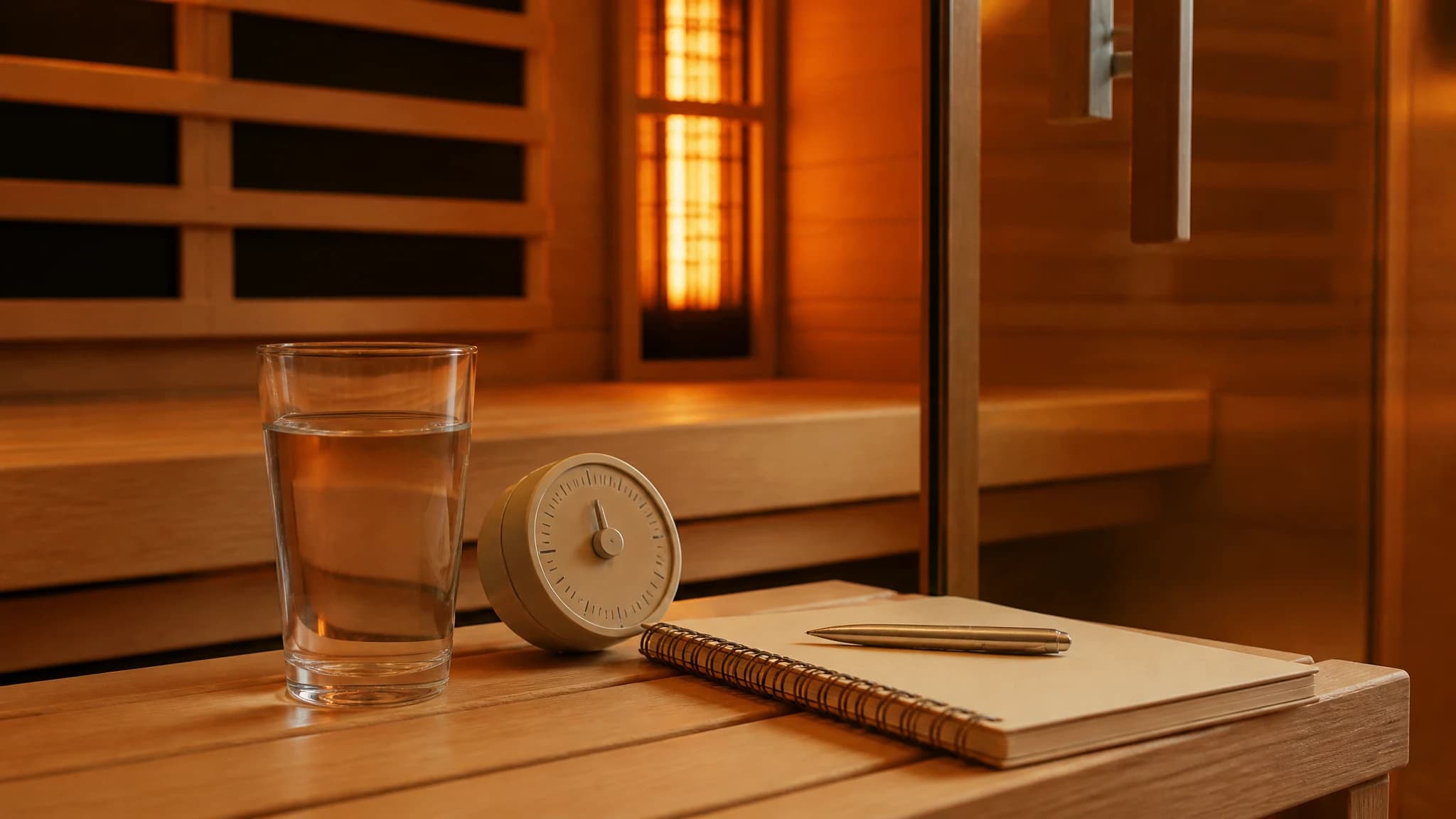
Recording time, temperature, and recovery notes can help you understand your personal routine.
What to do before, during, and after an infrared sauna session
Before
Drink fluids normally throughout the day rather than relying on a large amount immediately before entering. Avoid using the sauna when you are already dehydrated, feverish, or recovering from illness. If you have been exercising, allow your body to settle before adding another heat stressor.
During
Keep water nearby, sit or recline comfortably, and use a timer so you do not lose track of time. Avoid alcohol and be cautious with medicines or substances that may impair sweating, alertness, or temperature regulation.
After
Exit slowly, cool down gradually, and replace fluids. Give yourself time to notice how you feel before driving, exercising, or starting another demanding activity.
A written log can help you identify patterns. Record the temperature, session length, time of day, hydration, and how you felt afterward. SaunaMetrics is designed for this kind of routine tracking: you can log sessions, temperature, and notes so that your infrared-specific duration is based on your own experience rather than guesswork.
Infrared sauna duration versus traditional sauna duration
Traditional sauna guidance often uses shorter sessions because the air temperature is considerably higher. Harvard Health recommends limiting sauna time to about 15–20 minutes and leaving if you feel unwell. (health.harvard.edu)
Infrared saunas are commonly cooler, so some users may comfortably stay for 20–30 minutes. That does not mean the two types of sauna are interchangeable or that infrared sessions should automatically be longer. The temperature, humidity, cabin design, personal tolerance, and your health all influence the experience.
Think of the ranges as different starting points:
- Traditional sauna: often around 15–20 minutes
- Infrared sauna: commonly 10–30 minutes, building gradually
The safest choice is to follow the instructions for your specific sauna, start conservatively, and stop based on symptoms.
Common mistakes to avoid
Staying in because you have not sweated enough
Sweat volume is not a reliable scorecard. Some people sweat quickly, while others sweat less because of temperature, humidity, hydration, or individual differences.
Increasing temperature and time together
This can make a session unexpectedly intense. Adjust one factor at a time so you can tell what works for you.
Ignoring delayed symptoms
Headache, unusual fatigue, dizziness, or excessive thirst after a session may indicate that the duration or temperature was too high for that day. Shorten the next session or take a break.
Assuming lower temperature means no risk
Infrared saunas are cooler than traditional saunas, but they still expose your body to heat. Treat hydration, recovery, and warning signs seriously.
Trying to copy someone else’s routine
A friend’s 30-minute session is not necessarily your optimal sauna time. Track your own response and build a routine you can repeat comfortably.
The bottom line
So, how long should you stay in an infrared sauna? Start with 5–10 minutes, build gradually, and many healthy adults can work toward 10–30 minutes at a comfortable setting. Keep sessions below 30 minutes unless a qualified healthcare professional gives you different guidance, and leave immediately if you feel dizzy, nauseated, faint, confused, or otherwise unwell.
The best sauna duration is individual and repeatable. Record your temperature, time, and recovery notes, then use those patterns to develop a routine that supports your goals without turning heat exposure into an endurance challenge.