
 Veselin Stoyanov11 min read
How Long Should You Stay in a Sauna? Optimal Times and Limits
Wondering how long you should sit in a sauna? Learn the optimal sauna duration based on your experience level, sauna type, and physical response.
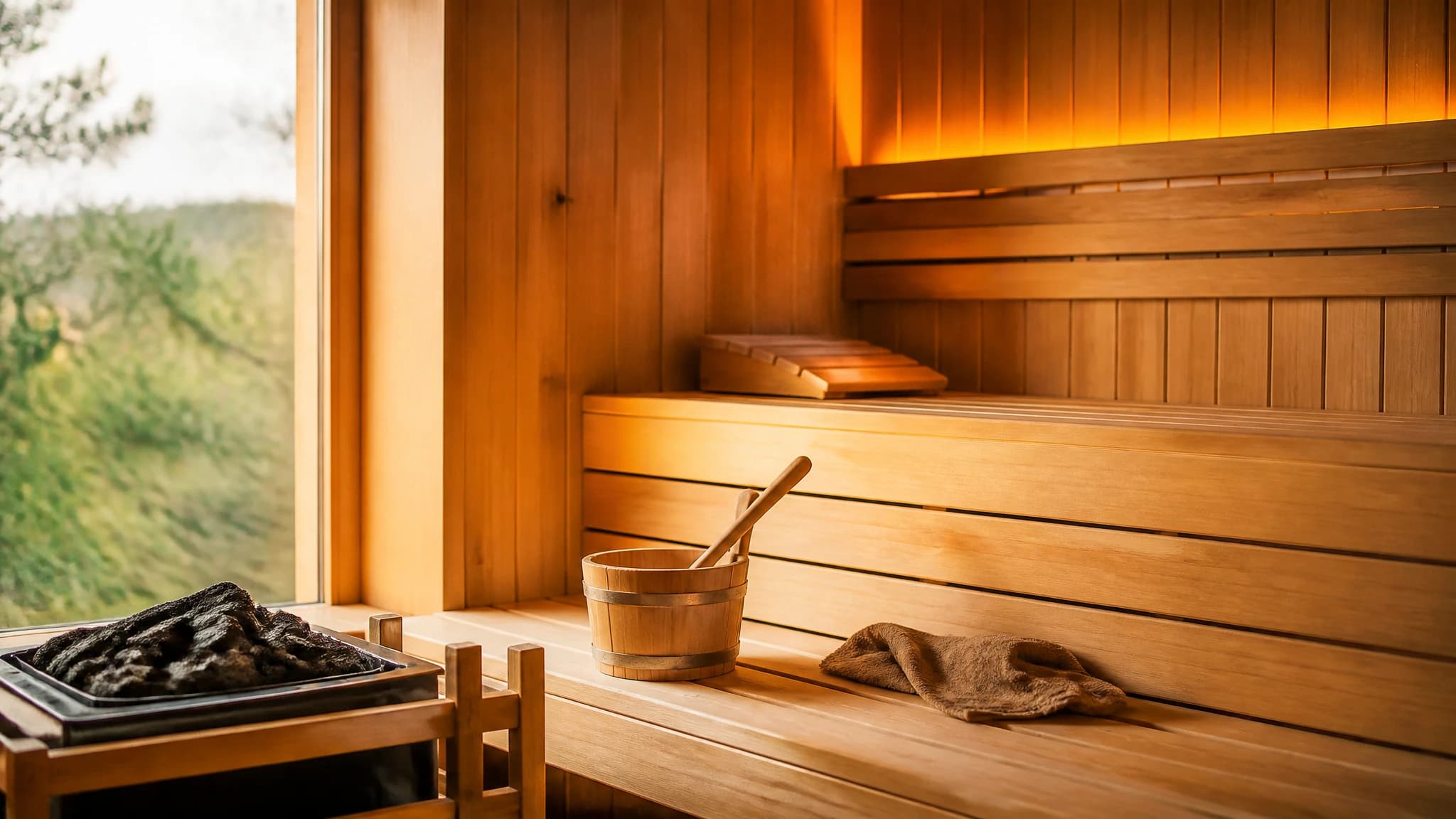
Stepping into a sauna offers a unique environment to relax, recover, and unwind. However, whether you are stepping into a heated cedar room at your local gym or powering up a personal infrared cabin at home, the most common question remains: exactly how long should you sit in a sauna?
The answer is not a simple, universal number. Finding your optimal sauna time depends heavily on your current experience level, the type of sauna you are using, the ambient temperature, and your body's unique physiological response to heat stress. Staying in too long can lead to dehydration and discomfort, while stepping out too early might prevent you from fully enjoying the relaxing experience you came for.
In this comprehensive guide, we will explore practical guidelines for sauna duration, how to safely extend your session length, and how tracking your routines can help you find your personal optimal sauna time.
The Physiology of Heat Exposure
To understand how long to stay in sauna environments, it is helpful to understand what happens to your body when you cross the threshold into a hot room.
When exposed to high temperatures, your body's core temperature begins to rise. In an effort to cool itself down, your cardiovascular system springs into action. Blood vessels dilate (expand) to push blood closer to the surface of your skin, which is why you may look flushed after a few minutes. Concurrently, your heart rate increases to pump this blood efficiently, and your sweat glands activate to release moisture onto your skin, which cools you down as it evaporates.
This process is often referred to as cardiovascular conditioning or passive heating. Because your body is working hard to maintain its internal temperature, a sauna session can feel mildly taxing, similar to a light workout. This is exactly why pacing yourself is crucial. Your cardiovascular system and sweat response need time to adapt to this stress. Forcing your body to endure excessive heat before it has adapted can lead to lightheadedness, nausea, or severe dehydration.
Pacing yourself is crucial for a safe and enjoyable sauna session.
How Long Should You Sit in a Sauna: Guidelines by Experience Level
The most practical way to determine your sauna session length is to categorize yourself by your experience level. Heat tolerance is highly adaptable. Someone who has never used a sauna will have a much lower threshold than someone who practices a daily heat routine.
Beginners: 5 to 10 Minutes
If you are new to sauna use, your primary goal is acclimation, not endurance. Start with 5 to 10 minutes per session. At this stage, your body is not yet efficient at cooling itself down in extreme environments. You may notice that you do not sweat immediately, or that your heart rate spikes faster than expected.
Focus on how you feel rather than watching the clock. Sit on the lower benches where the air is slightly cooler, as heat rises to the top of the room. If you feel dizzy or uncomfortably hot before the 5-minute mark, exit the sauna immediately.
Intermediate Users: 10 to 15 Minutes
Once you have been using a sauna consistently (perhaps two to three times a week for a month), your body's thermoregulatory system becomes more efficient. You will likely begin sweating sooner, and your resting heart rate inside the sauna will remain more stable.
For intermediate users, an optimal sauna time is typically between 10 and 15 minutes. At this stage, you might experiment with sitting on the middle or upper benches to experience a higher temperature. You can also begin practicing multiple shorter rounds (e.g., 10 minutes in the sauna, followed by a 5-minute cooling break, and then another 10 minutes in the heat).
Advanced Users: 15 to 20 Minutes (or slightly more)
Advanced users—those who have maintained a routine for several months or years—often stay in the sauna for 15 to 20 minutes at a time. Some practitioners may comfortably extend their sessions slightly beyond 20 minutes depending on the temperature and their hydration levels.
However, exceeding 20 minutes in a high-heat traditional sauna provides diminishing returns and exponentially increases the risk of dehydration. Even for seasoned veterans, the goal should be relaxation and gentle heat conditioning, not an endurance contest.
How Sauna Type Affects Duration
When asking "how long should you be in a sauna," it is vital to factor in the type of sauna you are using. Different heating technologies create vastly different environments, which directly dictate how long you can safely remain inside.
Traditional Finnish Saunas
Traditional saunas use a wood-burning stove or an electric heater covered with rocks to heat the air in the room. The temperatures in these spaces are typically very high, ranging from 70°C to 90°C (150°F to 195°F). Because of the intense ambient heat, duration should be kept on the shorter side. A standard session is 10 to 15 minutes.
Infrared Saunas
Infrared saunas operate differently. Instead of heating the air around you, they use infrared panels to warm your body directly. Because they do not rely on high ambient air temperatures, infrared saunas are much cooler, usually operating between 45°C and 60°C (110°F to 140°F).
Due to the lower temperature, users can typically tolerate infrared environments for much longer. It is common for infrared sauna sessions to last anywhere from 20 to 45 minutes. If you are using an infrared cabin, the 15-minute cap of a traditional sauna does not strictly apply, though beginners should still start slow.
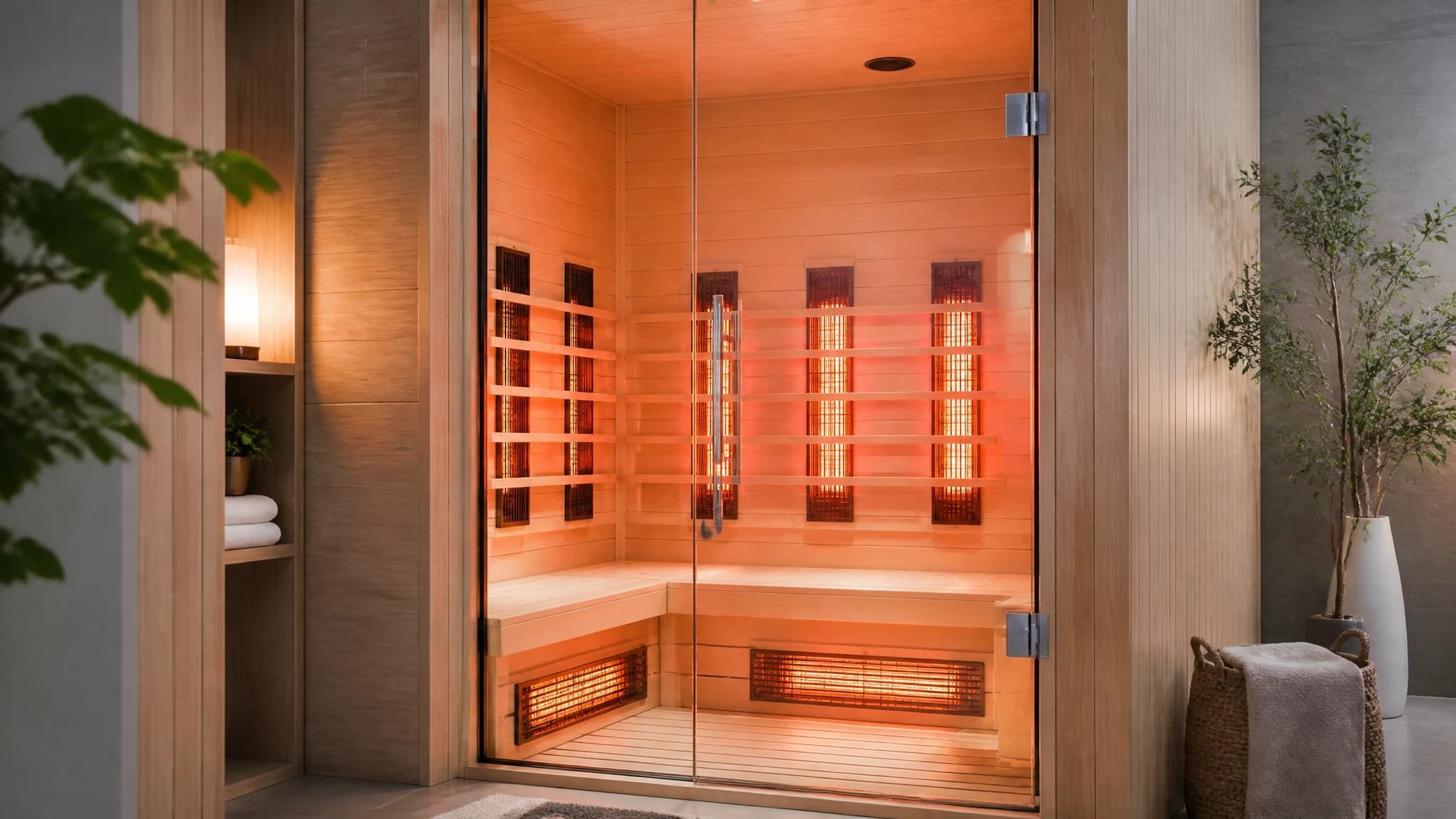
Infrared saunas operate at lower temperatures, often allowing for longer session times.
Steam Rooms
While technically different from a sauna, steam rooms are often part of the same conversation. Steam rooms operate at a lower temperature (around 43°C to 48°C or 110°F to 120°F) but feature 100% humidity. The extreme humidity prevents your sweat from evaporating, which makes the environment feel incredibly hot. Because your body cannot cool itself effectively through evaporation in a steam room, sessions should generally be limited to 10 to 15 minutes.
Key Factors Influencing Your Optimal Sauna Time
Beyond experience and sauna type, several daily variables will influence how long you can comfortably sit in the heat on any given day.
1. Hydration Levels
Your ability to withstand heat is directly tied to your hydration. Sweating is your body's cooling mechanism; if you are dehydrated before entering the sauna, your body cannot produce enough sweat to regulate your core temperature. Always drink plenty of water throughout the day before your session. If you are dehydrated, your optimal sauna time will be drastically reduced.
2. Pre-Sauna Activity
Did you just finish an intense, heavy workout? If your heart rate is already elevated and your muscles are fatigued, your tolerance for the sauna will be lower. Sitting in a sauna post-workout is excellent for relaxation, but you may find that you need to cut your session length by a few minutes compared to a rest day.
3. Temperature and Humidity Configurations
Even within traditional saunas, the exact temperature varies. A session at 75°C will feel very different from a session at 90°C. Furthermore, if you pour water over the hot rocks (creating 'löyly'), the sudden spike in humidity will make the room feel intensely hotter, often prompting users to shorten their session.
Warning Signs: When to Get Out Early
No matter what your planned sauna duration is, you should always listen to your body. There is no benefit to forcing yourself to stay in the heat if you are experiencing distress. You should end your session immediately if you experience any of the following symptoms:
- Dizziness, lightheadedness, or vertigo
- Nausea or an upset stomach
- A sudden, uncomfortable spike in heart rate
- A feeling of cold or chills (a sign of heat exhaustion)
- Muscle cramps
- A cessation of sweating
The sauna should be a restorative practice. If it stops feeling good and starts feeling like a battle for survival, it is time to open the door and step into the cooler air.
Tracking Your Progress with SaunaMetrics
One of the best ways to find your personal optimal sauna time is to track your sessions. Relying on memory can be tricky, especially when you are trying to gauge how your body responds to different temperatures and durations over several months.
This is where a free tool like SaunaMetrics becomes incredibly valuable. SaunaMetrics is designed specifically for sauna users who want to log their routines. By recording your session length, the exact temperature of the room, and brief notes about how you felt, you can start to identify patterns.
For example, you might look at your SaunaMetrics history and realize that 12 minutes at 80°C leaves you feeling refreshed, but pushing to 15 minutes at the same temperature consistently results in a headache. Having actual data allows you to optimize your routine safely and effectively, transforming a random guessing game into a tailored wellness habit.
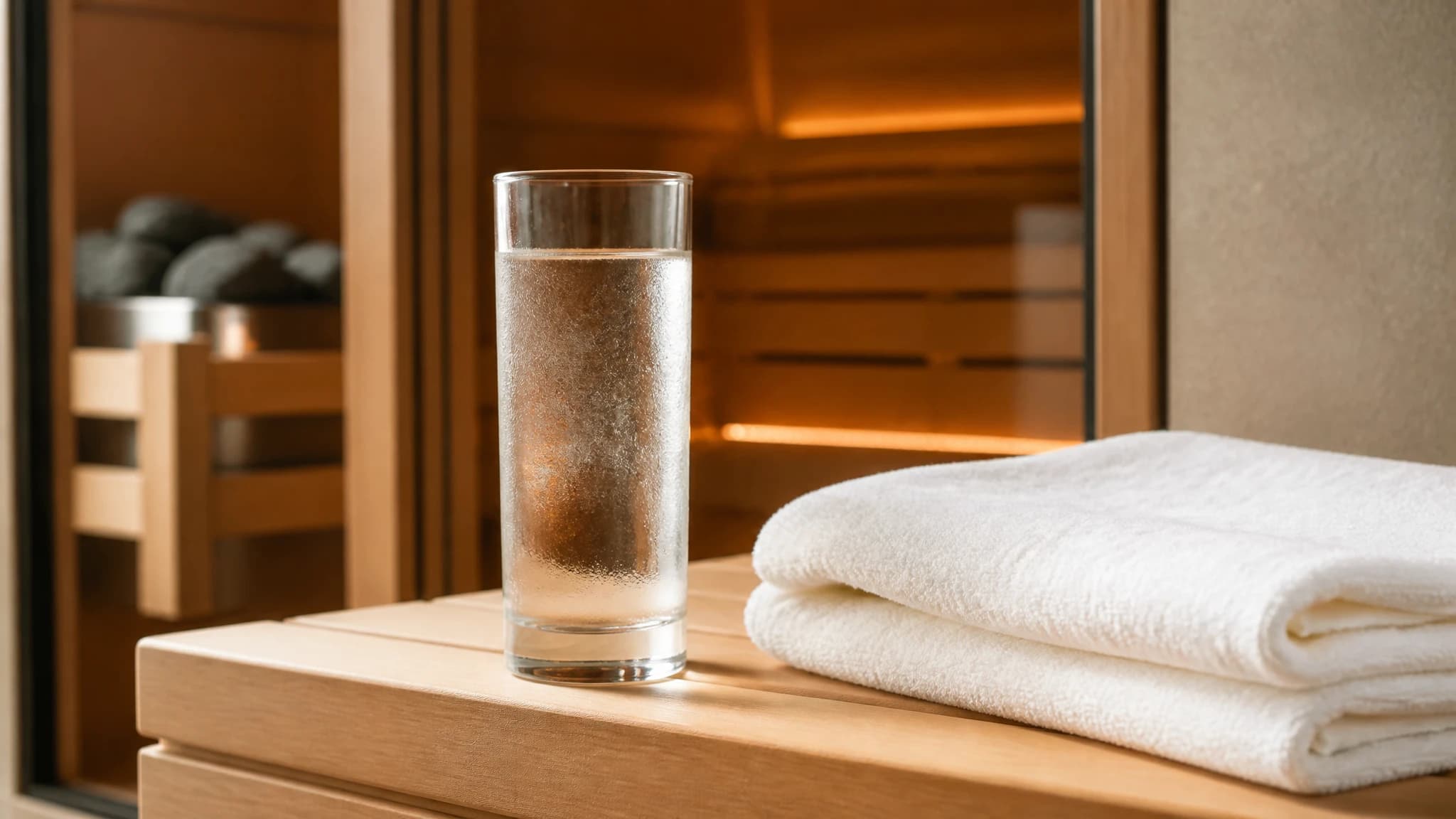
Rehydrating after leaving the sauna is essential for recovery.
Post-Sauna Best Practices: The Cool-Down Phase
Your routine does not end the moment you step out of the hot room. How you handle the cool-down phase is just as important as the sauna duration itself.
When you exit the sauna, your blood vessels are dilated and your heart rate is elevated. Your body needs time to return to homeostasis. Rushing straight into your daily activities can leave you feeling fatigued or dizzy.
First, focus on cooling down. You can step into fresh air, take a cool (or cold) shower, or simply sit in a room temperature area. Cooling down helps constrict your blood vessels and encourages your heart rate to return to its resting pace. If you are doing multiple rounds of sauna, ensure your cool-down break is at least as long as your time in the heat.
Second, prioritize rehydration. You lose a significant amount of water and essential electrolytes through sweat during a sauna session. Drink at least 16 to 24 ounces of water immediately following your session. Incorporating an electrolyte supplement or a mineral-rich beverage can also help replace the sodium and potassium you sweat out.
Building a Sustainable Habit
Ultimately, figuring out how long to stay in sauna environments is a personal journey. The human body is remarkably adaptable, but it requires patience. Start low, go slow, and prioritize consistency over intensity.
A 10-minute session enjoyed three times a week will provide far more sustainable relaxation than a grueling, uncomfortable 25-minute session once a month. Use common sense, stay hydrated, and consider tracking your routine with SaunaMetrics to dial in the perfect duration for your unique body. Over time, you will find a natural rhythm that leaves you feeling rejuvenated, relaxed, and ready to tackle the rest of your day.