
 Veselin Stoyanov13 min read
How to Monitor Sauna Progress: Metrics That Reveal Your Routine Over Time
Learn how to monitor sauna progress with practical metrics like frequency, duration, temperature, consistency, and personal notes.
How to Monitor Sauna Progress: Metrics That Reveal Your Routine Over Time
Monitoring sauna progress is not about finding one perfect temperature or reaching a specific number of sessions. A useful review looks at how your routine changes over time, whether it fits your schedule, and how you feel during and after each session.
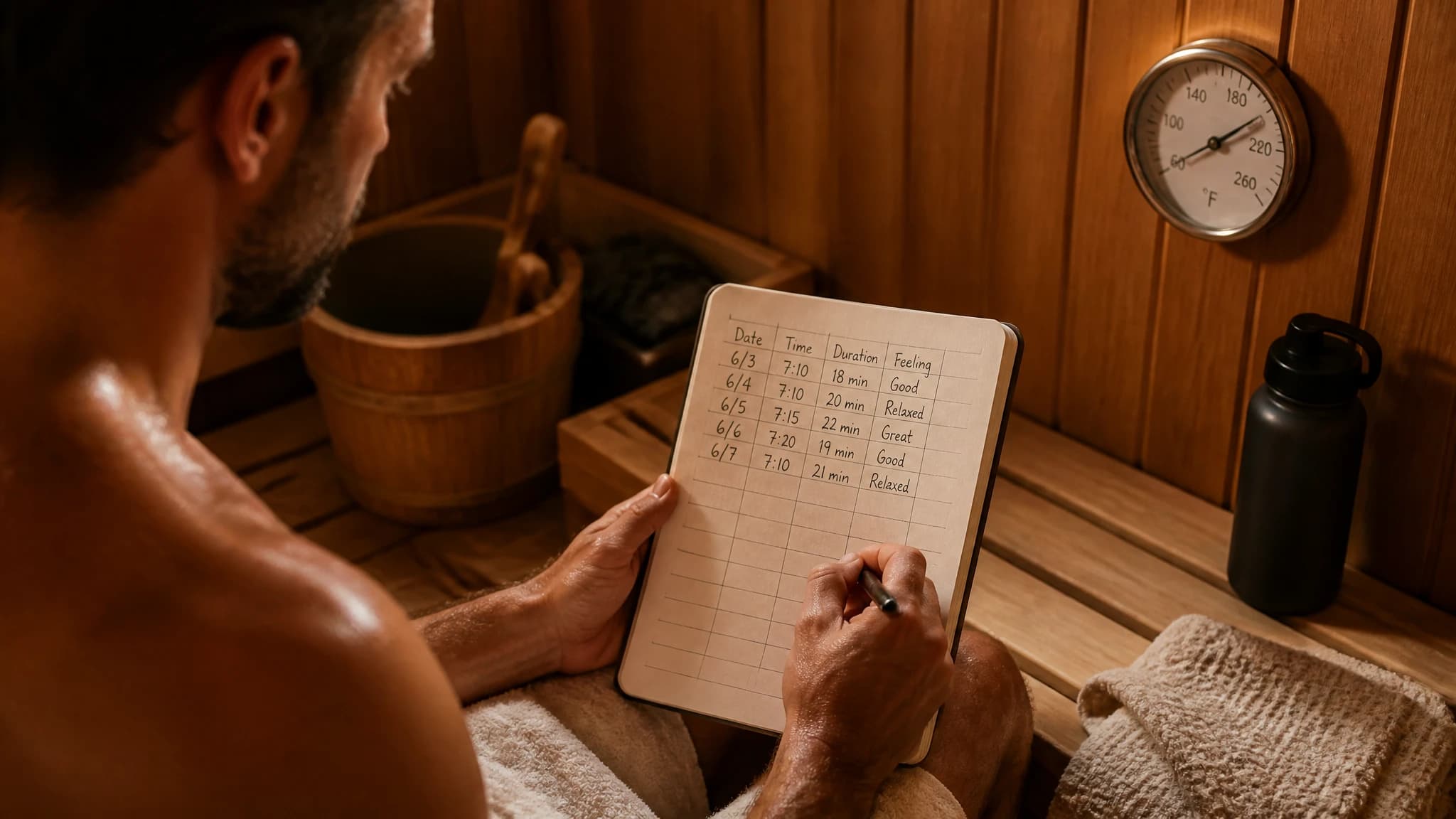
The simplest way to begin is to record a few repeatable details: when you used the sauna, how long you stayed, the approximate temperature, and any notes about the experience. After several weeks, that sauna habit data can help you spot patterns that are difficult to remember from session to session.
This guide compares the most useful sauna metrics, explains how to review sauna history manually, and shows where a simple tracking tool can make sauna trend analysis easier.
What Does It Mean to Monitor Sauna Progress?
To monitor sauna progress means to observe how your sauna routine develops over time. The focus is usually on behavior and experience rather than proving a particular health outcome.
For example, you might want to know:
- Are you using the sauna more consistently?
- Are your sessions becoming longer, shorter, or more predictable?
- Do you usually visit at similar temperatures?
- Which days or times make it easiest to maintain the routine?
- Do your notes reveal recurring reasons for a better or less comfortable session?
These questions are practical because they connect your sauna routine to information you can actually record. They also help keep expectations realistic. A tracking log can show what you did and how you experienced it, but it cannot establish that sauna use caused a specific medical result.
The Most Useful Sauna Metrics to Track
Not every detail needs to be measured. A small set of consistent metrics is often more useful than a complicated log that becomes difficult to maintain.
1. Session frequency
Frequency is the number of sauna sessions completed during a chosen period, such as a week or month. It is one of the clearest ways to see whether sauna use is becoming part of your routine.
Frequency can reveal:
- Whether sessions are occasional or regular
- Which weeks were more active
- Whether travel, work, or schedule changes affect your routine
- How often you actually use the sauna compared with your intention
A monthly total can be helpful, but it should be interpreted in context. A lower number during a busy month does not automatically mean your routine is failing. It may simply show that your current schedule needs a different plan.
2. Session duration
Duration records how long each session lasted. Tracking this metric helps you compare sessions without relying on memory.
You may notice that your sessions tend to fall into a narrow range, or that duration varies depending on the time of day, temperature, or how you felt beforehand. The goal is not necessarily to increase duration. Instead, look for a pattern that feels manageable and repeatable for you.
When reviewing duration, avoid treating a longer session as automatically better. Comfort, context, and responsible decision-making matter more than pursuing a target number.
3. Temperature
Temperature provides context for the rest of your sauna log. Two sessions with the same duration may feel very different if they take place at different temperatures.
Temperature tracking can help you identify:
- Your usual operating range
- Whether your sauna temperature varies by location or setup
- How duration changes at different temperatures
- Whether certain temperatures are associated with more comfortable sessions
If you cannot measure the exact temperature, record an approximate value or a simple range. Consistent estimates are still useful for comparing your own history, as long as you do not treat them as laboratory-grade measurements.
4. Routine consistency
Consistency is broader than frequency. It considers how evenly your sessions are distributed and whether you can maintain a routine across multiple weeks.
For example, four sessions completed in one week and then none for the next three weeks may produce the same monthly total as one session each week. The totals are equal, but the routines are different.
To review consistency, look at:
- The number of weeks with at least one session
- The longest gap between sessions
- Whether sessions happen on planned days
- Whether your routine continues during schedule changes
Consistency is often more actionable than a single monthly total because it shows how your routine behaves in real life.
5. Personal notes
Notes add context that numbers cannot capture. A short note can explain why a session felt different or why you changed your routine.
Useful notes might include:
- Energy level before the session
- Whether you had exercised earlier
- Hydration or meal timing observations
- How comfortable the session felt
- Whether the sauna was unusually crowded or cool
- Why you ended the session earlier than planned
Keep notes brief enough that you will actually write them. One or two sentences are usually sufficient. The value comes from recording observations consistently, not from creating a detailed journal after every session.
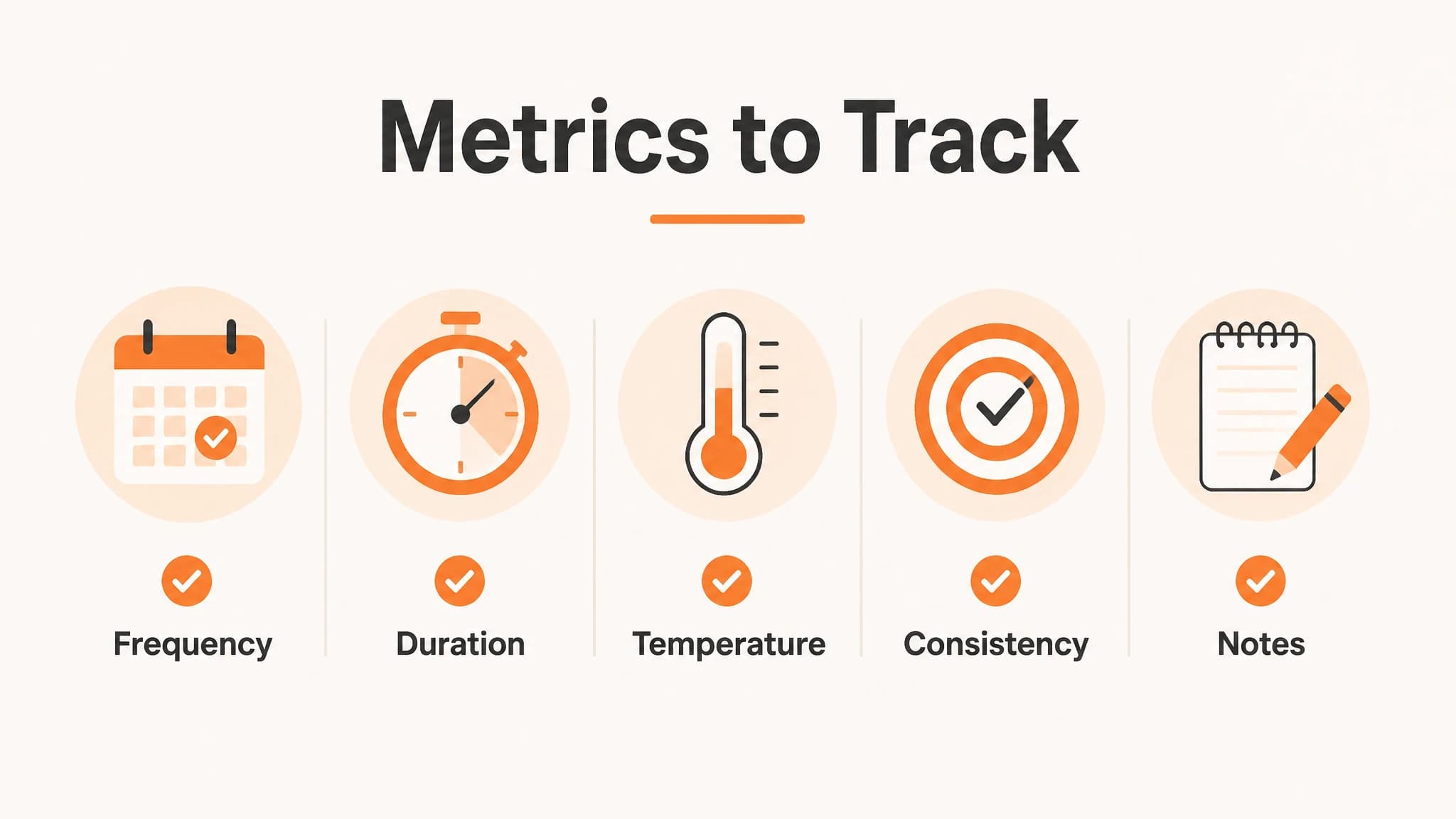
A small set of consistent metrics is usually enough to review a sauna routine.
Comparing Sauna Metrics: Which Ones Matter Most?
The best metric depends on the question you are trying to answer. Use the following comparison as a practical starting point.
| Question | Most useful metric | Helpful supporting detail |
|---|---|---|
| Am I using the sauna regularly? | Session frequency | Weekly gaps and planned days |
| Are my sessions becoming more predictable? | Consistency | Calendar spacing and routine timing |
| What does a typical session look like? | Duration | Temperature and personal notes |
| Do sessions vary by heat level? | Temperature | Duration and comfort notes |
| Why did one session feel different? | Personal notes | Temperature, duration, and context |
| Is my routine realistic? | Frequency and consistency | Missed sessions and schedule changes |
This comparison shows why no single number can describe progress. Frequency may tell you how often you go, while duration and temperature explain what those sessions looked like. Notes help you interpret the numbers without assuming that every change has the same cause.
How to Review Sauna History Manually
You do not need a specialized system to begin. A notebook, spreadsheet, or calendar can work if it makes your sessions easy to record and review.
Step 1: Choose a small set of fields
Start with the basics:
- Date
- Session duration
- Temperature or temperature range
- Optional notes
You can add frequency and consistency later by reviewing the dates. Starting with too many fields may make the process feel like administrative work rather than a useful habit.
Step 2: Record sessions soon after they happen
Logging soon after a session reduces the chance of forgetting important details. If you wait several days, you may remember that you used the sauna but not the exact duration, temperature, or context.
Use the same format each time. For example, record duration in minutes and temperature in the same unit. Consistent formatting makes later comparisons easier.
Step 3: Review the log at a regular interval
A short weekly review can show immediate scheduling patterns. A monthly review can reveal broader changes in frequency, gaps, and typical session characteristics.
During each review, ask:
- How many sessions did I complete?
- What was the typical duration?
- What temperature range appeared most often?
- Were there any long gaps?
- Did my notes show recurring patterns?
- Is there one small adjustment worth testing?
The last question is important. Reviewing data should lead to a practical next step, not an endless search for perfect performance.
Step 4: Compare periods carefully
Compare similar time periods when possible. A typical work month may be more useful to compare with another work month than with a vacation period.
Also, avoid drawing strong conclusions from one or two sessions. A longer history gives you more context and makes it easier to separate a lasting pattern from an unusual day.
Manual Review vs. a Simple Tracking Tool
Manual tracking is often enough for people who use the sauna occasionally or enjoy writing notes. It is flexible, inexpensive, and easy to customize.
However, manual review can become harder when your history grows. You may need to count sessions, calculate average duration, scan for gaps, and compare temperature patterns by hand. This is where a simple sauna tracking tool can help.
Manual tracking works well when:
- You have a small number of sessions
- You prefer a notebook or general spreadsheet
- Your main goal is remembering what you did
- You want complete control over the format
A tracking tool works well when:
- You want to review a longer sauna history
- You regularly compare frequency, duration, and temperature
- You want routine patterns presented in one place
- You prefer logging from a phone or browser
- You want less manual counting and sorting
The advantage of a tool is not that it makes the routine more effective by itself. Its value is organizational. A structured log can make sauna habit analytics easier to review and may help you notice changes that are less obvious in scattered notes.
SaunaMetrics is a free sauna tracking app designed for this kind of routine. You can log sessions, temperature, and notes, then review your routine over time. It is most useful when treated as a simple record of your own behavior rather than a source of unsupported health conclusions.

Logging soon after a session helps preserve useful details.
How to Identify Trends Without Overinterpreting Them
Sauna trend analysis is useful when it stays descriptive. Look for repeated patterns before deciding what they mean.
For example, you might observe that:
- Sessions are more frequent on weekends
- Duration is shorter on days with earlier workouts
- A certain temperature range appears most often
- Long gaps occur during travel or demanding work periods
- Notes are more positive when you arrive with enough time to relax
These observations can guide small routine adjustments. You might test a different day, prepare more time between activities, or choose a session length that fits your schedule better.
Avoid turning a correlation into a conclusion. If longer sessions appear during weeks when you feel better, that does not prove the sessions caused the change. Many factors may be involved, including sleep, exercise, stress, hydration, and ordinary variation.
A good review uses careful language: “I noticed this pattern” is more accurate than “this caused that.”
Using Data Visualization for a Clearer Review
A sauna statistics dashboard or simple chart can make routine patterns easier to understand. You do not need complex analytics. Even a few visual summaries can answer common questions quickly.
Useful views might include:
- Sessions per week or month
- A calendar showing session dates
- Duration over time
- Temperature compared with duration
- Notes grouped by recurring themes
A line chart may help you see changes in duration. A calendar view may make gaps easier to spot. A summary of typical temperature ranges can provide context when you compare different periods.
The purpose of sauna data visualization is clarity, not decoration. Choose views that help you make a decision or ask a better question. If a chart does not change how you understand your routine, it may not be necessary.
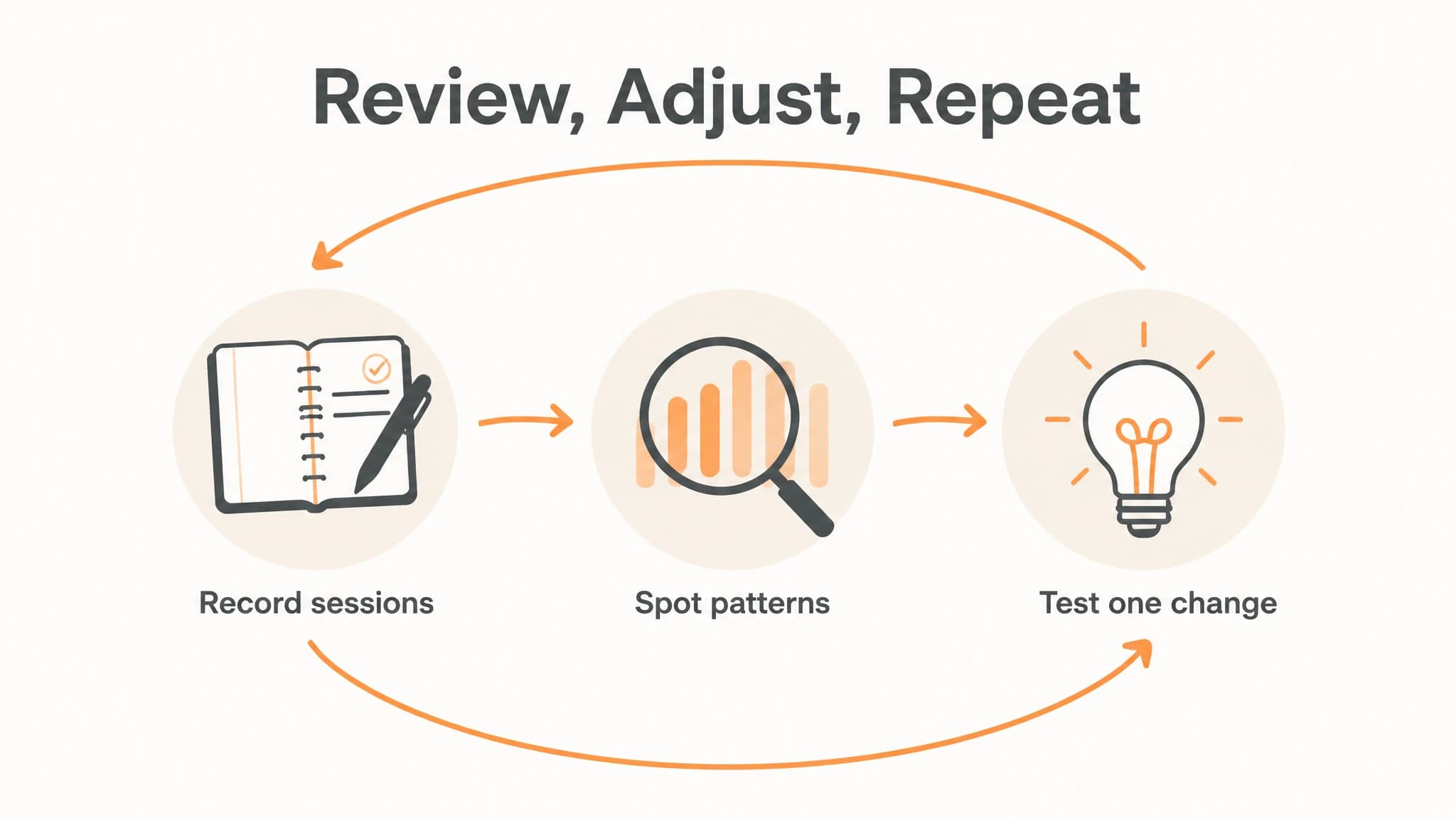
A repeatable review process turns routine data into practical next steps.
How to Adjust Your Routine Responsibly
Once you identify a pattern, make one modest adjustment at a time. Changing frequency, temperature, duration, timing, and recovery habits all at once makes it difficult to know what affected your experience.
A practical adjustment process looks like this:
- Identify one observation from your log.
- Choose one change that fits your schedule.
- Try it for several sessions rather than judging it immediately.
- Record how the sessions went.
- Review the results alongside your original notes.
For example, if your log shows that rushed evening sessions are often cut short, you could test an earlier time or reserve more space around the session. If temperature varies widely, you could record the range more carefully before changing anything.
Stop or modify a session if you feel unwell, unusually uncomfortable, dizzy, faint, or otherwise concerned. People with relevant medical conditions, those who are pregnant, or anyone unsure about sauna safety should seek personalized guidance from a qualified healthcare professional.
A Simple Monthly Sauna Progress Review
At the end of each month, use this checklist:
- Count your total sessions.
- Note the number of weeks with at least one session.
- Calculate or estimate your typical duration.
- Review the most common temperature range.
- Look for the longest gap between sessions.
- Read your notes for repeated themes.
- Choose one routine question to explore next month.
You can keep the review to five or ten minutes. The aim is to build awareness of your routine, not create a demanding performance system.
Conclusion
To monitor sauna progress effectively, focus on information that is consistent, understandable, and relevant to your own routine. Session frequency shows how often you use the sauna. Duration and temperature add detail, while consistency and personal notes help explain how the routine fits into everyday life.
Manual tracking may be enough when your history is small. As your log grows, a simple tool can make it easier to review sauna history, compare periods, and notice patterns without manually sorting every entry.
The most useful approach is the one you can maintain. Record a few meaningful details, review them regularly, and make responsible adjustments based on patterns rather than assumptions.