
 Veselin Stoyanov11 min read
The Pre-Sauna Checklist: What to Do Before You Step In
Learn how to use a sauna safely with a practical pre-sauna checklist covering hydration, showering, jewelry, timing, and routine preparation.
The Pre-Sauna Checklist: What to Do Before You Step In
Learning how to use a sauna is not only about what happens inside the room. The minutes before you enter can shape the quality of your session just as much as the temperature or time you spend heating up.
A good pre-sauna routine helps you arrive prepared, avoid common distractions, and notice how your body responds. It does not need to be complicated. For most healthy adults, the essentials are simple: hydrate, shower, remove heat-sensitive items, decide what you want from the session, and set a reasonable timer.
Use the checklist below as a practical starting point for your own sauna routine. Follow the rules of the sauna facility or manufacturer first, and stop your session if you feel unwell.
Quick pre-sauna checklist
Before stepping into the sauna:
- Drink water and avoid starting dehydrated.
- Avoid alcohol before or during sauna use.
- Take a quick shower and dry yourself thoroughly.
- Remove jewelry, watches, glasses, and other heat-sensitive items.
- Bring a towel and check the room’s rules.
- Choose a realistic session length before you enter.
- Set an intention, such as relaxation, quiet time, or routine-building.
- Start your session timer once you are ready to begin.
- Leave immediately if you feel dizzy, faint, confused, nauseated, or unusually uncomfortable.
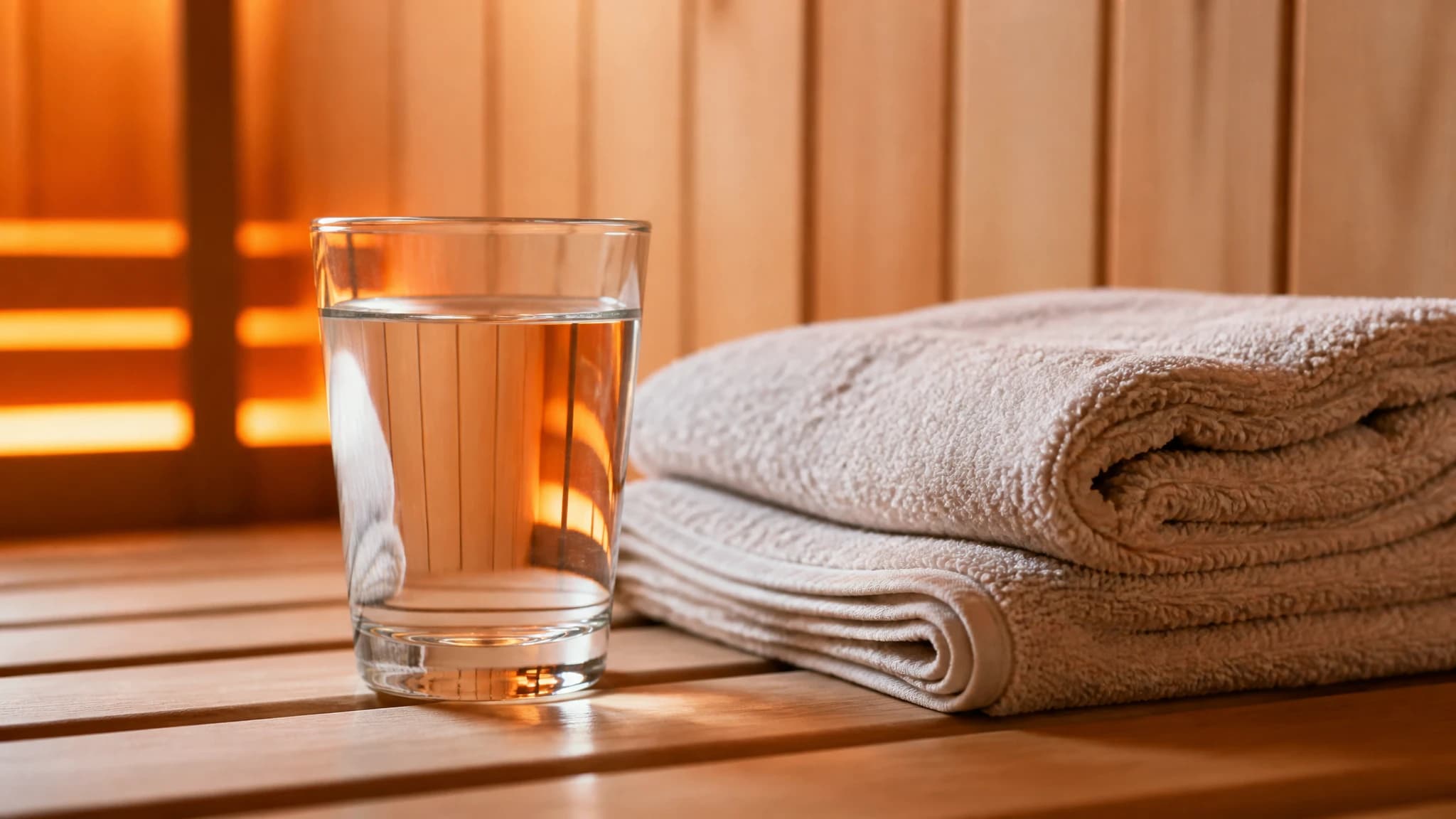
Hydrate before your session and keep water available for afterward.
1. Start with hydration
Hydration is one of the most important parts of sauna safety. Heat exposure increases sweating, and beginning a session already short on fluids can make discomfort more likely. Dehydration can contribute to symptoms such as thirst, headache, fatigue, dizziness, and weakness. (uclahealth.org)
You do not need to force down a large amount of water immediately before entering. Instead, drink normally throughout the day and have water available before and after your session. If you have been exercising, spending time outdoors in hot weather, or sweating heavily, take extra care to replace fluids before using the sauna.
A practical approach is to ask yourself:
- Have I had fluids recently?
- Am I unusually thirsty?
- Have I already been sweating or exercising?
- Do I feel lightheaded or fatigued before I begin?
If you already feel dehydrated or unwell, postpone the session. Sauna use should not be a way to “sweat out” dehydration.
You may also want to bring water for the cooling period afterward. Follow the facility’s rules about bringing bottles into the sauna itself, since some spaces do not allow glass or personal containers inside.
2. Skip alcohol before your session
Alcohol and sauna heat are a poor combination. Alcohol can contribute to dehydration and may increase the risk of problems related to heat exposure, low blood pressure, or impaired judgment. Health organizations and clinical sources commonly recommend avoiding alcohol before or during sauna bathing. (cdc.gov)
This is also a practical safety issue. If alcohol affects your awareness, you may be less likely to notice early warning signs or leave the sauna promptly. Save sauna time for when you are alert, adequately hydrated, and able to pay attention to how you feel.
3. Take a quick shower
Showering before entering is a standard part of many sauna routines. It removes lotions, sweat, and products from your skin, helps keep the sauna clean, and gives you a chance to transition from the rest of your day into the session.
Use lukewarm water rather than making the shower an extreme hot or cold experience. Afterward, dry yourself well before entering. A dry towel is also useful for sitting on and for wiping away excess sweat during the session.
The pre-sauna shower does not need to become a lengthy ritual. A quick rinse is usually enough unless the facility has specific hygiene requirements. If you are using a public sauna, always follow its posted instructions.
4. Remove jewelry and heat-sensitive items
Remove jewelry before entering the sauna. Metal can become hot and may irritate or burn your skin, especially when it rests against the body. Rings, necklaces, bracelets, earrings, watches, and fitness trackers are all worth checking before you step inside.
Also consider removing:
- Glasses, unless you need them for safe movement.
- Contact lenses if heat or dryness makes them uncomfortable.
- Hearing devices or electronics that are not designed for high temperatures.
- Hair accessories or materials that could soften, melt, or become uncomfortably hot.
Do not leave valuables unattended in a public space. Use a locker or another secure storage option according to the facility’s procedures.
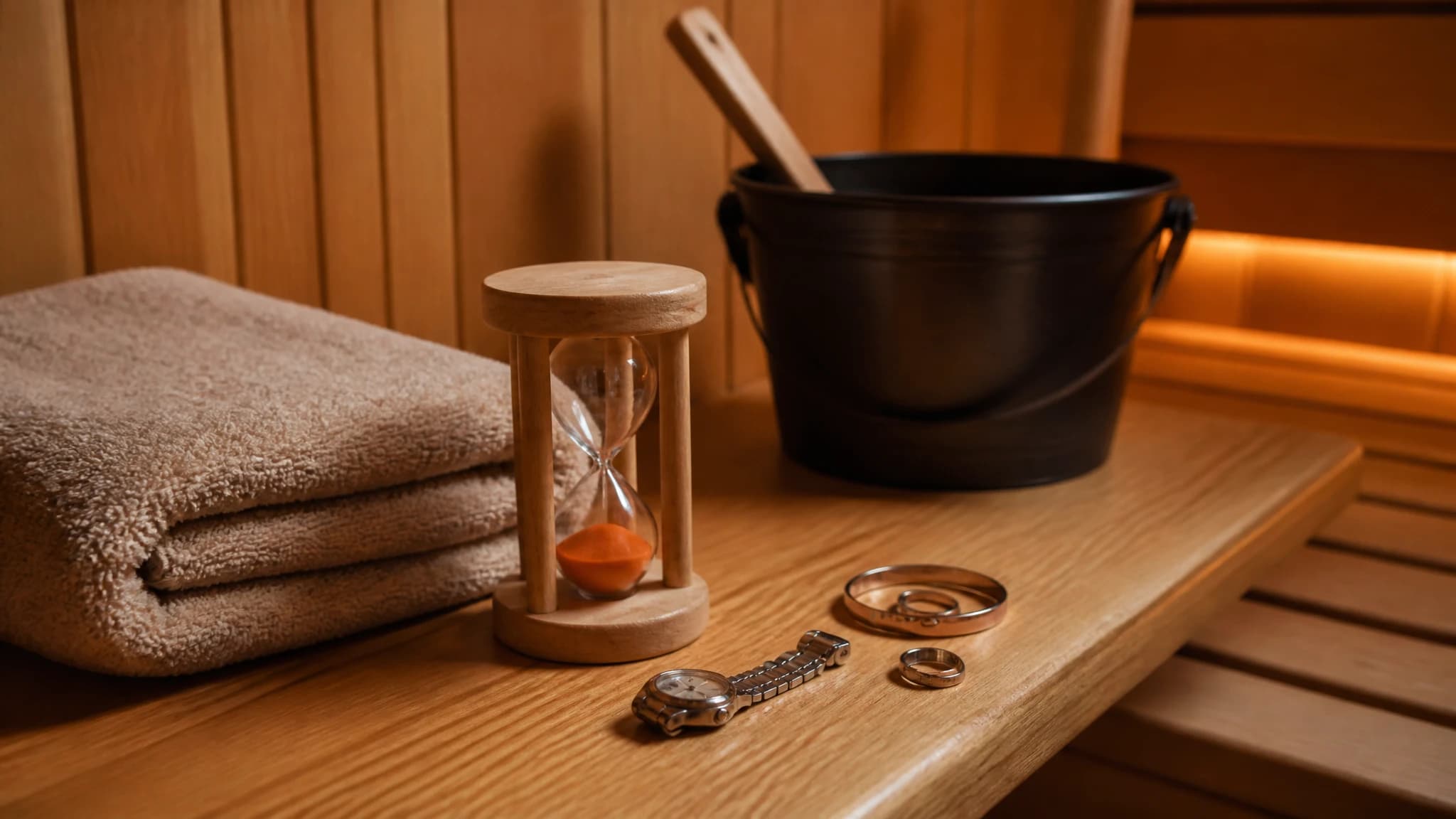
Remove jewelry and prepare only the essentials before entering.
5. Choose comfortable, appropriate clothing
Many saunas are used with a towel, while others require swimwear or specific clothing. Check the rules before entering rather than assuming every sauna has the same expectations.
Avoid clothing with metal parts, heavy synthetic layers, or anything that feels restrictive. If you are using a sauna at home, keep the space clean and make sure towels or fabrics are suitable for the environment and positioned safely away from heaters.
A towel serves several purposes: it provides a clean surface to sit or lie on, helps manage sweat, and can be used as a light cover if you become uncomfortable. Avoid bringing unnecessary items into the room.
6. Check the sauna before you enter
Take a moment to inspect the space. Confirm that the door opens normally, the benches are clear, and the heater or controls appear to be operating as expected. In a public sauna, note the emergency instructions and the location of the exit.
If you are using a home sauna, follow the manufacturer’s operating guidance. Do not place objects on or near the heater unless the instructions specifically allow it. Keep the path to the door clear, and avoid using the sauna if there is a problem with the equipment, ventilation, or controls.
This quick check is easy to skip, but it can prevent avoidable problems and helps you enter with more confidence.
7. Decide how long you will stay
One of the easiest ways to make a sauna routine more consistent is to decide on a time limit before you enter. New users should generally start conservatively and leave while they still feel comfortable rather than trying to tolerate as much heat as possible.
There is no prize for staying the longest. A shorter session that you can repeat comfortably is usually more useful for building a sustainable habit than an overly intense session that leaves you exhausted.
Your planned time can depend on factors such as:
- Your previous sauna experience.
- The sauna’s temperature and humidity.
- Whether you exercised earlier.
- How well-rested and hydrated you are.
- Any personal health considerations.
Use the facility’s guidance and listen to your body. If you feel dizzy, faint, confused, nauseated, short of breath, or unusually weak, leave immediately and cool down gradually. Do not wait for the timer to finish.
8. Set an intention for the session
An intention gives your sauna time a simple purpose. It can help you avoid turning every session into a test of endurance or a distracted scroll through your thoughts.
Your intention might be:
- Ten quiet minutes without your phone.
- A calm transition after work.
- A mindful breathing session.
- Recovery after a normal workout.
- Time to reflect on how your body feels.
- A consistent routine you can track over time.
An intention is not a performance target. You do not need to achieve a particular heart rate, sweat level, or feeling of exhaustion. The goal is simply to enter with a clear expectation and leave if the experience stops feeling appropriate.
9. Start the timer when you are ready
Once you have hydrated, showered, stored your belongings, and chosen your intention, start your session timer. Timing the session can help you avoid guessing, especially when heat makes it difficult to judge how long you have been inside.
For people building a regular sauna routine, recording the session afterward can also make patterns easier to notice. You might track the date, duration, temperature, how you felt before and after, and any notes about sleep, exercise, or recovery.
SaunaMetrics is a free sauna tracking app designed for this kind of routine. You can use it to log sessions, temperature, and notes, then review your sauna habits over time. The value is not in chasing a perfect number; it is in creating a clearer record of what feels sustainable for you.
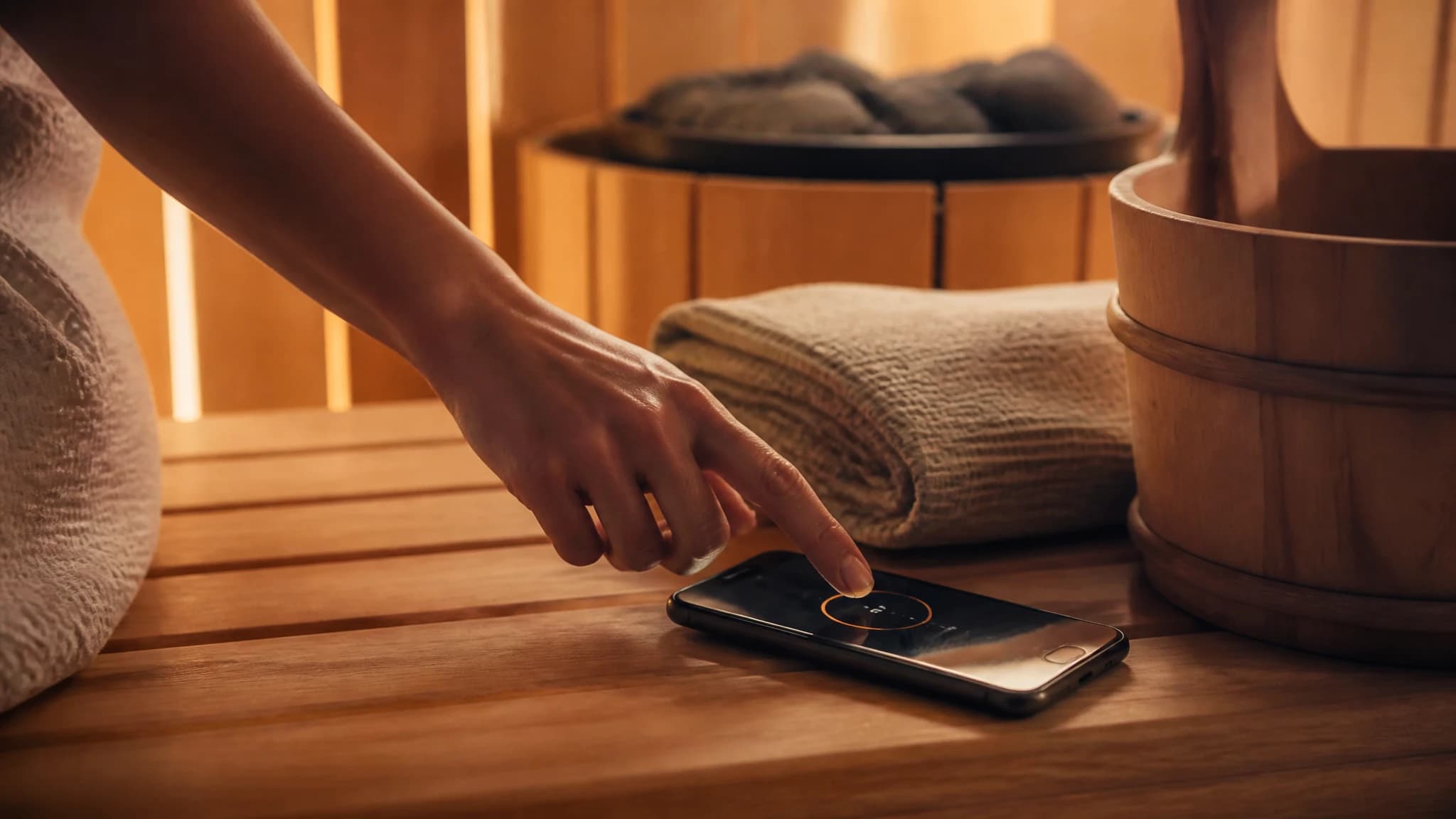
A timer helps you keep each session deliberate and easy to track.
10. Know when to postpone or ask for medical guidance
Sauna use is not appropriate for every situation. If you are pregnant, have heart disease, blood-pressure concerns, a condition affected by heat, or take medication that may affect hydration or blood pressure, ask a qualified healthcare professional whether sauna use is suitable for you. Pregnancy and certain cardiovascular conditions can require particular caution around heat exposure. (cdc.gov)
You should also postpone a session if you have a fever, are ill, feel dehydrated, or have recently consumed alcohol. Do not use the sauna as a substitute for medical care or as a treatment for a serious symptom.
If you become dizzy, faint, confused, nauseated, or unusually short of breath, exit the sauna and seek help if symptoms are severe, persistent, or worsening. When using a sauna in a public facility, tell staff if you need assistance.
A simple pre-sauna routine you can repeat
Here is the checklist in a practical order:
- Drink water and assess how you feel.
- Skip the sauna if you are dehydrated, ill, or have consumed alcohol.
- Shower and dry off.
- Remove jewelry, watches, electronics, and other heat-sensitive items.
- Bring a towel and follow the facility’s rules.
- Check the room and keep the exit accessible.
- Choose a conservative session length.
- Set an intention for the session.
- Start your timer.
- Leave immediately if your body gives you a reason to stop.
This process takes only a few minutes, but it creates a repeatable foundation for safer, more mindful sauna use.
Final thoughts
Knowing how to use a sauna starts before you sit down. Hydration, a quick shower, removing jewelry, choosing a realistic time limit, and setting an intention can make the experience more comfortable and easier to repeat.
The best sauna routine is one that respects your body and fits your real life. Prepare consistently, pay attention to warning signs, and record useful details if tracking helps you understand your habits. When you are ready to step in, start your SaunaMetrics timer and make the session intentional from the first minute.