
 Veselin Stoyanov10 min read
Balancing Sauna Time and Temperature for Optimal Results
Learn how to balance sauna time and temperature for optimal results. Discover the inverse relationship between heat and duration to build a perfect sauna routine.
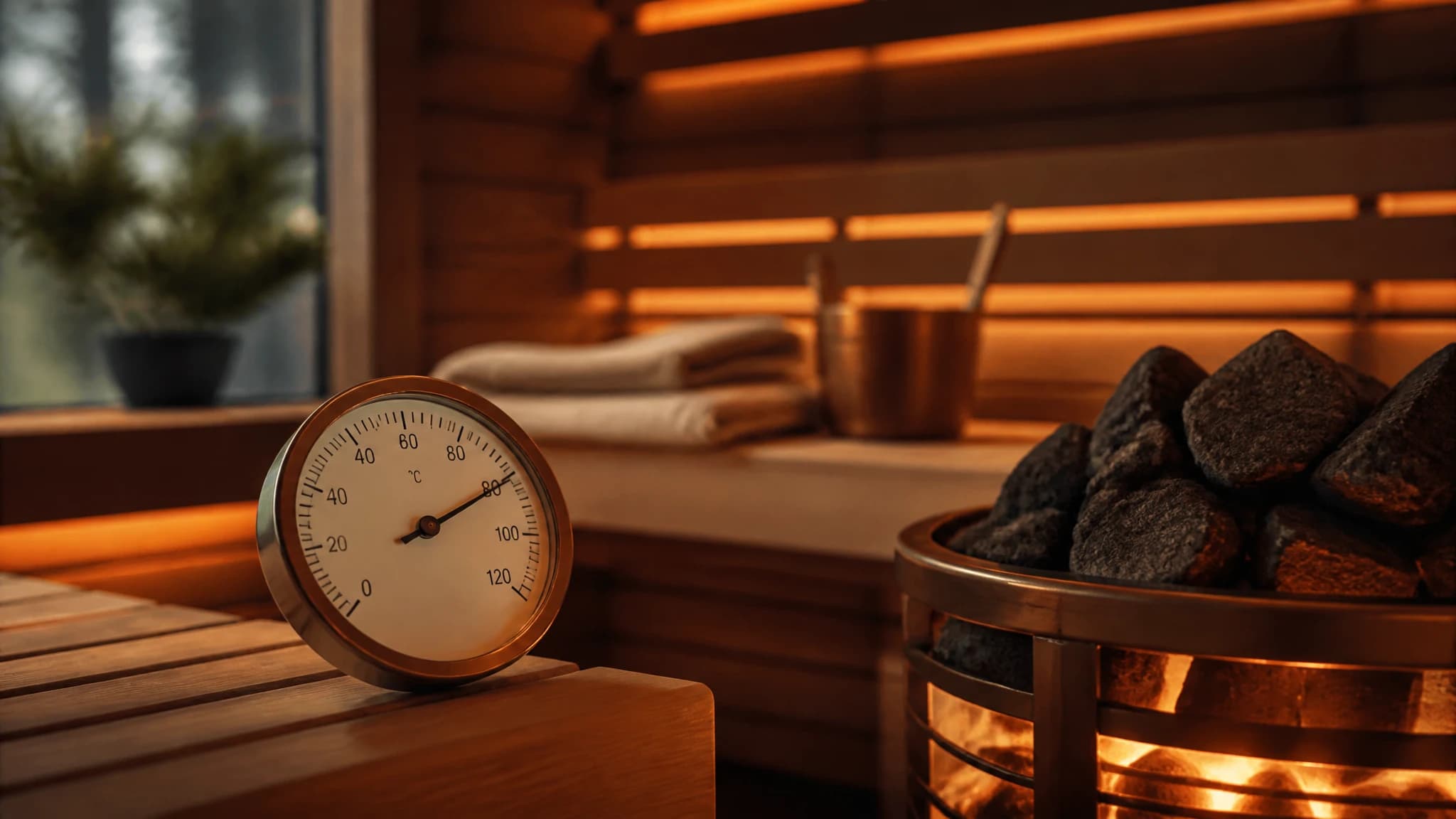
Getting the most out of your sauna practice requires understanding two fundamental variables: sauna time and temperature. Whether you are stepping into a traditional Finnish sauna, an infrared cabin, or a modern dry sauna, finding the right balance between these two factors ensures a comfortable, beneficial, and safe experience.
Many new sauna users ask exactly how hot the room should be and precisely how long they should stay inside. However, there is no single universal rule that applies to every individual. Human physiology, heat tolerance, hydration levels, and even daily stress can alter how your body responds to heat stress on any given day.
Instead of searching for a rigid formula, the key to success is understanding the inverse relationship between sauna temperature and time. By learning this core principle and tracking your sessions, you can pinpoint the exact conditions that work best for your body.
The Inverse Relationship Between Sauna Temperature and Time
The most important concept in sauna practice is the thermal load. Thermal load refers to the total amount of heat stress your body absorbs during a session. This load is determined by multiplying the intensity of the heat (the temperature) by the duration of your exposure (the time).
Because the body has a specific threshold for heat tolerance, sauna time and temperature share an inverse relationship. If you prefer an extremely hot sauna environment, your body will absorb the maximum thermal load much faster, requiring a shorter session. Conversely, if you prefer a milder, more moderate heat, you will need to stay in the sauna longer to achieve the same level of physiological response, such as a gentle increase in heart rate and active sweating.
For example, sitting in a 190-degree Fahrenheit sauna might only require 10 minutes for you to feel completely warmed up and ready to cool down. If the temperature is dropped to 160 degrees Fahrenheit, you might comfortably stay inside for 20 minutes to reach that exact same feeling. Understanding this balance is the first step toward tailoring your sessions to match your wellness goals.
Defining the Ideal Sauna Temperature
To figure out your optimal sauna time, you first need to establish your ideal sauna temperature. This baseline largely depends on the type of sauna you are using, as different heating methods affect the body in different ways.
Traditional Finnish and Dry Saunas
Traditional saunas use a stove with heated rocks to warm the air inside the room. In these environments, the ideal sauna temperature typically ranges from 150 to 195 degrees Fahrenheit (65 to 90 degrees Celsius).
Some experienced practitioners prefer the upper end of this spectrum, pushing toward 190 degrees Fahrenheit for a highly intense, deeply penetrating heat. If you are relatively new to sauna bathing, starting at the lower end—around 150 to 160 degrees Fahrenheit—allows your body to adapt gently to the environment.
It is also vital to consider humidity. In a traditional Finnish sauna, water is often poured over the hot rocks to create steam, known as loyly. This sudden increase in humidity makes the air feel significantly hotter on your skin, even though the thermometer reading has not changed. Higher humidity effectively increases the heat stress, which means you may need to reduce your sauna time to compensate.
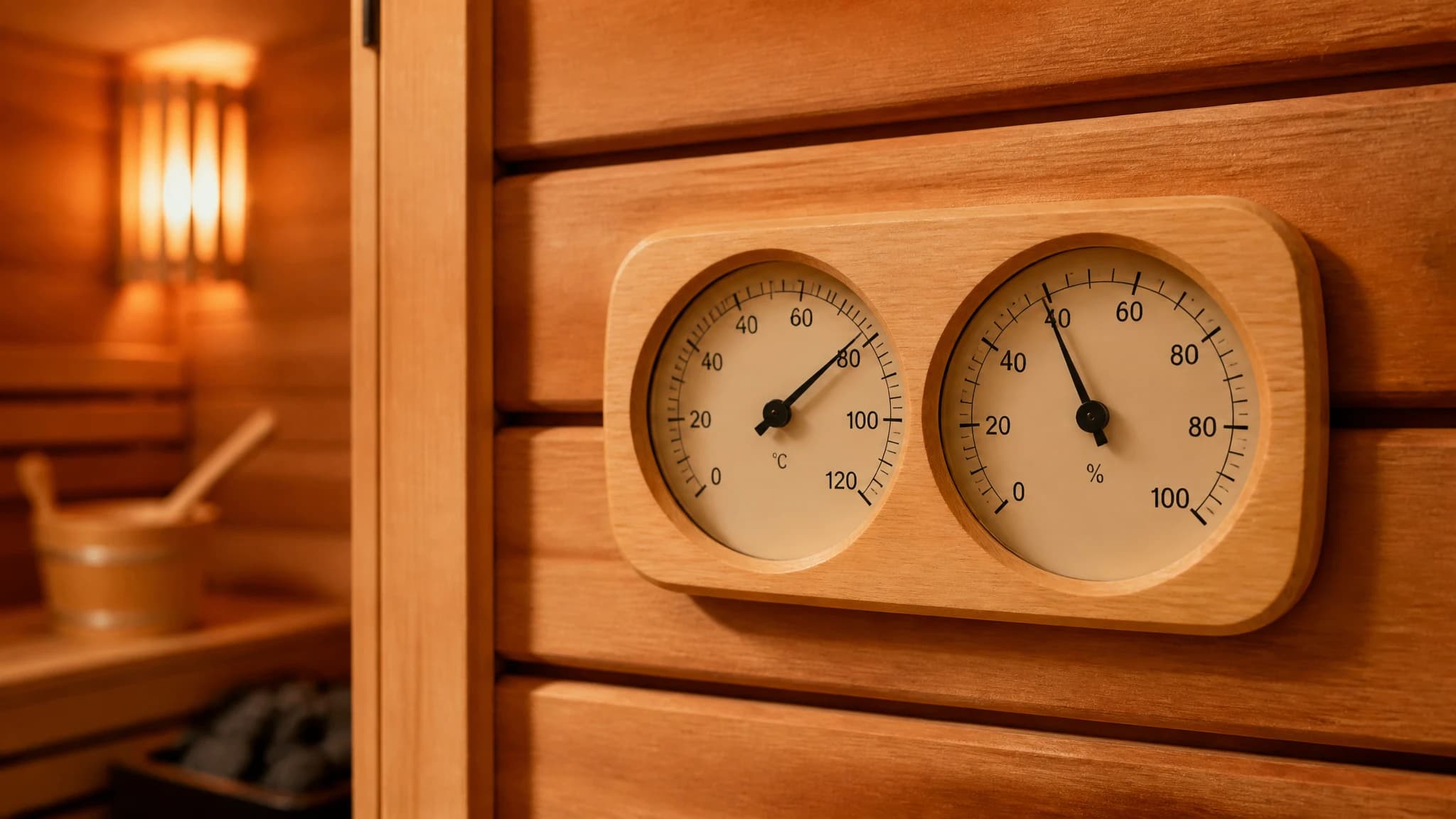
Keeping an eye on the temperature is the first step in managing your thermal load.
Infrared Saunas
Infrared saunas operate differently. Instead of primarily heating the air, infrared panels emit radiant heat that warms your body directly. Because the ambient air is not as hot, the ideal sauna temperature in an infrared cabin is much lower, typically ranging from 110 to 130 degrees Fahrenheit (45 to 55 degrees Celsius).
Because the temperature is milder, infrared saunas naturally encourage a much longer session duration. It takes more time for the body to mount a sweat response in this lower-temperature environment, making it a great option for those who struggle with the intense, stifling heat of a traditional dry sauna.
Determining Your Optimal Sauna Time
Once you have selected a comfortable temperature range, you can begin dialing in your optimal sauna time. Again, this is highly personal and should be based on your experience level and how you feel in the moment.
The Beginner Protocol
If you are just starting out, your body needs time to build heat tolerance. A common beginner protocol is to set a moderate temperature and aim for 5 to 10 minutes per session. During these initial sessions, pay close attention to your heart rate and your breathing. The goal is to feel warm and relaxed, not strained or exhausted. As your body adapts over a few weeks, you can slowly extend the duration.
Intermediate and Advanced Sessions
For regular users who have built a solid tolerance, optimal sauna time usually falls between 15 and 20 minutes per round. This duration is generally considered sufficient to promote a deep sweat, encourage relaxation, and provide the traditional benefits associated with sauna bathing.
Some advanced users may push their sessions past 20 minutes, particularly if the temperature is kept moderate. However, staying in the sauna longer is not always better. Pushing past your point of comfort can lead to dehydration, excessive fatigue, and diminished returns. The objective is consistency, not setting an endurance record.
How to Find Your Personal Sweet Spot
Finding your perfect combination of sauna time and temperature requires a bit of experimentation. The best way to discover your sweet spot is by tracking your sessions accurately.
Using a free tracking tool like SaunaMetrics allows you to log your temperature and time for each session. By consistently recording these data points, along with quick notes about how you felt, you transition from guessing to knowing exactly what works for your body.
For instance, you might notice that a 15-minute session at 170 degrees Fahrenheit leaves you feeling energized, while 20 minutes at the same temperature makes you feel overly fatigued. By reviewing your SaunaMetrics history, you can identify patterns. You might discover that after a heavy workout, you prefer a lower temperature for a longer time, whereas on a rest day, you prefer a short, intense heat blast.
Tracking transforms your sauna practice into a tailored wellness routine. It provides the insight needed to make micro-adjustments, ensuring that every session is optimized for your current state of being.
Building a Data-Driven Sauna Routine
Establishing a routine requires more than just showing up; it requires intentionality. When you step into the sauna, note the temperature on the thermometer. Set a timer, but allow yourself the flexibility to leave early if your body tells you it has had enough.
When the session is over, take 30 seconds to log the data. Over a month, you will accumulate a valuable dataset. You will begin to see how changes in temperature affect your preferred duration, proving the inverse relationship through your own personal experience.
This data-driven approach is particularly useful if you use different saunas. A gym sauna might run at a consistent 160 degrees, while your home barrel sauna might peak at 185 degrees. Knowing your preferred thermal load allows you to confidently adjust your time based on the specific environment you are entering.
Advanced Sauna Protocols: Rounds and Resting
When discussing optimal sauna time, it is important to distinguish between a single continuous session and a multi-round protocol. In traditional sauna cultures, the practice is rarely a single sit.
Instead, users typically engage in a cycle of heating, cooling, and resting. A standard protocol might involve 10 to 15 minutes of heat, followed by a cool shower, cold plunge, or simply sitting in fresh air for an equal amount of time. This cycle is often repeated two to three times.

The resting and cooling phase is just as important as the time spent inside the sauna.
When you break your sauna use into rounds, your total sauna time might reach 30 to 45 minutes, but your continuous exposure to the heat never exceeds your comfortable threshold. This start-and-stop method allows you to enjoy a longer overall practice while effectively managing your thermal load.
When tracking multi-round sessions, you can log each round individually or record the total time spent in the heat. Noting the resting and cooling periods can also provide insight into how well your body recovers between rounds.
Safety First: Listening to Your Body
While finding the optimal sauna time and temperature is a rewarding pursuit, safety must always remain the priority. No matter what your tracking app says or what protocol you are following, your body's signals override everything else.
Heat stress forces your cardiovascular system to work harder. If you ever experience dizziness, nausea, a rapid and uncomfortable heartbeat, or extreme fatigue, it is time to step out of the sauna immediately.
Hydration plays a massive role in how well you tolerate heat. Entering the sauna dehydrated will drastically reduce your optimal time and make a normal temperature feel unbearably hot. Always drink plenty of water before, during, and after your session to replenish the fluids lost through sweat.
Never force yourself to stay in the sauna just to hit a specific time goal. The inverse relationship between sauna time and temperature means that some days, your body will naturally require less time to achieve the same result. Respect those fluctuations.
Conclusion
Balancing sauna time and temperature is both a science and an art. By understanding the inverse relationship between the two, you can safely navigate any sauna environment. High temperatures require shorter sessions, while lower temperatures allow for longer, slower heat absorption.
Finding your ideal setup takes time and observation. By logging your sessions with a free tool like SaunaMetrics, you can take the guesswork out of your routine. Track your data, listen to your body, stay hydrated, and enjoy the ongoing process of refining your optimal sauna experience.