
 Veselin Stoyanov11 min read
Setting Sauna Goals: How to Develop a Consistent Sauna Habit
Learn how to set realistic sauna goals, decide how often to use a sauna, and build a sustainable routine with simple tracking habits.

A sauna habit does not need to be extreme to be worthwhile. For most people, the more useful goal is not “use the sauna as often as possible,” but “create a routine I can repeat safely and realistically.”
That shift matters because consistency is built through repeatable behavior. A sauna routine that fits your schedule, access, energy levels, and recovery needs is more likely to last than an ambitious plan that becomes difficult after the first week.
In this guide, you’ll learn how to set practical sauna goals, decide how often to use a sauna, and use a simple sauna log to understand your routine over time. SaunaMetrics can help you record sessions, temperatures, notes, and weekly patterns, but the core habit-building process works with any reliable tracking method.
Start with a goal you can repeat
The first step is to define what “success” means for your sauna routine. A vague goal such as “sauna more” is difficult to act on and even harder to evaluate. A specific goal gives you a clear next step.
Try completing this sentence:
I will use the sauna ___ times per week, usually on ___, for the next ___ weeks.
For example:
- I will use the sauna once per week after my Saturday workout.
- I will schedule two sessions per week on Tuesday and Friday evenings.
- I will complete one session per week for four weeks before deciding whether to increase frequency.
This is a version of a specific, measurable, achievable, relevant, and time-bound goal. The exact number matters less than whether you can follow it without regularly rearranging your life.
A good starting goal should feel slightly challenging but still realistic. If you currently use the sauna inconsistently, beginning with one planned session per week may be more useful than immediately aiming for five.
How often should you use a sauna?
There is no universal schedule that is right for everyone. Research has examined a range of sauna habits, but studies do not establish one ideal frequency for every person, sauna type, or health goal. A systematic review also noted that more research is needed to determine optimal frequency and duration for different situations. (pmc.ncbi.nlm.nih.gov)
For habit-building purposes, consider these starting ranges:
- New or occasional users: Start with one session per week.
- People with an established routine: Try two or three sessions per week if that fits comfortably.
- Highly experienced users: A more frequent schedule may be part of their normal routine, but frequency should still be balanced with hydration, recovery, access, and personal tolerance.
Some observational research has reported associations between more frequent sauna bathing and lower cardiovascular mortality risk, but those findings do not prove that increasing sauna frequency will produce the same result for every individual. They should not be treated as a prescription or a reason to ignore symptoms. (pubmed.ncbi.nlm.nih.gov)
The practical answer to “how often should you use a sauna?” is: begin with a frequency you can sustain, monitor how you feel, and adjust gradually. Your routine should support your broader wellness habits rather than compete with sleep, exercise, nutrition, or recovery.
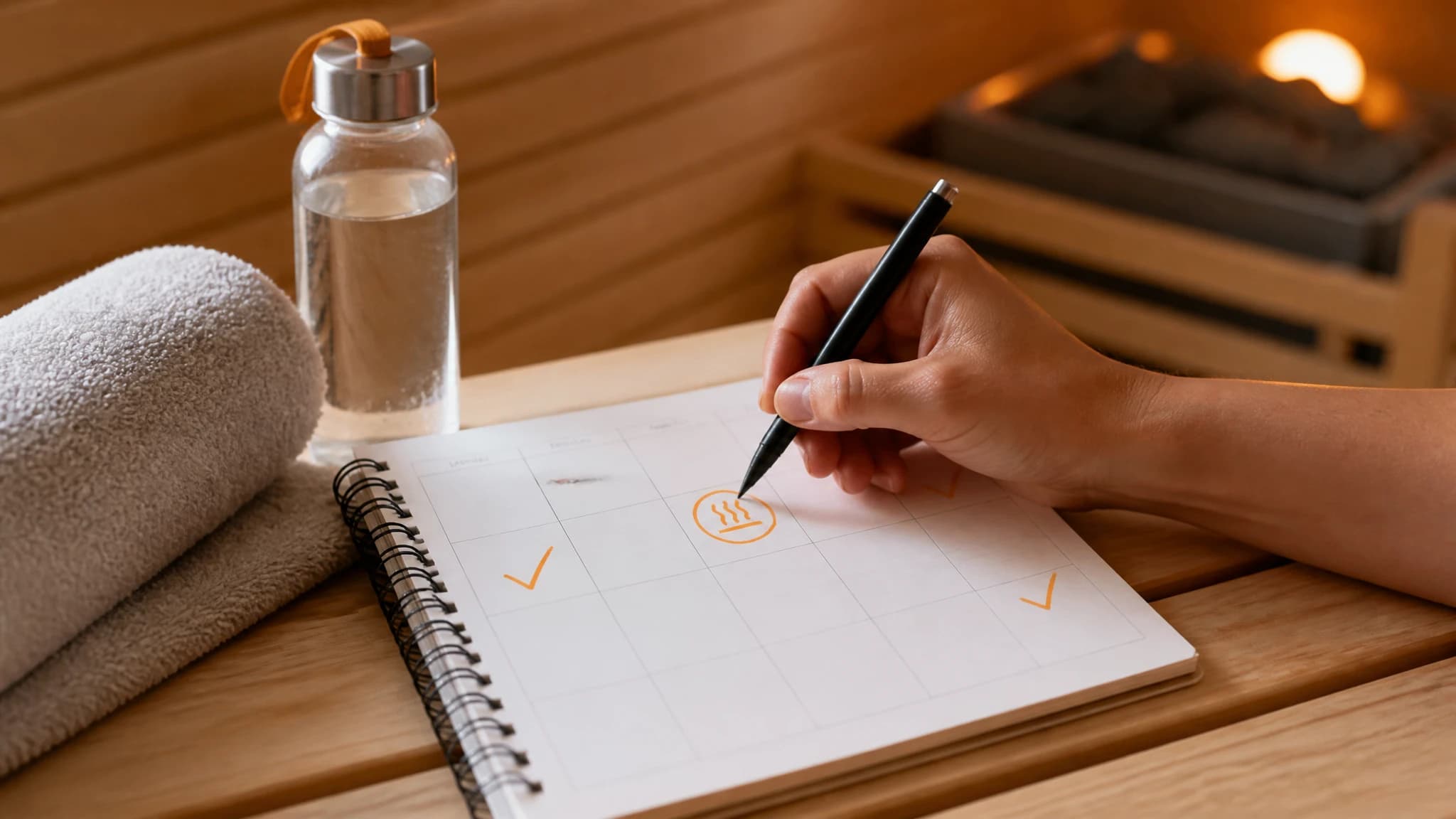
A specific cue and scheduled time can make a sauna habit easier to repeat.
Use habit psychology to make sauna easier
A consistent sauna routine depends less on motivation than many people expect. Motivation changes from day to day. A well-designed habit reduces the number of decisions you need to make.
1. Choose a reliable cue
A cue is something that reminds you to begin. Useful cues include:
- A particular day of the week
- The end of a workout
- Finishing work on a regular evening
- A recurring calendar event
- Packing your sauna items the night before
The best cue is connected to something that already happens. For example, “sauna after Tuesday strength training” is usually easier to remember than “sauna sometime this week.”
2. Make the routine visible
Put your planned sessions on your calendar. If you use a facility, check opening hours and travel time before choosing your goal. If you use a home sauna, decide when you will prepare it and how long the full routine takes, including cooling down and cleaning up.
Visibility reduces friction. It also helps you distinguish between a missed session and an unplanned goal.
3. Prepare the environment
Keep the items you normally use together, such as a towel, water bottle, clean clothing, and any personal sauna accessories. Preparation does not need to be elaborate. The aim is simply to remove small obstacles that might cause you to postpone the session.
4. Use a minimum version of the habit
Have a fallback plan for busy days. Your minimum version might be attending the sauna without adding extra rounds, choosing a shorter session, or simply keeping the appointment and reassessing once you arrive.
A minimum version helps protect the identity of the habit: “I am someone who follows my sauna routine,” even when the session is not perfect.
Build a sauna routine around your real week
A sauna goal is more likely to last when it is designed around your actual schedule instead of an idealized one.
Start by looking at your week and identifying the sessions that are most convenient. Ask:
- When do I reliably have access to a sauna?
- Which days already include exercise or relaxation time?
- How much travel and preparation time is required?
- Which sessions would interfere with sleep or other priorities?
- What will I do if I miss my planned day?
Then choose a primary schedule and a backup option. For example:
- Primary session: Wednesday evening
- Backup session: Saturday morning
This approach prevents one missed day from turning into a missed week. It also makes the goal more flexible without making it vague.
If you are building a new routine, use a short trial period. Commit to a schedule for three or four weeks, then review your notes. You may discover that a different day, time, or frequency is easier to maintain.
Track the details that help you learn
Tracking is most useful when it supports decisions. You do not need to record every possible detail. Start with a few consistent data points:
- Date of the session
- Number of sessions per week
- Approximate temperature, if known
- Session duration or number of rounds
- How you felt before and after
- Notes about sleep, exercise, hydration, or soreness
A sauna log can reveal patterns that are difficult to remember. You may notice that evening sessions are relaxing but make it harder to maintain your bedtime, or that sauna feels better on recovery days than immediately after intense training.
SaunaMetrics is designed for this kind of routine tracking. You can log sessions, temperature, and notes, then review your sauna activity over time. The purpose is not to turn every session into a performance test. It is to create a clearer record so your next goal is based on experience rather than guesswork.
Focus on consistency, not perfection
A common mistake is treating a missed sauna session as evidence that the routine has failed. In reality, occasional interruptions are normal. The more useful question is: what made the session difficult, and what adjustment would make the next one easier?
Use the following review after a missed session:
- What happened? Was the issue time, access, fatigue, travel, or forgetfulness?
- Was the goal too ambitious? Consider reducing frequency or choosing a more convenient day.
- Can I use a backup session? Move the session rather than abandoning the week.
- What can I prepare in advance? Add a calendar reminder or pack your items earlier.
Avoid trying to compensate with an unnecessarily demanding session. One missed day does not need to be “made up” by pushing beyond what feels comfortable.
A useful measure of progress is not a perfect streak. It is whether your behavior is becoming more predictable over several weeks.
Review your sauna metrics every few weeks
A weekly goal tells you what you intend to do. Your sauna log tells you what actually happened. Reviewing both can help you refine the routine.
Every three or four weeks, look for:
- Your average sessions per week
- The days and times you complete most often
- Sessions you regularly skip
- Temperatures or durations associated with discomfort
- Notes about sleep, relaxation, energy, or recovery
- Whether the routine still fits your current schedule
Keep the review simple. You are looking for practical adjustments, not trying to prove a health outcome from a small personal dataset.
For example, your review might show that you planned three sessions per week but completed one consistently. That is useful information. A better goal may be one guaranteed session plus an optional second session, rather than continuing to measure yourself against an unrealistic target.

Tracking a few consistent details can reveal patterns in your sauna routine.
Stay within your personal safety limits
A sauna routine should feel manageable, not punishing. Leave the sauna if you feel dizzy, weak, short of breath, or unwell. Cleveland Clinic also advises stopping when you experience concerning symptoms and seeking medical help when appropriate. (health.clevelandclinic.org)
Hydration and recovery are important practical considerations, especially if you combine sauna with exercise or use it in hot conditions. People who are pregnant, have cardiovascular conditions, take medications that affect blood pressure or fluid balance, or have other health concerns should ask a qualified healthcare professional for individualized guidance before establishing a frequent routine.
Do not use research about sauna frequency as a substitute for medical advice. The goal of tracking is to understand your own routine and make it more consistent—not to encourage you to ignore warning signs or increase exposure automatically.
A simple four-week sauna goal plan
If you want a practical starting point, use this four-week framework:
Week 1: Make the habit easy
Choose one session, one cue, and one backup day. Record the session without trying to optimize every variable.
Week 2: Repeat the same pattern
Keep the day and time similar if possible. Note how preparation, access, and recovery affect your experience.
Week 3: Test a small adjustment
If the routine feels comfortable, add an optional second session or refine the timing. If it feels difficult, reduce friction instead of increasing effort.
Week 4: Review and reset
Use your sauna log to compare your goal with your actual routine. Keep, reduce, or increase the target based on what you can realistically repeat.
This process turns sauna use into an experiment in behavior design. You are learning which cues, schedules, and environments help you follow through.
Make your next sauna goal specific
The best sauna routine is one you can maintain safely over time. Start with a modest frequency, connect sessions to reliable cues, prepare for common obstacles, and track enough information to learn from your experience.
If you want accountability without making the process complicated, a sauna tracking app such as SaunaMetrics can provide a central place for your session history, notes, and routine metrics. Use the record to notice patterns, set realistic weekly goals, and make small adjustments that help the habit fit your life.