
 Veselin Stoyanov9 min read
Heat Exposure Tracking: How to Log Sauna Sessions Consistently
Learn how to track heat exposure sessions with a simple sauna log for temperature, duration, rounds, hydration, breaks, and personal notes.

Heat Exposure Tracking: How to Log Sauna Sessions Consistently
Heat exposure tracking does not need to be complicated. A useful sauna log can be as simple as recording the date, temperature, time spent inside, number of rounds, breaks, hydration, and how you felt before and after the session.
The goal is not to create a medical record or compete with a target number. It is to make your routine visible enough that you can notice patterns, repeat what works, and recognize when a session did not fit your current energy, schedule, or recovery needs.
What Is Heat Exposure Tracking?
Heat exposure tracking is the practice of recording the main details of sauna sessions over time. Instead of relying on memory, you create a consistent record of what happened during each visit.
A basic log might show:
- When you used the sauna
- Approximate temperature
- Duration of each round
- Number of rounds
- Length of breaks
- Fluids consumed before or after
- Subjective notes about comfort, energy, and recovery
This information is most useful when it helps you understand your own routine. Sauna conditions vary, and your response can change with sleep, stress, exercise, meals, room temperature, and hydration. Tracking gives those factors somewhere to go.
Why Consistency Matters More Than Perfect Data
The best tracking system is one you will actually use. A detailed log completed once a month is less useful than a short log completed after most sessions.
Try to make your routine easy to repeat:
- Record the session soon after you finish.
- Use the same units and format each time.
- Estimate when exact measurements are unavailable.
- Add one or two sentences about how the session felt.
- Review your entries periodically instead of judging every individual session.
You do not need to force every session into the same duration or temperature. Consistency means recording the routine honestly, including shorter sessions, skipped rounds, and days when you chose to stop early.
For a broader look at the role of tracking in building a routine, read this guide to using a sauna tracking app.
A Simple Heat Exposure Tracking Framework
Use the following fields as a starting point. You can add more detail later if it helps answer a specific question.
1. Date and time
Record the date and, if useful, the approximate time of day. Timing can help you notice whether sauna sessions fit better before or after exercise, in the morning or evening, or on particular days of the week.
You can also note the day’s general context, such as a workday, rest day, travel day, or training day.
2. Sauna temperature
Record the approximate temperature shown by the sauna thermometer. If the sauna has meaningful differences between areas, note where you sat. Humidity, ventilation, sauna type, and position can affect how the session feels, so temperature is useful context rather than a complete description of the experience.
Avoid treating one temperature as universally ideal. The purpose of this field is to compare your sessions more consistently with one another.
3. Duration of each round
If you use multiple rounds, record each round separately when possible. For example:
- Round 1: 12 minutes
- Round 2: 10 minutes
- Round 3: 8 minutes
Separate round lengths are more informative than recording only a total time. They show whether your session became shorter, longer, or less comfortable as it progressed.
4. Number of rounds
Record how many times you entered the sauna. A single continuous session and three shorter rounds may have the same total time but feel very different.
If you stop earlier than planned, record the actual number of rounds. Honest data is more useful than data that makes every session look consistent.
5. Break duration and recovery setting
Note how long you rested between rounds and, if relevant, what you did during the break. You might sit indoors, walk briefly, shower, or move to a cooler area.
The exact break activity is less important than recording enough context to explain differences between sessions. A longer break may make the next round feel easier, while a rushed transition may make the session feel more demanding.
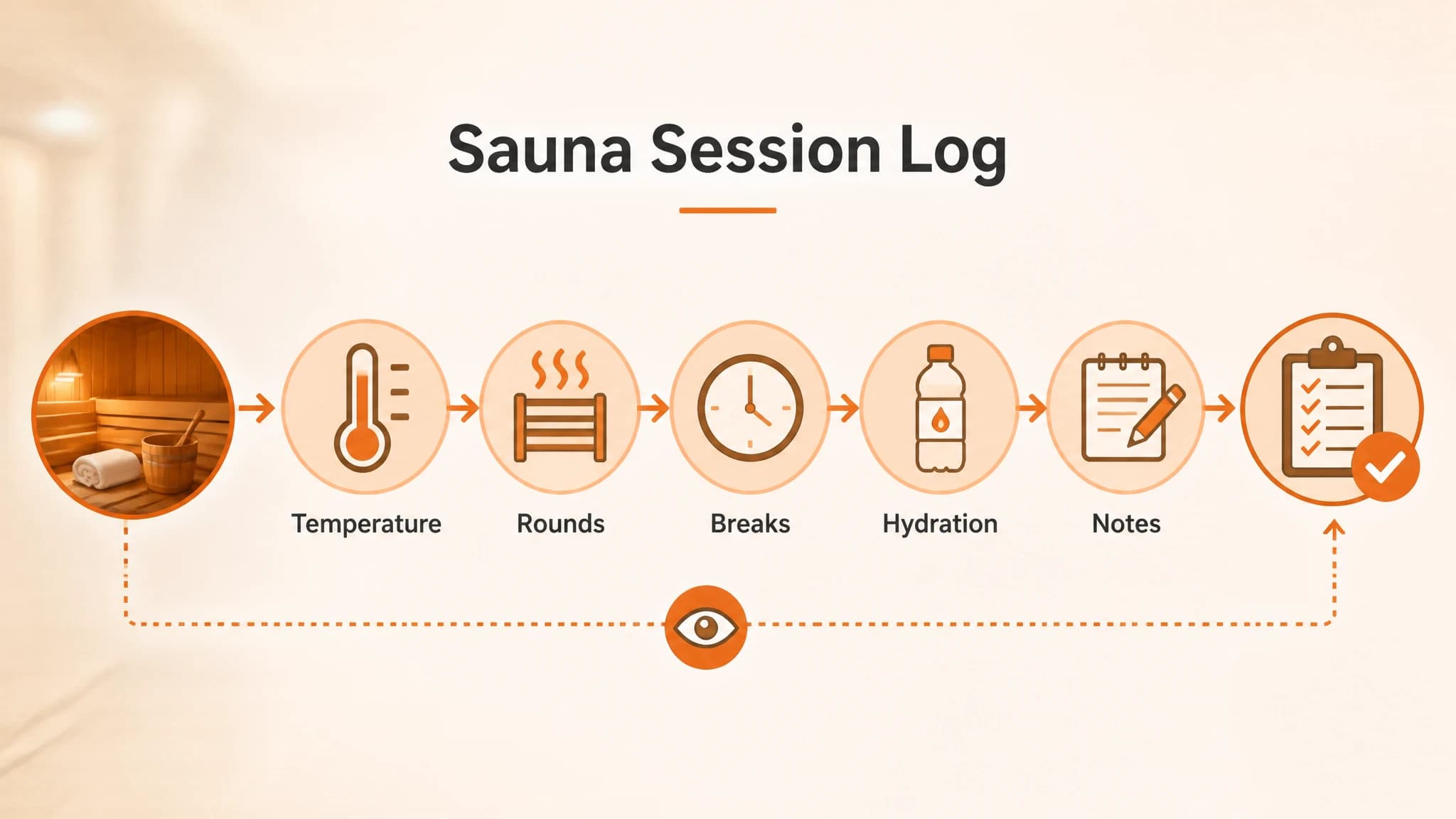
Track the same core fields after each session to make comparisons easier.
6. Hydration notes
Keep this field practical and non-judgmental. You could record whether you drank fluids before the session, during breaks, or afterward. If you use an electrolyte product, record that as a note rather than assuming it is necessary for every person or session.
You may also note obvious context, such as arriving thirsty, exercising earlier in the day, or having limited access to fluids. These details can help explain why similar sauna settings felt different.
Do not use a log to justify ignoring warning signs. If you feel faint, confused, unusually weak, nauseated, or unwell, leave the sauna and cool down safely. Seek appropriate medical guidance when symptoms are concerning or persistent.
7. Subjective notes
Personal notes are one of the most valuable parts of heat exposure tracking because numbers cannot describe everything. Keep them short and specific.
Useful prompts include:
- How did I feel before entering?
- Did the heat feel manageable, intense, or unusually difficult?
- Did I stop because of a planned limit or because I felt unwell?
- How did I feel 15 to 30 minutes afterward?
- How was my sleep, energy, or general comfort later that day?
These notes are observations, not proof of a health effect. They can help you make more informed routine decisions without turning every feeling into a conclusion.
Sample Sauna Tracking Checklist
Copy this checklist into a notes app or use it as a template for a dedicated tracker:
Session date:
Time of day:
Sauna temperature:
Round 1: ___ minutes
Break 1: ___ minutes
Round 2: ___ minutes
Break 2: ___ minutes
Round 3: ___ minutes
Total rounds:
Hydration before or after:
How I felt before:
How I felt during:
How I felt afterward:
Anything unusual:
You do not have to complete every field every time. If you are building the habit, start with date, temperature, total duration, number of rounds, and one short note. Add detailed break and hydration information when it is relevant.
How to Review Your Logs
Reviewing your records can be more useful than focusing on a single session. Set aside a few minutes every two to four weeks and look for repeated patterns.
Look for routine patterns
Ask whether your sessions happen on the days and at the times you intended. If not, the issue may be scheduling rather than motivation. A smaller routine that fits your week may be easier to maintain than an ambitious plan that repeatedly gets postponed.
Compare similar sessions
Compare sessions with roughly similar temperatures, durations, and numbers of rounds. This makes it easier to notice whether a difference in comfort may be connected to context such as sleep, exercise, food, stress, or hydration.
Notice changes in tolerance without chasing them
You may find that a previously difficult session feels more familiar over time. You may also find that tolerance varies from day to day. Neither observation requires you to extend the session or increase the temperature.
Tolerance is a description of your experience, not a score you need to maximize. This practical guide to sauna tolerance tracking can help you record comfort and warning signs more thoughtfully.
Check whether the routine supports your life
A useful sauna routine should fit around your responsibilities, exercise, sleep, and recovery. Review whether sessions leave you feeling comfortable enough to continue with your day, or whether the timing and intensity regularly create problems.
If you notice a consistent pattern of feeling unwell, reduce the intensity or pause the routine and consider speaking with a qualified healthcare professional. Personal tracking should support safer decisions, not replace medical advice.
Using a Sauna Tracking App
A paper notebook or phone note can work well, but a dedicated tool may reduce friction. SaunaMetrics is a free sauna tracking app for logging sessions, temperature, rounds, and personal notes in one place. Over time, a structured history can make it easier to review your routine instead of trying to remember how previous sessions went.
The most important feature is not complexity. It is the ability to record the same core details consistently and return to them later. If you prefer a simple workflow, use only the fields that answer your current question.
You can also browse the sauna tracking articles for related ways to review sessions and develop a repeatable habit.
A Practical Weekly Routine
Here is a simple process for making heat exposure tracking part of your week:
- Before the session: Check how you feel and decide what information you want to record.
- During the session: Follow your usual routine without changing it just to create better data.
- After the session: Record the temperature, round lengths, breaks, hydration notes, and a brief subjective note.
- Once a week: Check whether you logged the sessions you completed and whether any entry is missing useful context.
- Every few weeks: Review trends and make only small, deliberate adjustments.
This approach keeps tracking connected to self-awareness. It also prevents the log from becoming another performance target.
Final Takeaway
Effective heat exposure tracking is simple, repeatable, and honest. Record the date, temperature, duration, rounds, breaks, hydration, and how you felt, then review those details over time for patterns.
Use the information to understand your routine, not to prove a medical outcome or push past discomfort. A consistent record can help you make calmer decisions about timing, session structure, and what works for your everyday life.