
 Veselin Stoyanov10 min read
Top Benefits of Using a Sauna After Your Workout
Learn the potential benefits of using a sauna after a workout, including relaxation and circulation, plus practical timing, hydration, and safety tips.
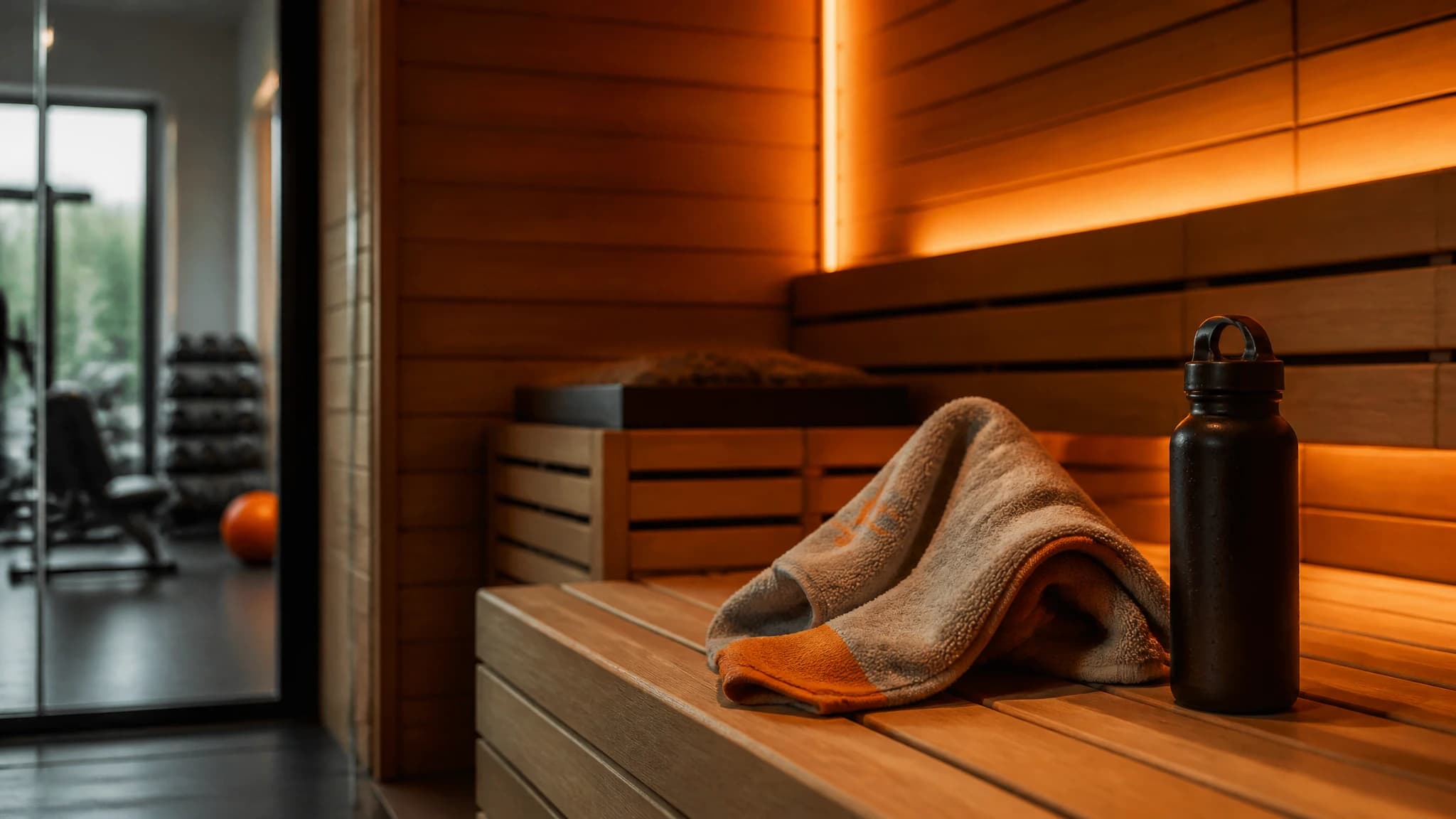
Top Benefits of Using a Sauna After Your Workout
Using a sauna after a workout can be a relaxing way to transition from training into rest. The heat increases skin blood flow, encourages sweating, and may help you feel less tense after exercise.
However, a sauna is not a guaranteed recovery shortcut. Research on post-exercise heat exposure is still limited, and studies have reported mixed results for short-term performance recovery. A sauna session should complement the basics—cooling down, replacing fluids, eating appropriately, and getting enough sleep—not replace them. (pubmed.ncbi.nlm.nih.gov)
Here are the main potential benefits of using a sauna after a workout, along with a practical way to add it to your routine.
1. It encourages vasodilation and increased skin blood flow
One of the most immediate physiological effects of heat exposure is vasodilation: blood vessels near the skin widen, allowing more blood to move toward the body’s surface. This helps the body release heat and regulate temperature.
After exercise, this can create a noticeable feeling of warmth and circulation. Some people describe it as a gentle, full-body loosening sensation, especially after strength training or a workout that leaves them feeling stiff.
Heat therapy research has also examined changes in blood pressure and vascular function. A systematic review found that repeated heat therapy was associated with modest improvements in several vascular measures, although the studies used different heat protocols and were not limited to ordinary post-workout sauna sessions. These findings are interesting, but they should not be interpreted as proof that every sauna session produces a specific cardiovascular benefit. (pubmed.ncbi.nlm.nih.gov)

Post-workout heat can encourage a calm transition into recovery.
What this means in practice
The circulation effect is best viewed as part of the sauna experience rather than a direct treatment for soreness. If you enjoy the sensation of warmth after training and do not feel lightheaded or overheated, it may fit comfortably into your cooldown routine.
2. It may help your body shift into a more relaxed state
A workout stimulates the body. Heart rate, breathing, body temperature, and alertness all rise during training. A quiet sauna session can provide a clear pause between exertion and the rest of your day.
The combination of warmth, stillness, and slower breathing may help you feel more relaxed. That does not mean the sauna automatically improves sleep or eliminates muscle soreness, but it can become a useful behavioral cue: the workout is over, and recovery has begun.
This transition may be especially valuable if your workouts are intense, competitive, or performed late in the day. Instead of leaving the gym immediately and moving straight into errands or work, you create a short period with fewer distractions.
Try a deliberate transition
After your final set or interval:
- Spend a few minutes walking slowly or performing an easy cooldown.
- Drink fluids and let your breathing settle.
- Shower if needed before entering the sauna.
- Sit quietly and avoid treating the session like another challenge.
The goal is not to tolerate as much heat as possible. The goal is to finish training feeling calmer than when you entered.
3. It can support a consistent post-workout routine
Recovery is easier to manage when it is built into a repeatable routine. A sauna can serve as an anchor between exercise and the rest of your day.
For example, your routine might look like this:
- Train: Complete your planned workout.
- Cool down: Walk, stretch gently, or breathe until your heart rate begins to settle.
- Rehydrate: Replace fluids lost during exercise.
- Sauna: Use a comfortable, brief session rather than pushing through discomfort.
- Recover: Eat, shower, relax, and sleep according to your normal needs.
This structure can make it easier to notice patterns. You may find that a sauna feels helpful after a moderate strength session but too demanding after a long run. Or you may prefer it on rest days rather than immediately after intense exercise.
SaunaMetrics can help you record the workout-to-sauna transition, including the session length, temperature, and notes about how you felt before and afterward. Over time, those observations can make your routine more intentional instead of relying only on memory.
4. It may feel soothing after training-related muscle tension
Heat is commonly used to promote relaxation and comfort. After a workout, that may make tight areas feel less noticeable for a while, particularly when the overall sensation is associated with rest.
Still, temporary comfort is not the same as repairing muscle damage. Current evidence does not establish that post-workout sauna use consistently improves every measure of recovery. A 2025 systematic review found uncertain results across acute recovery studies, with some showing benefits, some showing no effect, and one showing an adverse effect. The authors concluded that stronger research is needed to determine the best heat exposure methods for different types of training. (pubmed.ncbi.nlm.nih.gov)
If you have an acute injury, swelling, unusual pain, or symptoms that are getting worse, do not use a sauna to mask the problem. Ask a qualified healthcare professional what type of care is appropriate.

Hydration and simple notes can make sauna routines easier to manage safely.
5. Repeated post-exercise heat may be relevant for heat adaptation
Some athletes use post-exercise heat exposure as part of a heat-acclimation strategy. Repeated heat exposure may influence responses such as sweating, skin blood flow, and tolerance to exercising in hot conditions.
That is a specialized use, though. Evidence is more relevant to specific training protocols and performance in the heat than to general gym recovery. A systematic review found that passive heat acclimation may improve some endurance performance outcomes in hot conditions, while effects in temperate conditions and on measures such as VO2 max were less consistent. (pmc.ncbi.nlm.nih.gov)
For most sauna users, there is no need to turn a normal recovery session into a demanding heat-acclimation program. If you are training for an event in hot conditions, work with a coach or sports medicine professional who can account for training load, hydration, and individual risk.
How long should you stay in a sauna after a workout?
There is no universally correct post-workout sauna duration. Your ideal session depends on the sauna temperature, humidity, your heat tolerance, the workout you completed, and how well hydrated you are.
A practical starting point is a brief session at a comfortable intensity. Leave while you still feel in control, rather than waiting until you feel weak, nauseated, dizzy, or unusually fatigued. Rest outside the sauna and cool down gradually before deciding whether you need anything else.
Avoid judging the quality of a session by how much you sweat. Sweat is a cooling response, not a reliable measure of recovery or fitness.
Hydration and sauna safety after exercise
Exercise and sauna use can both increase fluid loss. Combining them without replacing fluids may raise the chance of dehydration, dizziness, or heat-related illness. The American Heart Association recommends paying attention to fluid replacement before, during, and after physical activity, and notes that fluid needs vary with exercise intensity, duration, climate, and individual sweat loss. (heart.org)
Use these safety guidelines:
- Rehydrate after training before adding more heat exposure.
- Avoid entering the sauna if you already feel dizzy, weak, nauseated, or overheated.
- Leave immediately if you feel faint, confused, unusually short of breath, or unwell.
- Do not use sauna time to extend a workout or chase additional weight loss.
- Avoid alcohol around sauna use because it can worsen dehydration and impair judgment.
- If you have cardiovascular disease, diabetes, another chronic condition, or concerns about medications, ask your healthcare professional before combining intense exercise with sauna exposure. (heart.org)
Seek urgent medical help for severe confusion, fainting, seizure, loss of consciousness, or signs of heat stroke.
When should you skip the sauna after a workout?
Skip the sauna when the workout has left you depleted or when you are not feeling normal. Examples include:
- Training in very hot or humid conditions
- Significant dehydration or dark urine
- Dizziness, headache, nausea, or chills
- Unusual heart palpitations or chest discomfort
- A fever or acute illness
- A new injury that is swollen or painful
A sauna should feel like controlled heat exposure, not another stress test. If your body is asking for fluids, food, cooling, or rest, address that need first.
How to track whether a post-workout sauna helps you
The benefits of a sauna after a workout are personal and may depend on the type of exercise, timing, and session conditions. Tracking a few simple variables can help you identify useful patterns:
- Workout type and duration
- Time between finishing your workout and entering the sauna
- Sauna temperature and session length
- Hydration before and after
- Perceived energy, relaxation, and muscle comfort
- Sleep quality that night
- How you feel during the next workout
Keep notes short and consistent. After several sessions, look for trends rather than one-off impressions. If a particular combination repeatedly leaves you refreshed, it may be a good fit. If it regularly leaves you drained or affects your next workout, reduce the heat exposure or skip it.
The bottom line
The main sauna after workout benefits are practical and immediate: increased skin blood flow, a warm and relaxed feeling, and a clear transition from exertion to rest. Repeated heat exposure may also have a role in specialized heat-acclimation training, but the evidence for faster general recovery or improved performance remains mixed.
Use the sauna as an optional part of a broader recovery routine. Cool down first, replace fluids, keep sessions comfortable, and pay attention to warning signs. By logging your workout-to-sauna transition in SaunaMetrics, you can learn how different session lengths, temperatures, and workout types affect your own routine without relying on unsupported promises.