
 Veselin Stoyanov10 min read
Sauna at Night Benefits: Winding Down and Relaxing
Learn how sauna at night may support relaxation, mental unwinding, and a calmer bedtime routine—with practical tips for using heat safely.
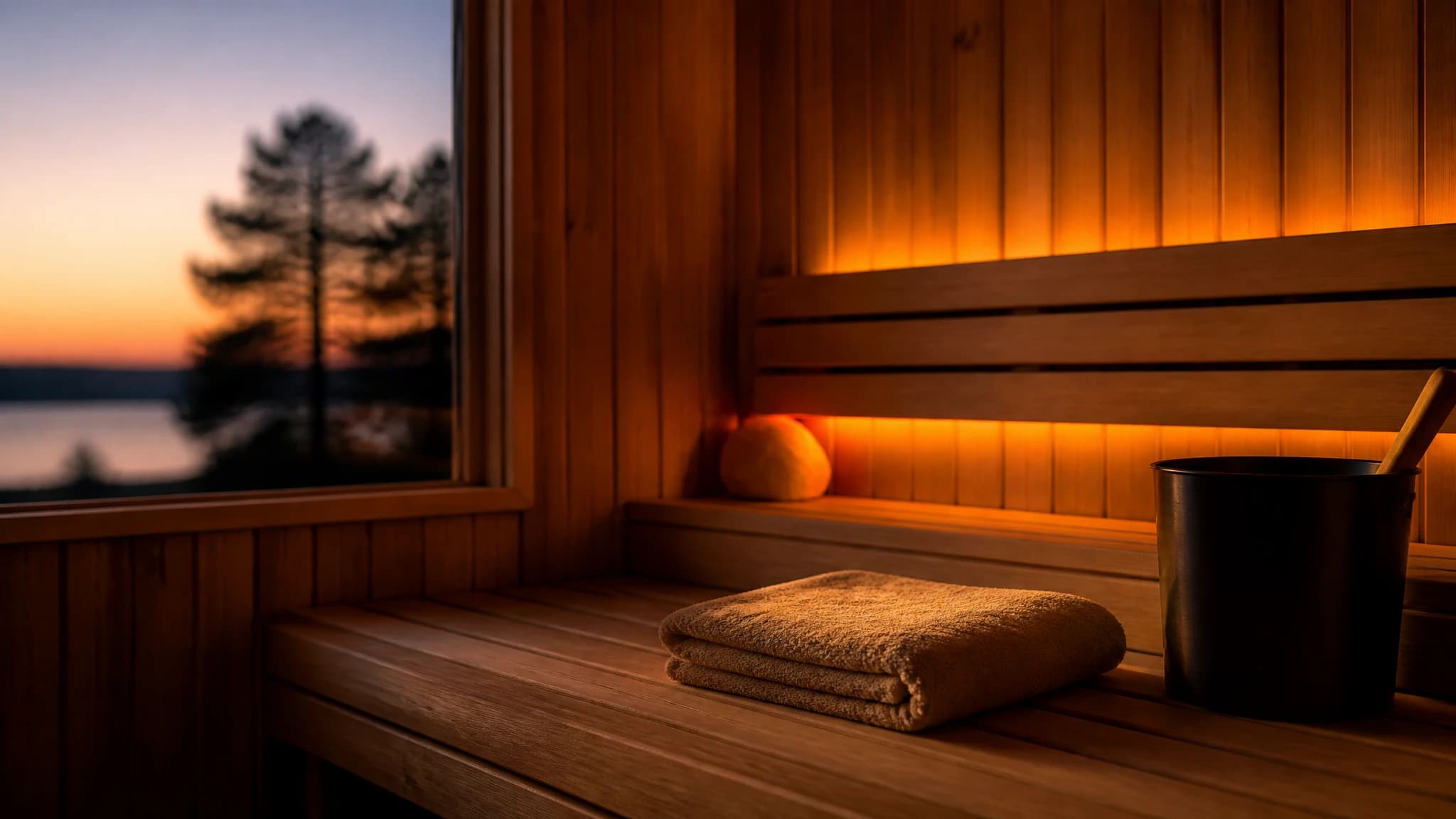
Sauna at Night Benefits: Winding Down and Relaxing
For many people, using a sauna at night is less about maximizing intensity and more about creating a clear boundary between the day and bedtime. The heat encourages you to slow down, put away distractions, and focus on how your body feels.
The potential sauna at night benefits are mainly connected to relaxation, mental unwinding, and the creation of a consistent evening ritual. Some people also find that a sauna before bed makes it easier to transition into sleep. However, sauna use is not a guaranteed treatment for insomnia, and the experience can be stimulating or uncomfortable if the session is too hot, too long, or too close to bedtime.
A practical approach is to treat nighttime sauna as one part of a wind-down routine—not as a test of endurance.
What happens when you use a sauna at night?
A sauna places a controlled heat stress on the body. Your heart rate may rise, you sweat, and your body works to regulate its temperature. After you leave the sauna, your body gradually moves back toward its normal state.
That transition can feel calming. You may notice relaxed muscles, slower breathing, and less interest in checking your phone or continuing with work. The quiet, enclosed environment can also make the sauna a useful pause before the rest of your evening.
Research on passive heating and sleep has often focused on warm baths or other forms of heat exposure rather than sauna specifically. Those studies suggest that warming the body and then allowing it to cool may support sleep-related processes, but the ideal timing and intensity can vary from person to person. (pubmed.ncbi.nlm.nih.gov)
The role of the parasympathetic nervous system
The parasympathetic nervous system is commonly associated with “rest and digest” functions. It helps regulate processes such as recovery, digestion, and a lower-arousal state after periods of stress.
It is tempting to describe a sauna as a direct switch into parasympathetic activity, but the reality is more nuanced. During the hot part of a sauna session, the body is responding to heat stress: heart rate and circulation can increase, and some people feel alert rather than sleepy. The more restful feeling may arrive afterward, as you cool down, rehydrate, and move into a quieter environment.
In other words, the useful nighttime effect may come from the complete sequence:
- A short period of controlled heat exposure.
- A deliberate break from stimulation.
- A gradual cool-down.
- Quiet activities that prepare you for sleep.
The sauna itself is only one part of that sequence.
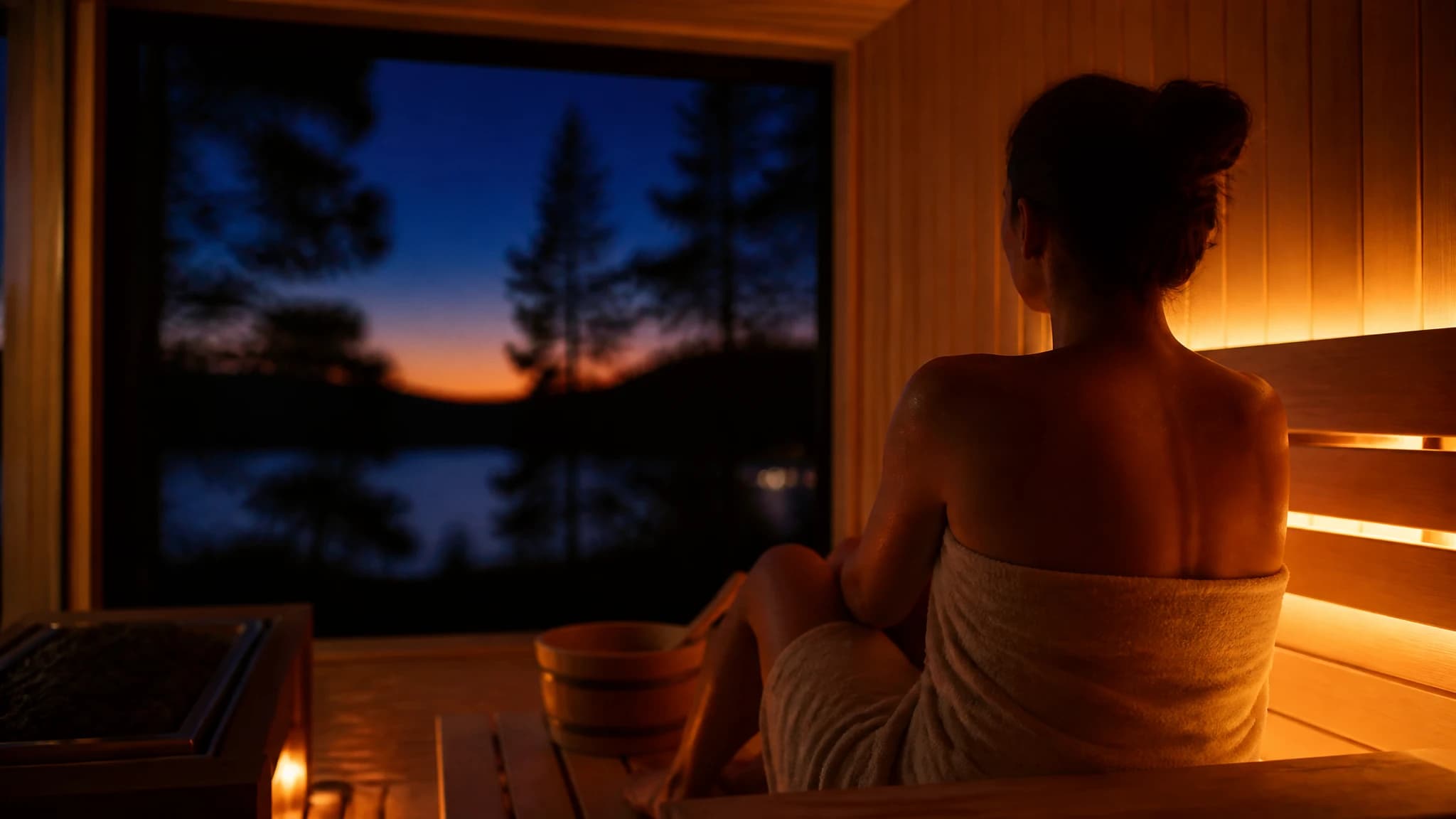
The most useful nighttime sauna routine is comfortable, repeatable, and followed by a gradual cool-down.
Sauna at night benefits for mental unwinding
1. A physical break from the day
Evening routines often carry unfinished work, notifications, household tasks, and screens. A sauna creates a defined period when you cannot easily multitask. That physical separation can make it easier to stop rehearsing the day’s problems.
You do not need to force your mind to become completely blank. Instead, use the session as a transition. Let thoughts come and go without turning the sauna into another productivity task.
2. A chance to notice accumulated tension
Heat may make it easier to notice areas where you are holding tension, such as the shoulders, jaw, lower back, or hands. Pairing the session with slow breathing can help you recognize the difference between physical discomfort and ordinary muscular tightness.
Try taking a few unhurried breaths and asking:
- Is my breathing shallow or relaxed?
- Am I clenching my jaw?
- Do I feel calm, overheated, dizzy, or restless?
- Would leaving the sauna now improve the experience?
These questions keep the routine body-aware rather than performance-focused.
3. A repeatable cue for relaxation
The brain responds well to consistent cues. If you use the sauna at a similar time, follow it with the same low-stimulation activities, and go to bed on a fairly regular schedule, the routine may become a recognizable signal that the active part of the day is ending.
This does not mean the sauna has to happen every night. A routine can be useful even when practiced a few times per week, as long as it remains comfortable and realistic.
Can sauna before bed improve sleep?
A sauna before bed may help some people feel ready for sleep, particularly when it is followed by a comfortable cool-down. But the timing matters.
If you finish a very hot or lengthy session immediately before getting into bed, you may still feel overheated, thirsty, or alert. Those sensations can make falling asleep harder. On the other hand, ending the session earlier may give your body time to cool and your mind time to settle.
A reasonable starting point is to finish your sauna session about one to two hours before bedtime, then adjust based on your response. This is a personal experiment, not a universal rule. Some people may prefer a shorter gap, while others need more time to cool down.
Sleep-related research on passive body heating supports the general idea that changes in body temperature may influence sleep onset and sleep quality, but results from baths or hot tubs should not be treated as proof that every sauna protocol will have the same effect. (pubmed.ncbi.nlm.nih.gov)
A practical nighttime sauna routine
Use the following as a flexible framework rather than a prescription.
Step 1: Choose a realistic time
Work backward from your usual bedtime. Give yourself enough time for the sauna, shower or rinse, hydration, and a quiet transition afterward. Avoid scheduling the session so late that you feel rushed.
Step 2: Keep the first sessions moderate
If you are new to nighttime sauna, begin with a shorter, gentler session. You can learn how your body responds before changing the duration or heat level.
Do not stay in longer simply because you have used a sauna for longer in the past. Evening sauna for relaxation should leave you feeling settled—not depleted.
Step 3: Leave room for a gradual cool-down
After the session, cool down comfortably. You might take a lukewarm shower, sit in a cooler room, change into light clothing, and drink water according to your thirst.
Avoid turning the cool-down into another extreme challenge if your goal is relaxation. The best approach is the one that helps you feel comfortable and steady.
Step 4: Reduce stimulation afterward
Choose one or two calm activities, such as:
- Reading a paper book.
- Gentle stretching.
- Quiet conversation.
- Preparing clothes for the next day.
- Writing a few notes about the day.
- Listening to calm audio at a low volume.
Try not to replace sauna time with bright screens, work messages, or emotionally intense content.
Step 5: Track how you respond
Your response is more useful than a generic promise about sauna and sleep. Record a few simple details after each session:
- Time of sauna use.
- Approximate session duration.
- Temperature, if known.
- Number of rounds.
- How you felt immediately afterward.
- How long it took to fall asleep.
- How rested you felt the next morning.
SaunaMetrics can help you create a recurring evening log for these observations. Over time, your notes may show whether a certain time, duration, or session structure fits your routine.
How to make sauna at night more relaxing
Keep the environment simple
Dim lighting, a clean towel, water nearby, and a prepared change of clothes can reduce small sources of friction. If you are constantly searching for supplies or checking notifications, the routine loses some of its calming value.
Use breathing as an anchor
There is no need for an elaborate breathing technique. Try breathing gently through your nose if comfortable, relaxing your shoulders on the exhale, and allowing the pace to remain natural. Stop focusing on the breath if it makes you feel uncomfortable or lightheaded.
Avoid making every session a test
Nighttime sauna is not the ideal setting for chasing personal records. Longer sessions and higher heat are not automatically better for relaxation. A session that leaves you calm and able to sleep is more useful than one that leaves you exhausted.
Pay attention to hydration and alcohol
Sweating increases fluid loss. Drink enough to replace fluids, but avoid using sauna as a way to offset alcohol or dehydration. Alcohol can affect sleep and heat tolerance, so combining it with sauna may increase the chance of dizziness or feeling unwell.
Safety considerations for evening sauna use
Leave the sauna immediately if you feel dizzy, faint, nauseated, confused, unusually weak, or short of breath. Cool down gradually and seek help if symptoms are severe or do not improve.
Avoid sauna when you are ill, dehydrated, or unable to respond normally to heat. If you have a cardiovascular condition, blood-pressure concerns, are pregnant, take medications that affect hydration or blood pressure, or are unsure whether sauna is appropriate for you, ask a qualified healthcare professional first.
Never use sauna as a substitute for medical care or as a way to treat persistent insomnia. If sleep problems continue, speak with a clinician who can help identify potential causes and evidence-based treatments.
Is sauna at night right for you?
The best way to find out is to run a low-pressure experiment for a few weeks. Keep the routine consistent enough to compare sessions, but do not force yourself to continue if the experience worsens your sleep or makes you feel unwell.
Start with a moderate session, finish early enough to cool down, and follow it with quiet activities. Then review your notes rather than relying on memory. You may discover that sauna at night works best on certain days, at a particular temperature, or only when you keep the session short.
The main benefit may not be a dramatic physiological change. It may simply be the opportunity to stop, notice your body, and create a dependable transition into rest.