
 Veselin Stoyanov10 min read
Sauna Protocol for Beginners: Step-by-Step Instructions
Follow this beginner-friendly sauna protocol: prepare, spend 10 minutes inside, cool down, hydrate, and repeat once safely.
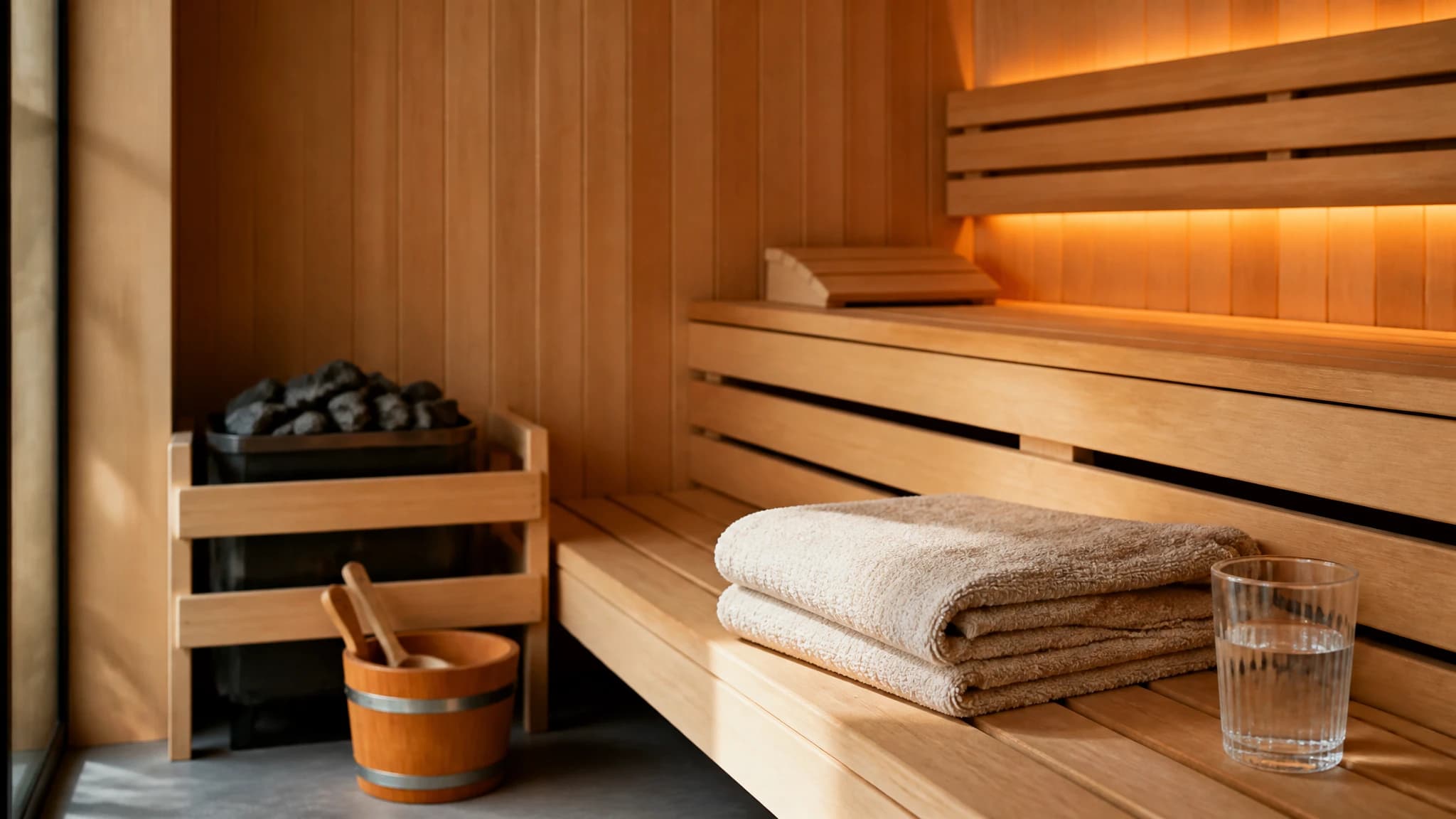
Sauna Protocol for Beginners: Step-by-Step Instructions
A sauna protocol for beginners should be simple enough to follow without constantly checking the clock or guessing what to do next. For most healthy adults, a practical starting routine is:
- Prepare and hydrate lightly.
- Spend up to 10 minutes in the sauna.
- Leave and cool down for about 5 minutes.
- Drink water and assess how you feel.
- Repeat the cycle once if you feel well.
- Finish with a gradual cool-down and recovery period.
This is a conservative starting point—not a challenge to see how long you can tolerate heat. Sauna use can contribute to dehydration, and people with certain health conditions, those taking some medications, pregnant people, older adults, and younger users may need individualized medical advice before using a sauna. (health.clevelandclinic.org)
What to know before your first sauna session
A sauna raises your body temperature and makes you sweat. That can feel relaxing, but sweating also means losing fluid. The goal of a beginner routine is to become familiar with the heat while stopping well before you feel unwell.
You do not need to chase extreme heat, heavy sweating, or long sessions. Sweating can reduce body weight temporarily through fluid loss; it is not the same as losing body fat. There is also not enough evidence to claim that excessive sweating “detoxes” the body. (my.clevelandclinic.org)
Before you begin, check the sauna’s instructions. Temperature, humidity, seating arrangements, and house rules vary between traditional saunas, steam rooms, and infrared saunas. Follow the facility’s guidance and leave immediately if you feel dizzy, weak, short of breath, confused, or unusually uncomfortable.

Prepare your water, towel, and timer before entering.
The beginner sauna protocol
Step 1: Prepare 15–30 minutes beforehand
Drink some water before entering, particularly if you have exercised, spent time in hot weather, or have not had much to drink during the day. Avoid arriving already thirsty or feeling overheated.
Have a towel, water, and a way to keep track of time available. A sauna can make it harder to judge how long you have been inside, so use a clock or timer that you can check easily. SaunaMetrics can also help you record the session duration, temperature, and notes afterward so you can build a repeatable routine.
Avoid using a sauna after drinking alcohol. Alcohol and sauna heat can be a poor combination, and the American Heart Association specifically advises against mixing them. (heart.org)
It is also sensible to avoid entering immediately after a very demanding workout if you are already exhausted, dehydrated, nauseated, or lightheaded. Recover first, drink fluids, and only use the sauna if you feel steady.
Step 2: Enter and choose a comfortable position
For your first session, sit on a lower or middle bench if the sauna has different levels. Heat is often more intense higher up, so starting lower can make the experience easier to manage.
Sit or lie down in a way that feels stable. Keep your first session quiet and uncomplicated. You do not need to stretch aggressively, exercise, or test your tolerance while inside.
Set a timer for 10 minutes. This is the first limit in this beginner sauna protocol. If you feel unwell before the timer ends, leave immediately. The timer is a maximum, not a target you must complete.
Step 3: Stay inside for up to 10 minutes
Use the time to notice how your body responds. Normal sensations may include warmth, sweating, and a faster heartbeat. Concerning sensations include dizziness, faintness, nausea, headache, unusual weakness, trouble breathing, confusion, chest discomfort, or a feeling that something is wrong.
If any concerning symptom appears, end the session. Move slowly when standing because heat can make some people feel lightheaded. Sit somewhere cool and ask for assistance if needed.
Do not treat discomfort as proof that the protocol is working. A shorter session is the correct choice when your body is telling you to stop. Cleveland Clinic guidance recommends that people new to sauna use start with about five minutes and gradually add time, while also emphasizing that beginners may need to keep sessions short. (health.clevelandclinic.org)
Step 4: Leave and cool down for about 5 minutes
After up to 10 minutes, leave the sauna and spend approximately 5 minutes cooling down. Sit in a cooler area, breathe normally, and let your body settle.
A cool shower can be part of your routine if it feels comfortable, but you do not need to plunge into very cold water. The American Heart Association advises people with high blood pressure not to move back and forth between cold water and hot tubs or saunas without appropriate medical guidance because it may raise blood pressure. (heart.org)
The purpose of this break is to assess how you feel—not to create another intense challenge. If you remain dizzy, weak, nauseated, unusually short of breath, or otherwise unwell, stop for the day.

Use the break between rounds to cool down, hydrate, and assess how you feel.
Step 5: Hydrate and decide whether to repeat
Drink water during the break. You do not need to force a large amount quickly; take reasonable sips and pay attention to thirst and how you feel.
After cooling down, ask yourself:
- Do I feel clear-headed?
- Am I steady when standing and walking?
- Do I feel comfortable rather than depleted?
- Have I developed a headache, nausea, cramps, or unusual weakness?
If you feel well, repeat the same cycle once: up to 10 minutes inside, followed by about 5 minutes outside. For a first session, one or two short rounds are enough. There is no need to add extra rounds simply because you can tolerate the first one.
If you do not feel well, skip the second round. A successful beginner sauna routine is one that leaves you able to recover normally afterward.
Step 6: Finish with a gradual recovery period
After the final round, leave the sauna and cool down gradually. Drink more water with your meal or over the next several hours, especially if you were sweating heavily or had exercised earlier.
Avoid immediately stacking more heat exposure on top of the session. Give yourself time to notice delayed symptoms such as headache, excessive thirst, muscle cramps, fatigue, or continued lightheadedness. These can be signs that you need more recovery and hydration.
Do not use a sauna as a substitute for medical treatment, hydration, sleep, or recovery from illness.
A simple first-session schedule
Here is the complete sauna protocol for beginners in one place:
| Time | What to do |
|---|---|
| Before | Drink some water, bring a towel, and avoid alcohol. |
| 0–10 minutes | Sit comfortably in the sauna. Leave earlier if you feel unwell. |
| 10–15 minutes | Cool down outside the sauna and assess how you feel. |
| 15–25 minutes | Repeat once only if you feel well. |
| After | Cool down gradually, drink water, and rest. |
If 10 minutes feels too intense, use a 5-minute first round instead. As you become familiar with the heat, you can adjust the duration cautiously, but do not assume that longer sessions are automatically better.
How often should beginners use a sauna?
Start with a schedule that gives you enough time to learn how your body responds. For example, one session per week can help you practice the routine without making sauna use feel like a test of endurance.
If you tolerate that comfortably, you may choose to use a sauna more regularly while keeping sessions short and consistent. Track what you actually do rather than relying on memory: date, sauna type, approximate temperature, time inside, cool-down duration, hydration, and how you felt later.
This is where a tracking tool such as SaunaMetrics can be useful. Its free tracking app lets you log sessions, temperatures, and notes over time, helping you see whether your sauna routine is becoming consistent and which session lengths feel manageable.
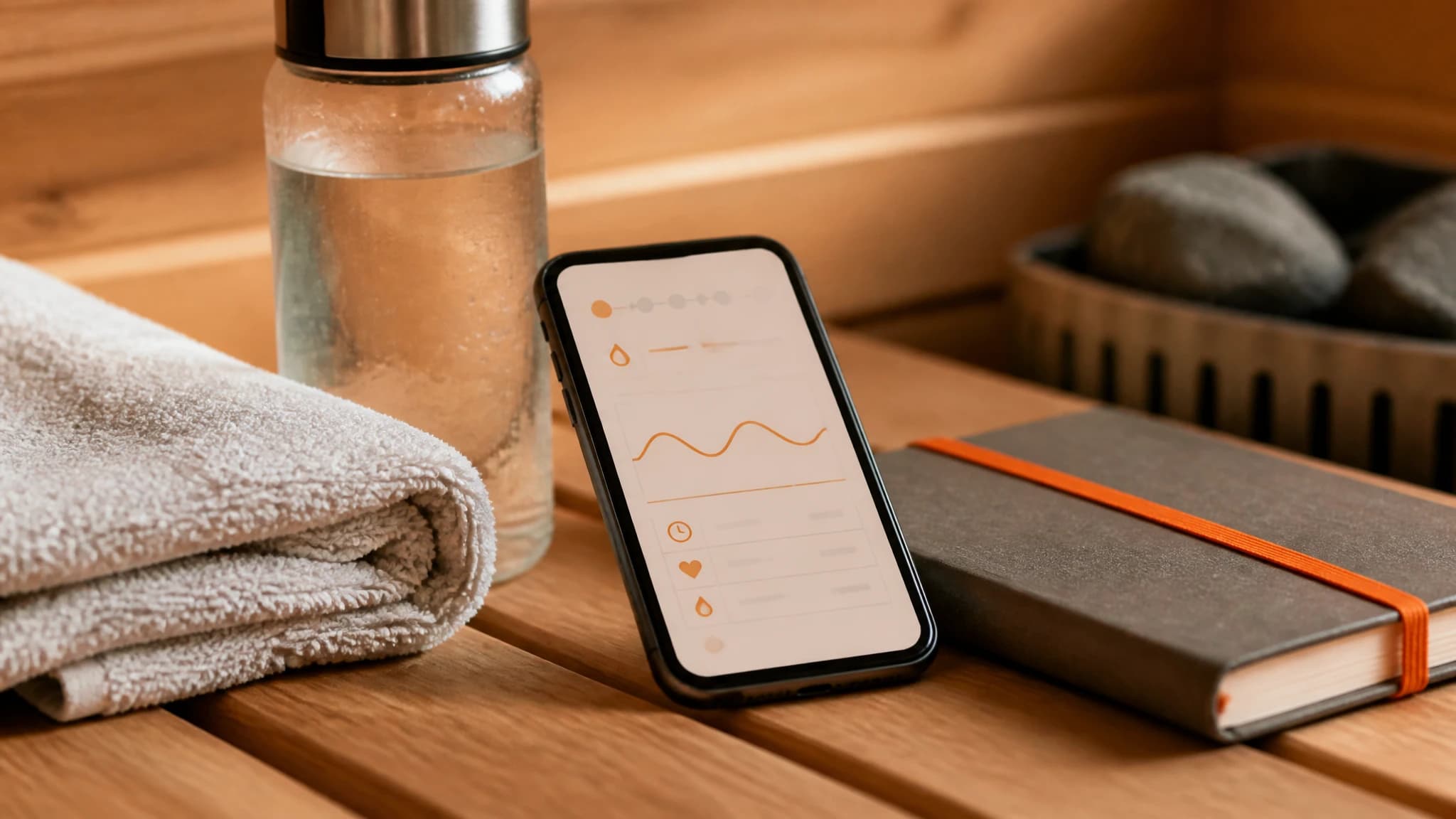
Recording duration, temperature, and how you felt can make a routine easier to understand.
Common beginner mistakes to avoid
Staying in too long
Longer is not automatically safer or more beneficial. Set a limit before entering and leave when the limit is reached—or sooner if you feel unwell.
Treating hydration as an afterthought
Starting dehydrated or failing to replace fluids after sweating can make a session harder to recover from. Drink water before and after, and consider your overall fluid intake for the day.
Using the sauna after alcohol
Skip the sauna if you have been drinking. Combining alcohol with heat can increase safety risks, and it can make it harder to recognize or respond to symptoms. (health.clevelandclinic.org)
Switching rapidly between extreme heat and cold
A dramatic hot-cold routine is not required for beginners. Use a gradual cool-down unless a qualified healthcare professional has advised you otherwise.
Ignoring symptoms because a timer is running
A timer supports the protocol; it does not override your body. Stop if you feel dizzy, faint, weak, confused, nauseated, short of breath, or uncomfortable.
Who should ask a healthcare professional first?
Ask a healthcare professional before sauna use if you have heart disease, heart failure, severe aortic stenosis, uncontrolled or concerning blood pressure, a neurological condition such as epilepsy, or another condition that may be affected by heat. You should also ask about sauna use if you are pregnant or trying to become pregnant, are over 65, are under 16, take prescription or over-the-counter medication, or have another health concern. (health.clevelandclinic.org)
Do not use a sauna when you are ill, significantly dehydrated, intoxicated, or recovering from a recent serious medical event unless your healthcare professional has specifically cleared it.
This article is general education, not personal medical advice. If you are unsure whether sauna use is appropriate for you, ask a qualified healthcare professional before starting.
Make the protocol easy to repeat
The best sauna protocol for beginners is predictable: short exposure, a real break, hydration, and only one repeat when you feel well. Keep the first few sessions deliberately modest, then use your notes to decide whether a small adjustment makes sense.
Record the details that matter—time, temperature, rounds, cool-down, and how you felt afterward. Over time, that simple record can turn an occasional sauna visit into a routine you understand and can manage responsibly.