
 Veselin Stoyanov10 min read
Why a Sauna Before Bed Improves Sleep Quality
Learn how sauna before bed may support sleep through core body temperature changes, the best timing buffer, and practical ways to track your routine.
A sauna session in the evening can feel like a natural bridge between an active day and bedtime. Many people report falling asleep more easily after sauna, but the most useful explanation is not that heat simply makes you tired. It is what happens after the heat exposure: your body begins releasing heat, and core temperature moves downward as sleep approaches.
That temperature transition is closely connected to sleep onset. Research on passive body heating—especially warm baths and showers—suggests that warming the body approximately 1–2 hours before bedtime can shorten the time it takes to fall asleep and improve self-rated sleep quality. Sauna research is more limited, so it is best to view sauna as a promising sleep-supporting routine rather than a guaranteed treatment for insomnia. (sciencedirect.com)
The connection between body temperature and sleep
Your body temperature follows a daily rhythm. It generally rises during the day, reaches a high point later in the day, and then begins to decline as your usual sleep period approaches. Sleep onset typically occurs while core body temperature is on this downward slope. Heat loss through the skin—particularly through the hands and feet—helps the body reach the thermal state that supports sleep. (pubmed.ncbi.nlm.nih.gov)
This does not mean that a lower temperature automatically produces sleep. Sleep also depends on your circadian rhythm, sleep pressure, light exposure, stress level, environment, and regular schedule. However, the rate at which your body can release heat appears to be one factor involved in becoming sleepy.
A useful way to think about it is:
- Heat exposure raises skin and core temperature.
- The body responds by increasing blood flow near the skin.
- After leaving the sauna, heat can dissipate more efficiently.
- Core temperature begins moving downward.
- That cooling phase may support the normal transition into sleep.
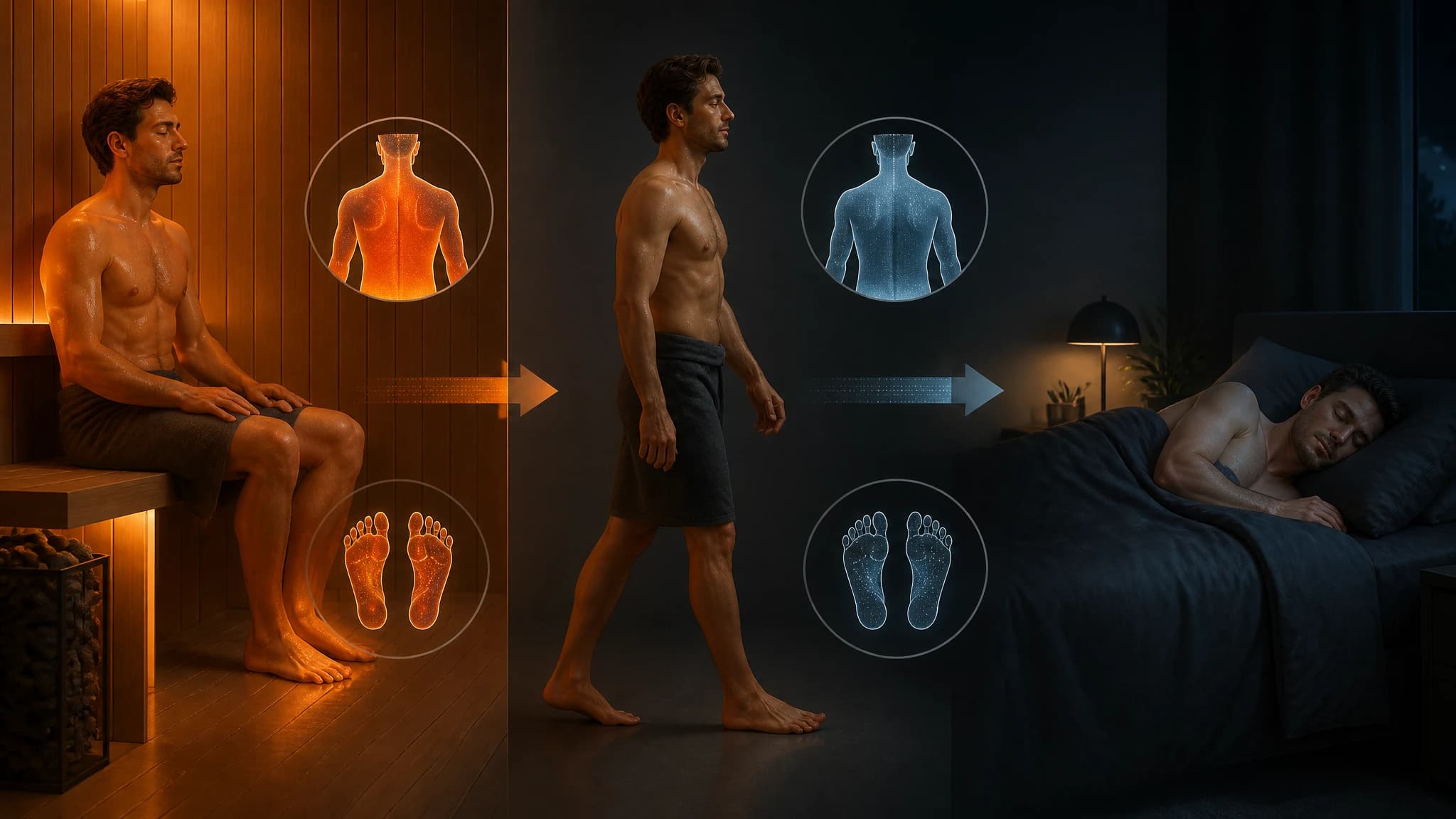
After sauna, increased heat loss through the skin may help core temperature move downward.
Why a sauna before bed may help
1. It creates a deliberate warming-and-cooling cycle
A sauna temporarily exposes your body to substantial heat. Once you leave and begin cooling down, the contrast between the heated state and the resting state may make the evening transition more noticeable. The potential sleep benefit is therefore more likely to come from the post-sauna cooling period than from remaining hot in bed.
Studies of warm bathing support this general mechanism. A systematic review and meta-analysis of 17 studies found that warm showers or baths at approximately 40–42.5°C, scheduled around 1–2 hours before bed, were associated with shorter sleep-onset time, better sleep efficiency, and improved subjective sleep quality. These findings concern water-based heating rather than sauna specifically, so they should not be treated as proof that every sauna protocol will produce the same result. (sciencedirect.com)
2. It may promote relaxation after the session
A sauna routine can also function as a behavioral signal. Repeating the same sequence—finish daily tasks, sauna, shower, hydrate, dim the lights, and prepare for bed—may help reduce stimulating activity in the final part of the evening.
This is an important distinction. Sauna is not a substitute for a consistent sleep schedule or treatment for a sleep disorder. It may help when it is part of a broader wind-down routine, especially if the session replaces late-night work, intense screen use, or other activities that keep you alert.
3. It gives you a routine you can evaluate
Sleep responses vary. One person may feel calm and sleepy after an evening sauna, while another may feel overheated or energized if the session is too long or too close to bedtime. Tracking can help you identify your own response instead of relying on general advice.
Useful observations include:
- Session start and end time
- Sauna temperature, if known
- Session length
- Whether you cooled down afterward
- Approximate bedtime
- How long it took to fall asleep
- Number of nighttime awakenings
- Morning sleep quality
- Notes about hydration, stress, caffeine, or exercise
SaunaMetrics can be used to log sessions, temperature, and notes over time. That makes it easier to compare evening sauna days with non-sauna days and look for patterns in your own routine.
What is the best time to use a sauna before bed?
A practical starting point is to finish your sauna about 1–2 hours before bedtime. This gives your body time to move through the cooling phase while leaving enough room for showering, hydrating, and completing your normal bedtime routine. The 1–2-hour window is supported most directly by research on warm baths and showers, not by a large body of sauna-specific sleep trials. (sciencedirect.com)
For example, if you usually aim to sleep at 10:30 p.m., you might begin a short sauna session around 8:30 or 9:00 p.m. and finish with enough time to cool down before getting into bed.
There is no universally perfect buffer. Consider testing three options for several nights each:
- Two hours before bed: Useful if you tend to stay warm after sauna.
- About 90 minutes before bed: A reasonable middle starting point.
- One hour before bed: May work if you cool down quickly and feel relaxed rather than stimulated.
Change only one major variable at a time. If you change session length, temperature, bedtime, caffeine intake, and exercise simultaneously, it becomes difficult to tell what affected your sleep.
How long should an evening sauna session last?
There is no single evidence-based duration that guarantees better sleep. A shorter, moderate session is a sensible starting point, particularly if you are new to sauna or are testing it specifically for sleep.
The goal is not to maximize heat exposure. The goal is to finish feeling comfortable enough to cool down and follow your bedtime routine. If you leave feeling dizzy, nauseated, unusually restless, or excessively hot, the session was not helping your sleep routine in that form.
You can experiment with:
- A shorter session compared with your usual daytime session
- A lower temperature, if your sauna allows it
- A longer cooling period afterward
- A consistent session time on selected evenings
Avoid interpreting one unusually good or bad night as a definite result. Sleep naturally varies, so look for a pattern across multiple sessions.
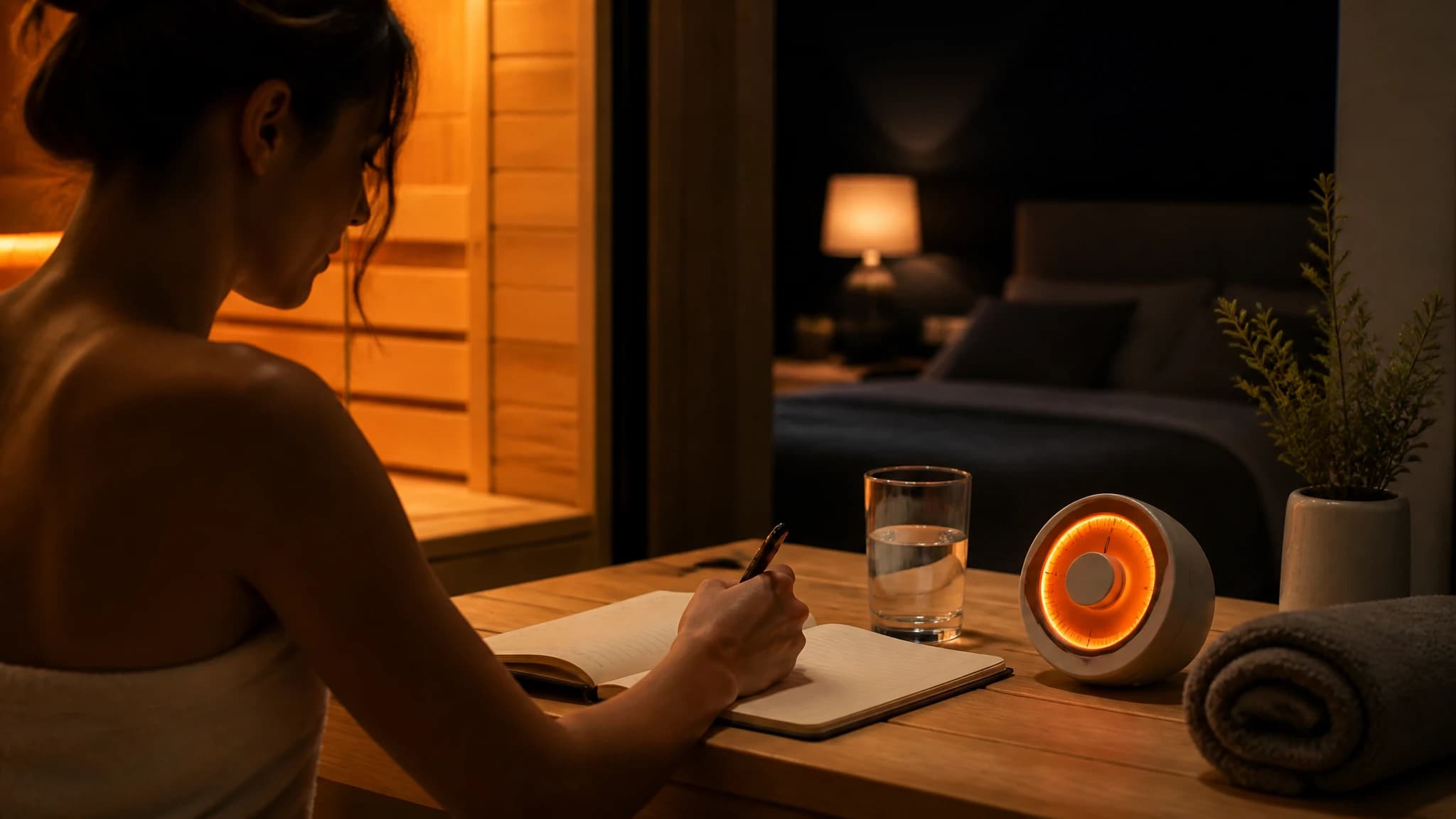
Recording session timing and sleep outcomes can help identify your personal sauna routine.
A practical sauna-for-sleep routine
Try this simple sequence for one to two weeks:
1. Choose a consistent bedtime
Start with the bedtime you already want to maintain. The sauna should support your schedule, not push it later.
2. Finish sauna 1–2 hours beforehand
Begin with a buffer that allows you to cool down fully. If you still feel hot at bedtime, move the session earlier on the next trial night.
3. Keep the post-sauna period quiet
Use the cooling period for low-stimulation activities such as showering, light stretching, reading, or preparing for the next day. Bright light, intense exercise, work messages, and emotionally activating content may work against the wind-down effect.
4. Hydrate sensibly
Replace fluids according to your thirst and usual needs. Avoid turning hydration into a large intake immediately before bed, since repeated bathroom trips can interrupt sleep.
5. Keep the bedroom comfortable
The cooling phase works best when your sleep environment allows heat to escape. A room that is too warm, heavy bedding, or clothing that traps heat may make it harder to settle. The National Sleep Foundation notes that the body’s natural temperature decline is part of the transition into sleep and that excess bedroom warmth can interfere with comfort. (thensf.org)
6. Record the result
Log the session and note your sleep onset, awakenings, and morning experience. After several trials, compare your sauna nights with evenings without sauna.
When a sauna before bed may not improve sleep
Evening sauna is not automatically beneficial for everyone. It may work poorly when:
- The session is too intense or too long.
- You finish immediately before getting into bed.
- You remain overheated during the cooling period.
- You are dehydrated.
- The session causes a noticeable increase in alertness.
- Sauna replaces needed sleep time.
- You are already dealing with an overly warm bedroom.
If your sleep gets worse, move the session earlier, reduce the intensity, or stop using it at night. A morning or afternoon sauna may be a better fit for your schedule.
People with medical conditions that affect heat tolerance, blood pressure, hydration, circulation, or consciousness should ask a qualified healthcare professional whether sauna use is appropriate. Never use sauna when ill, impaired, or feeling faint, and leave immediately if you feel unwell.
What the evidence does—and does not—show
The strongest timing evidence comes from studies of warm showers and baths, where passive heating 1–2 hours before bed was associated with improved sleep-onset measures and subjective sleep quality. Research on the underlying thermoregulation mechanism also supports the role of peripheral heat loss and the downward movement of core temperature around sleep onset. (sciencedirect.com)
That evidence supports a reasonable hypothesis for sauna: heat exposure may help some people sleep when it is followed by adequate cooling and placed far enough before bed. It does not prove that sauna improves sleep for everyone, establish one ideal temperature or duration, or show that sauna can treat insomnia.
The most useful approach is to treat sauna as a personal experiment. Keep your bedtime and other evening habits as consistent as possible, record what you do, and assess the trend over several sessions.
The bottom line
The potential sauna sleep benefits are linked less to being hot at bedtime and more to the body’s transition from heat exposure to cooling. A sauna before bed may support sleep quality when it helps you relax, promotes heat loss, and ends roughly 1–2 hours before you plan to sleep.
Start conservatively, leave enough time to cool down, and pay attention to how your own sleep responds. Tracking session time, temperature, duration, and notes with SaunaMetrics can help turn a vague impression into a clearer picture of which evening routine works for you.