
 Veselin Stoyanov9 min read
The Best Sauna Temperature for Beginners to Start Safely
Discover the safest sauna temperature for beginners. Learn where to sit, how long to stay, and how to track your heat tolerance with SaunaMetrics.
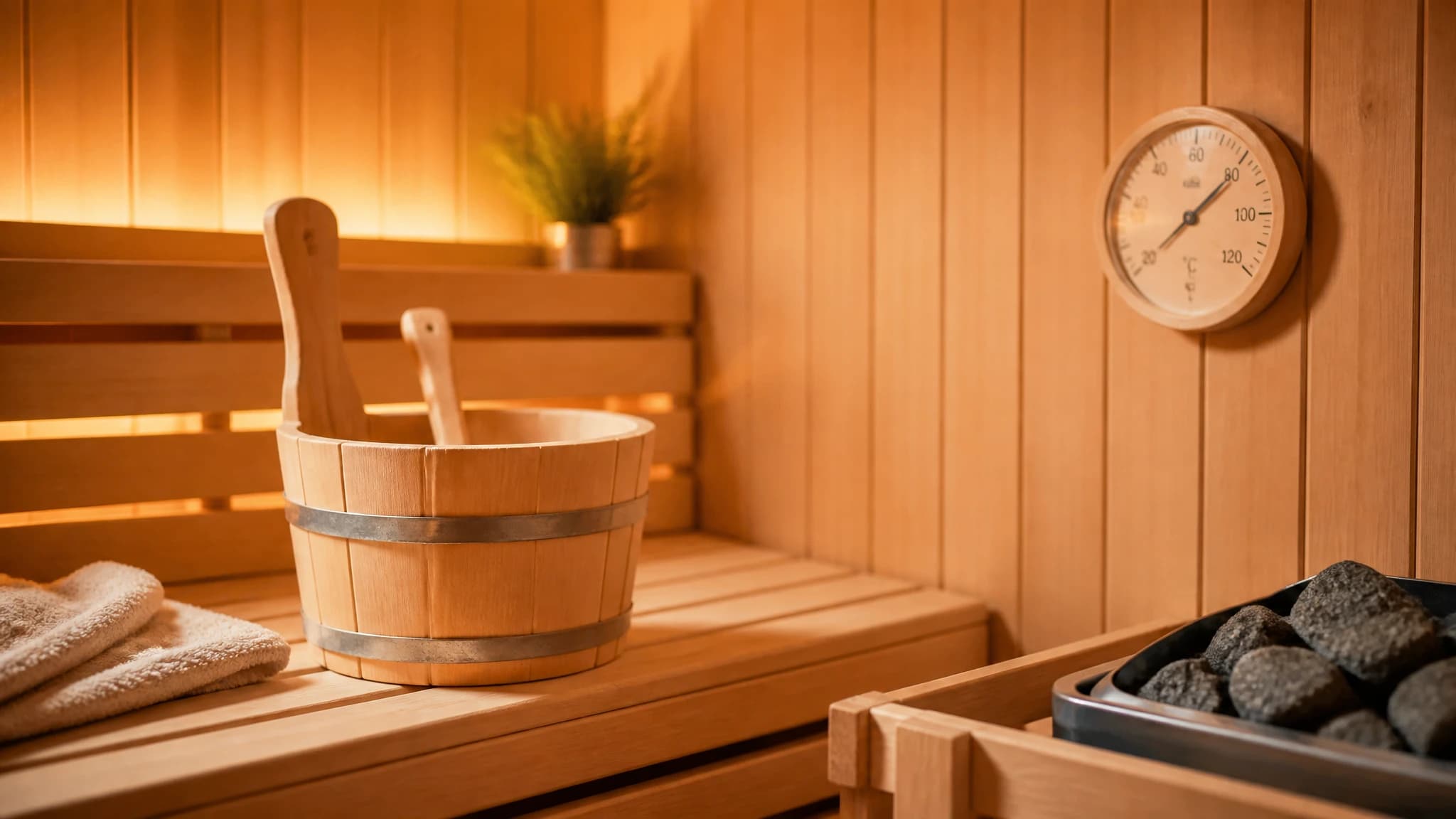
Stepping into a sauna for the first time can feel like walking into a wall of heat. While seasoned sauna practitioners might comfortably sit in blistering temperatures for extended periods, novices need a different approach. Finding the right sauna temperature for beginners is not just about comfort; it is about safety, building heat tolerance gradually, and ensuring that your new wellness habit is enjoyable rather than overwhelming.
Whether you are visiting a local gym, a spa, or setting up a personal home sauna, understanding how to navigate the heat is essential. In this comprehensive guide, we will explore the ideal safe sauna temperature, how to manage your environment, and how to track your progress as your body acclimates to the heat.
Why Temperature Matters for Sauna Beginners
When you enter a sauna, your body immediately begins to work to maintain its core temperature. Blood vessels dilate to increase blood flow to the skin, and you begin to sweat to cool down through evaporation. For someone who has never practiced sauna bathing, this physiological response can feel intense.
The cardiovascular system works harder in a sauna, similar to light to moderate exercise. If the environment is too hot, a beginner might experience dizziness, lightheadedness, or an uncomfortably rapid heart rate. By starting at a lower, manageable temperature, you give your body the time it needs to adapt. This process, known as heat acclimation, improves your body's efficiency at regulating its internal temperature. Over time, you will find that you sweat sooner, your heart rate remains steadier, and you can comfortably endure higher temperatures.
Starting at an optimal sauna temperature for beginners ensures that your first few sessions are relaxing rather than stressful, laying the groundwork for a long-term, sustainable routine.
Recommended Sauna Temperature for Beginners
The ideal starting temperature depends heavily on the type of sauna you are using. The two most common types are traditional Finnish saunas and infrared saunas, and they heat the body in fundamentally different ways.
Traditional Finnish Saunas
A traditional sauna uses a heater (electric or wood-burning) to heat a room full of rocks, which in turn heats the air. These saunas are known for their high heat and relatively low humidity.
For an experienced user, traditional saunas are typically kept between 160°F and 195°F (71°C to 90°C). However, the best sauna temperature for beginners in a traditional setting is between 150°F and 160°F (65°C to 71°C). At this range, the heat is stimulating but not instantly overpowering. It allows a novice to comfortably sit in the room for a few minutes and observe how their body reacts before the urge to exit becomes overwhelming.
Infrared Saunas
Infrared saunas use infrared panels to emit light that directly heats your body rather than the air around you. Because the air temperature remains lower, many beginners find infrared saunas more tolerable.
The standard operating temperature for an infrared sauna ranges from 120°F to 140°F (49°C to 60°C). For absolute beginners, starting at the lower end of this spectrum—around 110°F to 120°F (43°C to 49°C)—is highly recommended. This provides a gentle, warming sensation that promotes a deep sweat without the heavy, stifling feeling that sometimes accompanies traditional saunas.
The Physics of Heat: Sit on the Lower Benches
One of the most practical tips for managing a safe sauna temperature has nothing to do with a thermostat. It involves basic physics: heat rises.
In a standard traditional sauna, there are usually at least two tiers of benches. The temperature difference between the top bench and the bottom bench can be dramatic—sometimes a difference of 15°F to 20°F. The air near the ceiling is the hottest, while the air near the floor remains significantly cooler.
For a sauna beginner, always start on the lowest bench. This naturally positions you in the coolest part of the room. As your heat tolerance improves over several sessions, you can gradually move to the middle bench, and eventually to the top bench. Sitting on the lower bench also allows you to keep your head out of the most intense heat, which helps prevent lightheadedness.
Managing Humidity: Understanding Löyly
In a traditional sauna, users often pour water over the hot rocks to create a burst of steam. In Finnish, this steam is called "löyly." While adding steam does not actually increase the ambient temperature of the room, it significantly increases the humidity.
Water conducts heat much better than air. When the humidity spikes, sweat cannot evaporate as efficiently from your skin, making the room feel drastically hotter. For beginners, it is best to avoid adding water to the rocks during your first few sessions. Experience the dry heat first. Once you are comfortable with the baseline temperature, you can experiment with adding a very small splash of water to feel the difference.
If you are in a public sauna and someone asks to pour water on the rocks, it is perfectly acceptable to step out if the resulting heat wave feels too intense.
How to Request or Adjust Lower Temperatures
If you are using a personal home sauna, you have complete control over the thermostat. Set it to your desired beginner range and allow it to preheat.
However, if you are visiting a public gym or spa, the saunas are usually preset to accommodate experienced users, often hovering around 175°F to 180°F. How can a beginner handle this?
First, speak to the facility staff. You can politely ask if there is a cooler sauna available, or if they have specific times of day when the temperature is kept slightly lower. Some facilities have multiple saunas with different temperature profiles.
If adjusting the thermostat is not an option, rely heavily on your positioning. Sit on the lowest possible bench or even the floor if it is clean and safe to do so. Additionally, monitor your time strictly. Even in a hot sauna, a short, two-to-three-minute session can be a safe way to introduce your body to the environment.
Best Practices for a Safe First Session
Aside from temperature, safety in the sauna depends on how you prepare and how long you stay.
Limit Your Duration
Beginners should never try to "tough it out" or compete with others in the room. A safe sauna for beginners means keeping sessions short. Start with 5 to 10 minutes maximum. If you feel dizzy, nauseous, or uncomfortably hot before the 5-minute mark, step out immediately. Cooling down is just as important as heating up.
Prioritize Hydration
You will lose a significant amount of water through sweat, even at a lower temperature. Drink a large glass of water before you enter the sauna, and have a water bottle waiting for you when you step out. Hydration is the key to preventing post-sauna headaches and fatigue.
Listen to Your Body
Your body gives clear signals when it has had enough. A rapid, pounding heart rate, a feeling of claustrophobia, or sudden chills are all indicators that you need to exit the sauna, sit down in a cool area, and drink water. Never ignore these signs.
Tracking Your Sauna Tolerance Over Time
Developing a sauna habit is a journey. Just as you might track your progress in the gym, tracking your sauna sessions helps you understand your body's acclimation and prevents you from pushing too hard too quickly.
This is where a free tool like SaunaMetrics becomes invaluable. SaunaMetrics allows you to easily log your sauna sessions, recording the temperature, the duration, and how you felt.
As a beginner, you might start by logging a 150°F session that lasted 8 minutes, noting that it felt "challenging." A few weeks later, you might look at your SaunaMetrics dashboard and see that you are comfortably sitting in 165°F heat for 15 minutes, noting that it feels "relaxing."
Tracking these data points removes the guesswork from your routine. It allows you to visibly see your heat tolerance growing, which is incredibly motivating. You can note which bench you sat on, whether steam was added, and how your hydration levels affected your recovery. By treating your sauna practice as a measurable routine, you ensure long-term consistency and safety.
Building a Sustainable Habit
The most important aspect of finding the right sauna temperature for beginners is patience. Heat acclimation cannot be rushed. By starting at lower temperatures, sitting on the lower benches, staying hydrated, and carefully tracking your sessions with SaunaMetrics, you will safely build a foundation for a lifelong wellness habit.
Remember that the goal of sauna use is relaxation and recovery, not an endurance test. Respect your body's limits, enjoy the warmth, and watch your tolerance naturally expand over time.