
 Veselin Stoyanov12 min read
How to Track Sauna Use for Wellness: Build a Routine You Can Learn From
Learn how to track sauna use for wellness with simple session logs, comfort notes, and routine reviews that support sustainable habits.

How to Track Sauna Use for Wellness: Build a Routine You Can Learn From
Sauna use can become a meaningful part of a broader wellness routine, but it is difficult to learn from a habit you never record. A simple log can help you see how often you use the sauna, which session conditions feel comfortable, and what makes the routine easier to maintain.
The goal is not to chase a perfect temperature, longer sessions, or a specific number of visits. Instead, tracking sauna use for wellness gives you a practical way to notice patterns and make small, informed adjustments.
This guide explains what to track, how often to review your history, and how to use notes to support a routine that is realistic for you.
What does it mean to track sauna use for wellness?
Tracking sauna use for wellness means recording the details of your sauna sessions and reviewing them over time. A useful log may include the date, temperature, duration, number of rounds, breaks, hydration, and how you felt before and after the session.
The purpose is personal routine management. Your notes can show whether you are being consistent, whether certain conditions feel more comfortable, and whether practical factors such as timing, hydration, or recovery affect your experience.
Tracking is not a substitute for medical advice, and it should not encourage you to ignore warning signs. If a session makes you feel unwell, stop and prioritize your safety.
Why a sauna log can improve your routine
Without a record, sauna sessions can blend together. You may remember particularly difficult or enjoyable visits, but forget the ordinary sessions that reveal your actual routine.
A log can help you answer useful questions, such as:
- How often am I really using the sauna?
- Do I tend to feel better with shorter or longer sessions?
- Which temperatures feel manageable and repeatable?
- Does sauna use fit better before or after certain activities?
- What makes me skip a session?
- Am I building a routine I can maintain, or trying to do too much at once?
These questions shift the focus from performance to awareness. The best routine is not necessarily the most intense one. It is the one you can approach consistently and comfortably.
The essential sauna metrics to record
You do not need a complicated spreadsheet to get started. Begin with a few details that are easy to record and likely to help you make decisions.
1. Date and time
The date shows your overall frequency, while the time of day may reveal scheduling patterns. Some people prefer sauna sessions in the morning, after exercise, or later in the day. Recording the time can help you identify when sauna use fits most naturally into your schedule.
2. Temperature
Record the approximate sauna temperature if you know it. Temperature is useful when comparing sessions, but it should not become a target you feel pressured to increase.
Two sessions at the same temperature may feel very different depending on humidity, duration, hydration, rest, and your condition that day. Treat the number as context rather than a score.
3. Time spent inside
Log the duration of each round or the total time spent inside. This makes it easier to compare how you felt after different session lengths.
If you use multiple rounds, recording each round separately can be helpful. For example, you might note two rounds of 10 minutes with a break between them rather than logging one 20-minute session.
4. Number of rounds and breaks
Rounds and breaks describe the structure of your session. Include how long you rested between rounds when that information is useful to you.
This can help you distinguish between a session that felt comfortable because of its temperature and one that felt comfortable because the breaks were longer or better planned.
5. Comfort and perceived effort
A short subjective note may be more useful than another precise measurement. You could rate the session as easy, moderate, challenging, or uncomfortable, or use a simple scale such as 1 to 5.
Keep the scale consistent. The goal is not scientific precision. It is to create a repeatable way to compare your own experiences.
6. Notes before and after the session
Notes provide context that numbers cannot. Before a session, record factors such as energy, stress, recent exercise, food, sleep, or how hydrated you feel.
Afterward, note how you felt during recovery. You might record whether you felt relaxed, tired, refreshed, uncomfortable, or ready to continue with your day. Keep the language simple and honest.
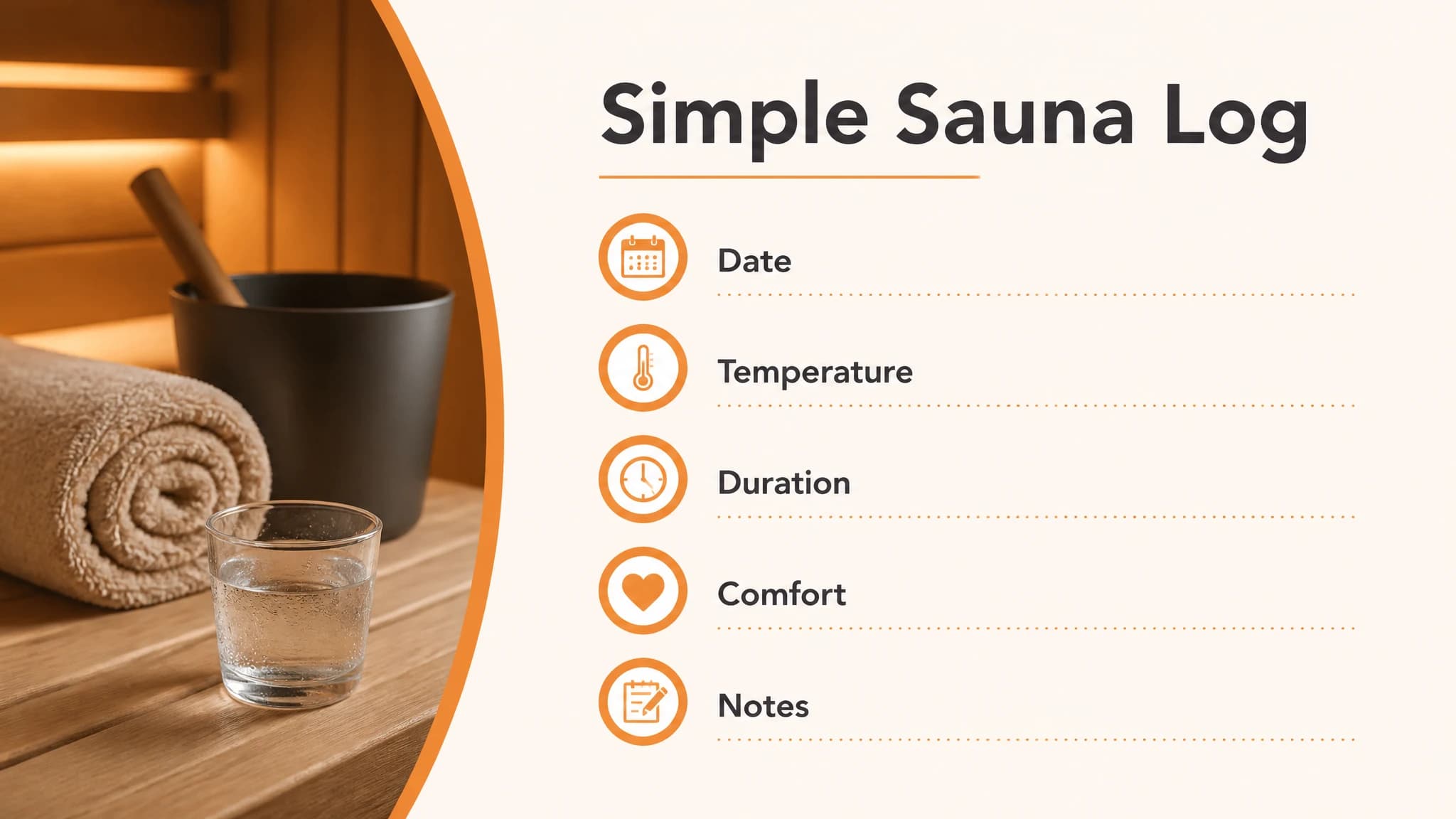
Start with a few repeatable fields instead of trying to record everything.
A simple sauna tracking template
A basic log could include these fields:
| Field | Example |
|---|---|
| Date | September 3 |
| Time | Evening |
| Temperature | Approximate temperature |
| Rounds | 2 |
| Duration | 10 minutes per round |
| Breaks | Rested between rounds |
| Before session | Moderate energy, workday stress |
| After session | Relaxed, recovered comfortably |
| Notes | Shorter session felt easier to repeat |
The example is intentionally simple. You can add more detail later if a specific question requires it, but too many fields may make tracking feel like work.
For people who want a dedicated record, SaunaMetrics is a free sauna tracking app for logging sessions, temperatures, notes, and routine history. The main benefit is having your information in one place so you can review your routine over time.
You can also start with a paper notebook, phone note, or spreadsheet. The best method is the one you will use consistently.
How often should you review your sauna logs?
Daily review is usually unnecessary. Reviewing after every session can make you focus too much on individual fluctuations instead of broader patterns.
A weekly review is a practical starting point. Once a week, look at:
- The number of sessions completed
- Whether your planned routine matched your actual routine
- Which session conditions felt comfortable
- Any repeated barriers or skipped sessions
- Notes about recovery, energy, or discomfort
A monthly review can help you evaluate larger changes. Look for trends in consistency, timing, session structure, and comfort rather than trying to assign a single wellness score.
If you are new to tracking, review your first two to four weeks as a baseline. Avoid changing several variables at once. If you increase duration, change temperature, and alter your schedule simultaneously, it becomes harder to understand what influenced your experience.
For more detail on reviewing session history, explore this guide to monitoring sauna progress.
How to identify consistency patterns
Consistency is more than a streak. A routine may be consistent if it fits your schedule, even when the exact number of weekly sessions varies.
Start by comparing your intended plan with what actually happened. If you planned three sessions but completed one, ask what got in the way. The answer may be more useful than the number itself.
Common patterns include:
- Sessions are easier to complete on specific days
- Evening sessions are more realistic than morning sessions
- Longer sessions are harder to repeat
- A missed session often follows a busy day
- Preparation is easier when hydration and clothing are organized in advance
Use these observations to reduce friction. You might choose a smaller minimum session, prepare earlier, or schedule sauna use around an activity you already do regularly.
For additional habit-building ideas, see these practical tips for developing a consistent sauna habit.
How to identify comfort patterns
Your logs can help you understand which conditions feel sustainable, but they should not be used to push past warning signs.
Compare comfort notes with the surrounding session details. For example, if a session felt more difficult, check whether it was longer, hotter, poorly timed, or preceded by strenuous activity. You may also notice that the same routine feels different depending on sleep, stress, or hydration.
Useful questions include:
- Did I feel comfortable throughout the session?
- Did I need to leave earlier than planned?
- How did I feel during the break between rounds?
- Did recovery feel straightforward afterward?
- Did anything feel unusual or concerning?
If you repeatedly feel dizzy, faint, confused, unusually weak, or otherwise unwell, stop the session and seek appropriate medical guidance. A tracking habit should support awareness, not override your body’s signals.
A dedicated sauna tracking log can make it easier to compare temperature, duration, rounds, breaks, hydration, and personal notes in one routine history.
Use notes to support sustainable habits
Notes are most useful when they lead to a practical decision. Instead of writing a long description after every session, record one observation and one possible adjustment.
For example:
-
Observation: Late sessions felt rushed.
-
Adjustment: Schedule the next session earlier.
-
Observation: Two long rounds were difficult to recover from.
-
Adjustment: Try shorter rounds with a longer break.
-
Observation: Sessions were skipped when preparation took too long.
-
Adjustment: Set out towels and water beforehand.
This approach keeps your log connected to real behavior. You are not collecting data for its own sake. You are using it to make the next session easier to plan.
Set a routine you can repeat
A sustainable sauna routine usually starts with a modest commitment. Choose a frequency that fits your current schedule instead of copying someone else’s routine.
It can help to define three levels:
- Ideal routine: What you would do during a normal, well-organized week.
- Minimum routine: The smallest version that still feels worthwhile and realistic.
- Recovery plan: What you will do after a busy week or missed session.
This structure prevents one missed session from becoming a reason to abandon the habit. You can return to the minimum routine, review what changed, and adjust without treating the interruption as failure.
Keep the purpose visible. If your goal is to create a calming evening ritual, track timing and how you feel afterward. If your goal is to understand heat tolerance, pay closer attention to temperature, duration, and comfort. Your log should reflect the question you are trying to answer.
Common mistakes when tracking sauna use
Tracking too many details
A log with dozens of fields may look thorough but become difficult to maintain. Start with the details you can use: date, temperature, duration, structure, comfort, and notes.
Treating numbers as goals
Temperature, duration, and frequency are context, not automatic measures of a better session. More is not always more useful, especially if it makes your routine difficult to repeat.
Ignoring recovery
The session itself is only part of the experience. Notes about how you felt afterward can reveal whether your routine fits comfortably into the rest of your day.
Changing everything at once
Make one adjustment at a time when possible. A gradual approach gives you a clearer understanding of what works for you.
Using tracking to dismiss warning signs
No metric can make an uncomfortable or unsafe experience acceptable. Stop when you feel unwell and seek professional guidance when appropriate.
A practical 30-day approach
If you want to start tracking sauna use for wellness, try this simple plan:
Week 1: Establish a baseline
Record your sessions without trying to optimize them. Focus on capturing what actually happens, including skipped sessions and unexpected discomfort.
Week 2: Look for scheduling patterns
Review when sessions happen and what commonly gets in the way. Choose one small change that could make attendance easier.
Week 3: Compare comfort and structure
Look at temperature, duration, rounds, breaks, and after-session notes. Identify which combinations feel most manageable.
Week 4: Choose one routine adjustment
Keep what works, remove unnecessary complexity, and set a realistic routine for the next month. Your goal is a repeatable process, not a perfect record.
Final takeaway
To track sauna for wellness effectively, keep the process simple and use the information to make practical decisions. Record the session details that matter to you, review your logs weekly or monthly, and pay attention to consistency, comfort, recovery, and the circumstances around each visit.
A useful sauna routine is personal. Tracking can help you understand it, refine it, and maintain it without turning wellness into a competition.